Why Pirates Are Giving Up On Oil

Piracy in some of the world’s most critical oil chokepoints is on the rise–but now, pirates are resorting back to another method of income generation better suited to times of lower oil prices: taking human captives.

Sometimes, black market oil prices just aren’t lucrative enough. In the days of $100 oil, oil theft was a hot commodity. Today, pirates are supplementing their stolen oil income with ransomed sailors, creating a whole new set of problems for the oil industry to tackle.

To continue reading, please click here.

Source: oilprice.com

Riyadh Hosts Meeting of Red Sea Coastal States

Fatehelrahman Yousif

Foreign ministers of Red Sea coastal states are set to kick off meetings in Riyadh next week to promote cooperation and economic integration and to ensure maritime security along this international waterway.

The meeting is expected to tackle issues on the responsibility of Red Sea states to prevent the intervention of any foreign country in the affairs of this sensitive area.

To continue reading, please click here.

Source: aawsat.com

Shipping on alert as Iran vows revenge for deadly American drone strike

Iranian Navy ships in Velayat-90 military exercise, by Mohammad Sadegh Heydari via Wikipedia

Sam Chambers

Merchant shipping heading through Middle Eastern waters has been placed back on high alert over fears Iran may retaliate to American drone strikes earlier today that killed a top Iranian general.

Iran’s most powerful military commander, General Qasem Soleimani, was killed by a US air strike in Iraq at around 1am this morning.

To continue reading, please click here.

Source: splash247.com

16 Malaysians on ship reported seized by Iran

PETALING JAYA: A ship with 16 Malaysian crew members on board has been seized by Iran’s Revolutionary Guard Corps for fuel smuggling, according to the official Irna news agency.

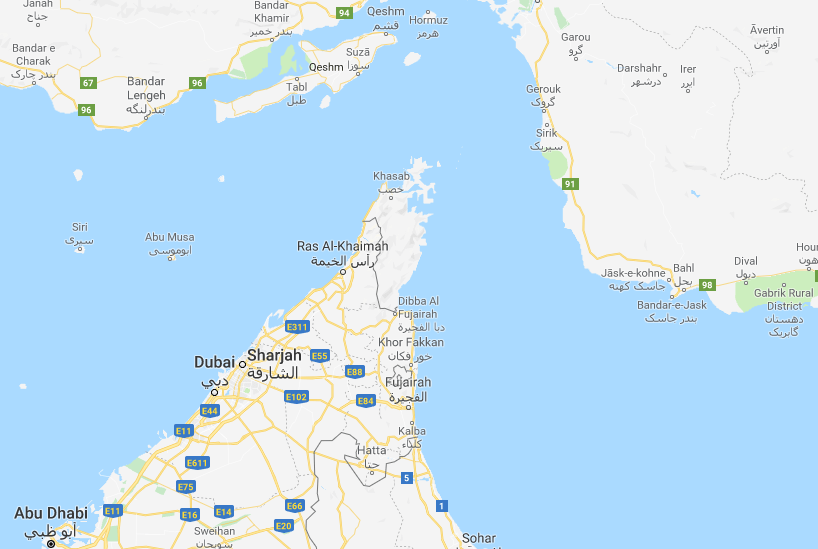
The ship was reported to be carrying nearly 1.3 million litres of fuel. It was not known under which national flag the ship was sailing. It was reportedly seized near Abu Musa Island, near the entrance to the Straits of Hormuz.

To continue reading, please click here.

Source: freemalaysiatoday.com

Iranian Commander Says More Joint Drills on Agenda

TEHRAN (Tasnim) – After conclusion of a joint naval war game of Iran, Russia and China, a ranking Iranian military commander said the Islamic Republic will continue to stage joint military exercises with other countries in the coming years.

Commander of the Naval Operations Department of the General Staff of the Iranian Armed Forces General Mohammad Ebrahim Dehqani said on Sunday that joint military drills will definitely continue in the coming years.

According to the commander, the joint exercises in future will include other regional countries as well.

He also stressed that the naval exercise of Iran, Russia and China has given the enemies a clear message that any mistake would draw a crushing response from the Iranian Armed Forces.

“Our friends receive an assurance that the region’s maritime security would be ensured by the Islamic Republic of Iran and its allies, and there is no need for alien forces in the region, particularly the Americans,” he said.

Denouncing the presence of American forces as a main factor behind regional insecurity, Dehqani said the US decision to transfer its military forces from the Persian Gulf and the Sea of Oman to the northern parts of the Indian Ocean reveals that “Americans are even incapable of ensuring their own security.”

Iranian, Russian, and Chinese naval units on Sunday wrapped up the joint exercise after three days.

On the final day of the joint drill, the naval forces of the three countries exercised tactics to fight piracy and extinguish vessel fires in the international waters south of Iran.

The war game came amid US efforts to woo countries into a maritime coalition for patrols in the Persian Gulf, which have received lukewarm welcome from its allies.

Source: tasnimnews.com

Iran Navy Chief: US Must Leave Region

TEHRAN (Tasnim) – There is no place for American forces in the region anymore, Iranian Navy Commander Rear Admiral Hossein Khanzadi said.

“Today, the era of American free action in the region is over, and they (US forces) must leave the region gradually,” Rear Admiral Khanzadi told reporters on Sunday on the sidelines of a joint naval exercise of Iran, Russia and China, which is underway in the Sea of Oman and the northern parts of the Indian Ocean.

“We believe that regional security does not require the presence of those (foreign) countries, and that regional countries themselves can ensure security together,” he added.

The Iranian Navy commander also expressed hope that more regional states would join Iran in the efforts to ensure security.

“We believe that maritime security definitely needs collective action,” Khanzadi added.

He went on to say that friends of Iran and those favoring regional security have welcomed the joint naval drill, while the US and its proxies who seek to impose inappropriate security arrangements on the region would receive “significant messages” from the war game.

Iran, Russia and China are holding a four-day joint naval exercise, dubbed Marine Security Belt, in the Indian Ocean and the Gulf of Oman.

The war game comes amid US efforts to woo countries into a maritime coalition for patrols in the Persian Gulf, which have received lukewarm welcome from its allies.

Source: tasnimnews.com

Japan green-lights MSDF dispatch to Middle East amid tensions

Persian Gulf/SoH

TOKYO, Dec. 27 (Xinhua) — The Japanese Cabinet on Friday approved the dispatch of Maritime Self-Defense Force (MSDF) personnel to the Middle East amid tensions in the region, despite public opposition and post-war military constraints restricting the nation’s military activities constitutionally.

The planned deployment, backed by the ruling Liberal Democratic Party (LDP) and its coalition ally, Komeito, is to purportedly conduct information-gathering operations and others related to enhancing the safety of commercial shipping in the region.

To continue reading, please click here.

Source: xinhuanet.com

IRGC Navy Urges Iranian Fishermen Not to Respond to Foreign Vessels

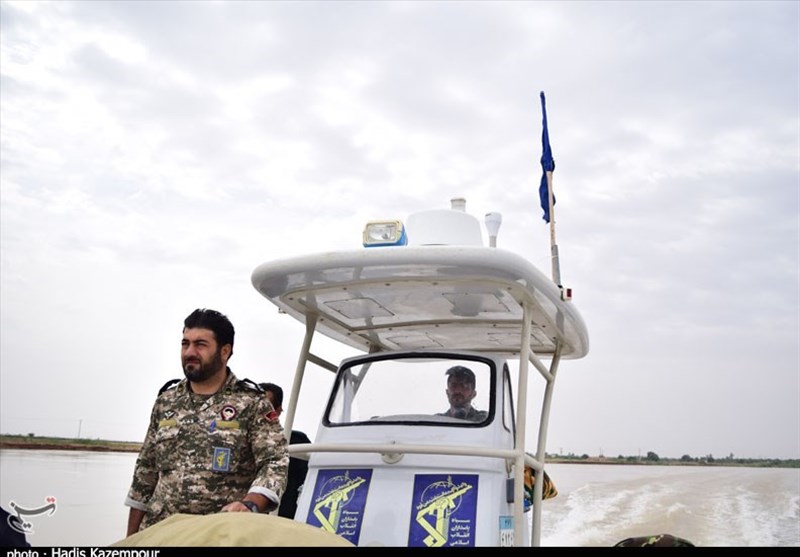
TEHRAN (Tasnim) – The Islamic Revolution Guards Corps (IRGC) Navy called on Iranian fishermen not to respond to foreign warships passing through the Persian Gulf waters, saying they have no right to question Iranian sailors.

In a statement addressed to all Iranian fishermen on Monday, the IRGC Navy said neither the US’ vessels nor those of other countries have the right to inspect, seize or question any of Iranian fishing boats, particularly in Iran’s territorial waters.

The statement further described any move by foreign ships to question Iranian vessels as being “against the national interests and in violation of international law”.

The IRGC Navy also called on all Iranian fishermen not to cooperate with foreign vessels and immediately inform IRGC patrols via Channel 16 VHF if they are questioned by them.

Earlier this month, Commander of the IRGC Navy Rear Admiral Ali Reza Tangsiri highlighted his forces’ powerful presence in the Persian Gulf and said all foreign vessels passing through the waters are closely monitored by the IRGC Navy.

“The IRGC Navy checks and monitors foreign vessels entering the Persian Gulf and questions them about their nationality, the type of the vessels, and their destination,” Rear Admiral Tangsiri told Tasnim.

All foreign vessels, including those belonging to the United States, have always been answerable to the IRGC Navy, the commander added.

He further emphasized that the monitoring of foreign vessels in the Persian Gulf is “an inalienable right” of the Islamic Republic.

“The Persian Gulf belongs to Iran and other littoral states and we have the right to question the vessels because the entrance to the Strait of Hormuz is located in Iran’s territorial waters,” Rear Admiral Tangsiri stated.

Source: tasnimnews.com

New Coalition In Gulf May Not Fare As Well As Old One – Analysis

Persian Gulf/SoH

By

Operational Sentinel patrols the Strait of Hormuz, yet regional rivalries and the international coalition’s makeup could escalate tensions.

By Gregory Clough and Morgan D. Bazilian*

Renewed conflict in the Strait of Hormuz pushed the United States to establish an international coalition for maritime security to ensure safe passage of shipping traffic and guarding against further disruption in oil supplies. While such security coalitions have been successful in the past, applying the same approach in the Middle East may not improve conditions and may even exacerbate tensions.

To continue reading, please click here.

Source: eurasiareview.com

Royal Navy guardians protect 7m tonnes of shipping in Gulf

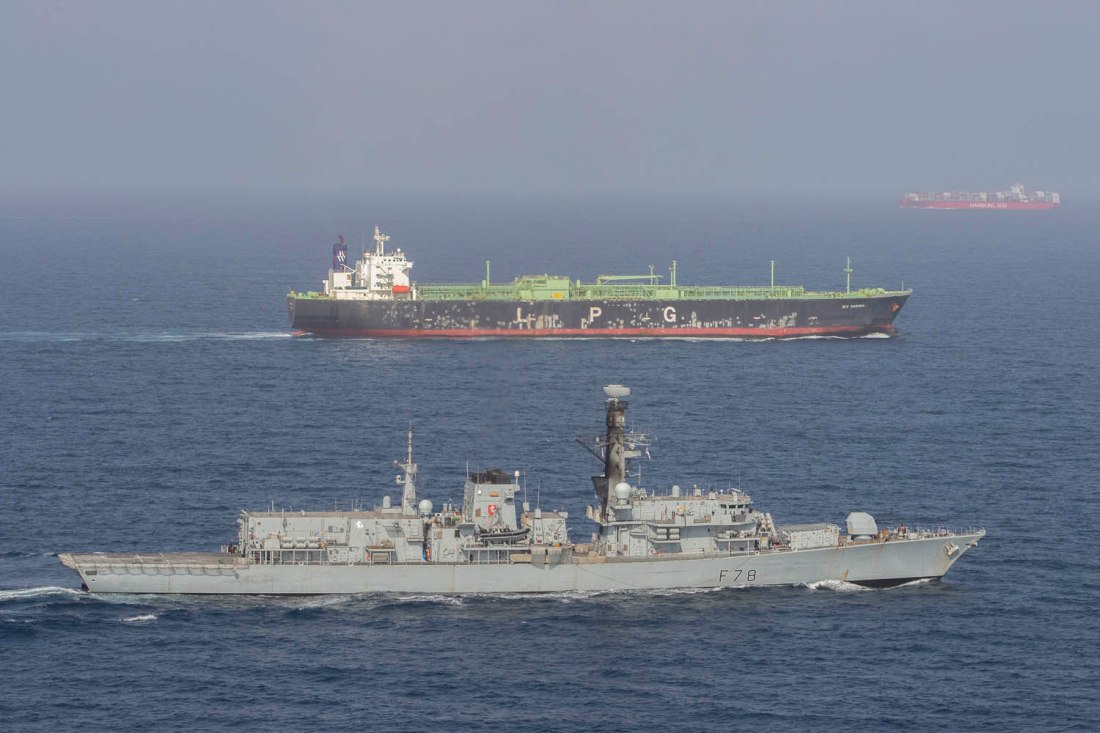
Over seven million tonnes of British shipping – the equivalent of around 20 wartime convoys – have been guided safely through the Strait of Hormuz by the Royal Navy.

HMS Montrose, her sister frigate HMS Kent and destroyers HM Ships Duncan and Defender – have accompanied British flagged and registered merchant ships in and out of the Gulf amid tensions with Iran.

Grateful seafarers have labelled the Royal Navy vessels ‘guardians of the Gulf’ for their efforts providing protection in the narrow waters separating Iran on the north shore and Oman and the UAE since the beginning of July.

The warships, plus their helicopters, have been used to accompany and watch over merchant shipping to ensure they can pass into and out of the Gulf safely, keeping international trade – especially oil and natural gas – flowing in the face of threats.

Most recently HMS Kent has borne the burden of patrols, spending three weeks in the strait, providing safe passage for in excess of 800,000 tonnes of shipping.

“We are a close-knit team and I am extremely proud of what my sailors have achieved over the last few months,” said Commander Andrew Brown, HMS Kent’s Commanding Officer.

The ship uses her Wildcat helicopter to scour hundreds of square miles of the Gulf for any signs of danger – merchant shipping needs accompanying through an area twice the size of Wales.

“Controlling our helicopter in such a busy area of the world can at times be extremely stressful,” said Leading Aircraft Controller Lewis Jackson. “The constant training we receive enables us to do our job in a calm and safe manner and at an extremely professional level.”

Beyond the physical and mental challenges of the escort mission, the 200-plus sailors and Royal Marines aboard the warships are still contending with demanding temperatures – in the high 30s Celsius by day – even at the end of September.

HMS Duncan, which returned to Portsmouth at the weekend, made 29 runs through the Strait, watching over 1,287,209 tonnes of merchant shipping.

Commander Tom Trent said his ship’s company found the mission challenging but also “very rewarding. We had emails from the ships we helped thanking us for getting them through safely.

“Protecting shipping is what the Royal Navy has done for hundreds of years. The whole operation is a reminder of how critical the Royal Navy is.”

Operations in the Strait of Hormuz to protect British shipping continues on a daily basis.

Source: royalnavy.mod.uk