Iran’s Navy commander, Rear Admiral Hossein Khanzadi, said on Wednesday that the presence of his country’s troops in the Red Sea would be reinforced to protect navigation routes.
Khanzadi indicated, in a press statement issued by Fars News Agency today, that “the Red Sea’s maritime security has been undermined, as several oil tankers have been targeted in recent months, which requires further strengthening the presence of our troops in this zone.”
SEOUL/DUBAI (Reuters) – Yemen’s Iran-aligned Houthi movement released three vessels and 16 people it had seized, South Korea’s foreign ministry and a Houthi military source in Yemen said on Wednesday.
The seizure on Sunday was the latest incident at sea around Yemen, where Saudi Arabia is leading a Western-backed coalition of Arab states against the Houthis, who control the capital and most population centres and have been accused of attacking shipping.
‘Attack’ on ship towing South Korean drilling rig threatens vital shipping routes, Saudi spokesman says.
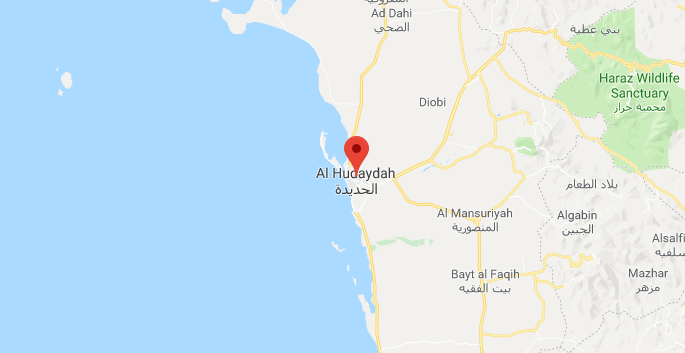
The Saudi-led coalition fighting in Yemen said Iran-aligned Houthi rebels hijacked a vessel south of the Red Sea.
Saudi Arabia‘s state-run Saudi Press Agency quoted coalition spokesman Colonel Turki al-Malki as saying on Monday that Houthis seized the ship while it was towing a South Korean oil drilling rig on Sunday.
MaritimeSecurityNews: This is a significant roll of the dice by al Houthi rebels. As war weariness sets in on both sides, it has been suggested that this incident is an attempt by Houthis to show Saudi Arabia how difficult it can still make life for them. South Korean media outlets have suggested that three vessels were hijacked/seized by Houthi rebels and have dispatched their anti-piracy Cheonghae unit to the region, which will focus minds in Yemen, given their reputation.
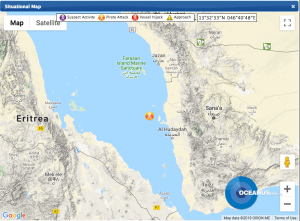
Maritime security in the Red Sea remains perilous, with Iran reporting attacks which are unverified independently and the ongoing threat posed by Houthi naval mines and SVBIEDs. A persistent threat to a major shipping lane will not go unchallenged by other countries in the region as well as the USA. I hope the al Houthis appreciate just how risky this gamble may prove to be. Image below via OCEANUSLive.org, who carry the initial UKMTO report.
The legitimate government asked Chair of the Redeployment Coordination Committee (RCC) and head of the United Nations Mission to Support the Hodeidah Agreement (UNMHA) Abhijit Guha to “open humanitarian corridors in the city of Hodeidah,” an informed Yemeni source told Asharq Al-Awsat.
The government explained that it requested to open the corridors because of the presence of government-controlled areas in the city, although Houthi militias rule most of it, the source said Thursday.
Iran says Israel, the US, and Saudi Arabia might be behind the recent “cowardly” attack on its oil tanker in the Red Sea, to which Iran will definitely give a crushing response.
Ali Shamkhani, the secretary of Iran’s Supreme National Security Council, said on Wednesday video evidence had provided leads about the incident. “A special committee has been set up to investigate the attack on Sabiti… with two missiles and its report will soon be submitted to the authorities for decision,” Shamkhani noted.
EHRAN – Iranian Foreign Minister Mohammad Javad Zarif announced on Tuesday that “one or more countries” had directed or facilitated the Friday morning attack on the Iranian SABITI oil tanker off the Saudi coast in the Red Sea.
Zarif also said the raid on SABITI was a “state-sponsored act”. He added, “According to received intelligence the Friday assault on the Iranian oil tanker was a complicated move done by one or more states.”
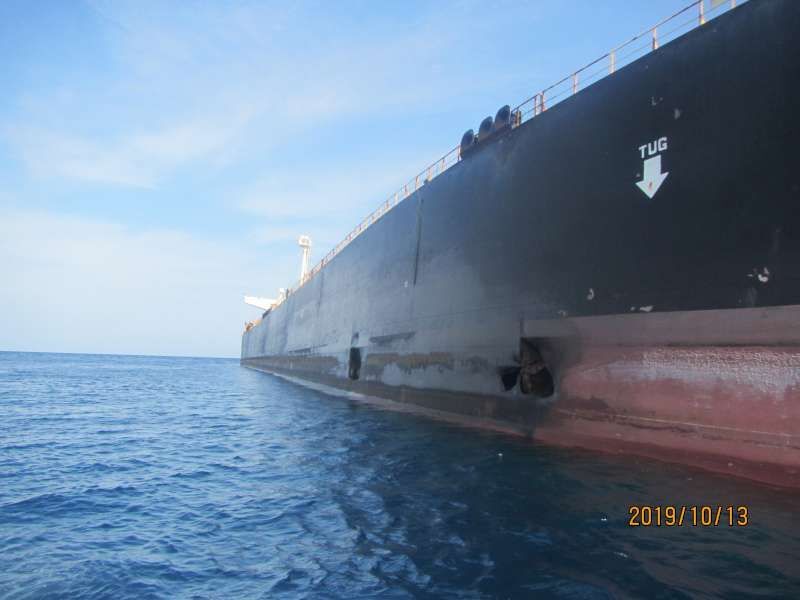
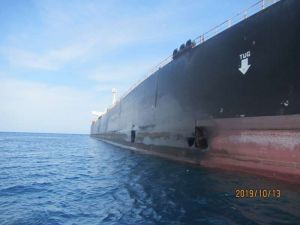
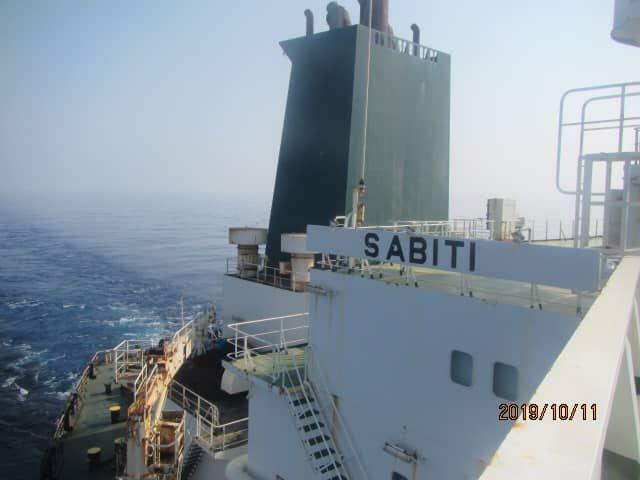
Following Friday’s (12th) reported attack on the Iranian oil tanker, MT Sabiti, the Iranian Oil Ministry has finally released images showing the damage to the vessel. The incident on Friday reportedly took place around 60 miles off Jeddah, Saudi Arabia, in the Red Sea as the ship reportedly transited towards Suez. The Iranian National Oil Company (NOIC) initially suggested that the ship had been struck by two missiles.
Iran accused Saudi Arabia of attacking the vessel, something which Saudi Arabia naturally denied.
The images released appear to show three holes above the water line. The impact caused a small oil spill which has now been sealed, according to Iranian sources. The US Navy stated on Friday that it was aware of the reports but had nothing further to add.
The incident remains extremely curious. Reports have also suggested that the Iranian ‘spy ship’ MV Saviz was seen close by the Sabiti following the incident. The vessel’s AIS appears to have been disabled shortly afterwards. According to Maritime Bulletin:
SAVIZ as of now, is full of arms and military equipment, plus her own 4 50-mm guns, surveillance equipment, special forces team and 3 RHIBs.
While it’s very easy to speculate as to who could have perpetrated such an attack and the motivation behind it, logic dictates that we await further information. Iran has announced an investigation into the incident, which may take some time to complete and is unlikely to involve independent inspectors.
Damage seen on MT Sabiti, images via Iranian Oil Ministry
An explosion has caused a fire on an Iranian tanker near the coast of Saudi Arabia, Iranian media say.
The
vessel, from Iran’s national oil company (NOIC), was 60 miles (97km)
from the Saudi port city of Jeddah when the incident took place, reports
said.
The ship’s two main storage tanks were said to be damaged, causing an oil spill into the Red Sea, but no-one was injured.
NOIC claimed the vessel was hit by missiles, but did not provide evidence.
Iran’s national tanker company (NITC) said the fire had been put out and the oil spillage reduced to a minimum, according to the news site Iran Front Page.
Iranian state TV identified the ship as the oil tanker
Sinopa. The maritime vessel tracking firm Tanker Trackers said the
tanker was regularly used to ferry oil to the Syrian government, despite
international sanctions.
The incident came amid heightened tension between Iran and Saudi Arabia.
Last
month, 18 drones and seven cruise missiles hit a major oil field and
processing facility in Saudi Arabia, which blamed Iran for the attack.
And
US officials said Iran was responsible for attacks on two oil tankers
in the Gulf in June and July, as well as attacks on another four tankers
in May.
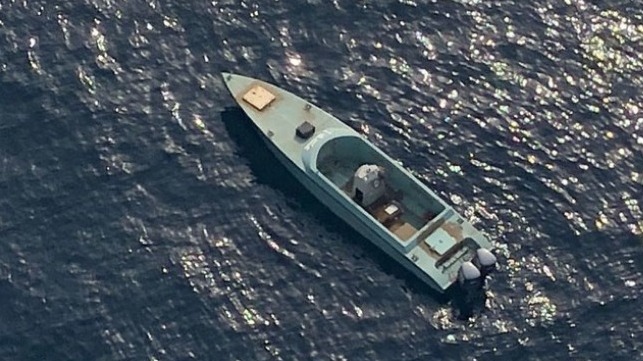
The
Saudi-led coalition said it intercepted and destroyed an unmanned
explosives-laden boat launched from Yemen by the Iran-aligned Houthi
group on September 19, 2019, an incident that could further increase
regional tensions after the attack on Saudi oil installations. Since
2017, in fact, there have been several reports of attacks or discovery
of these unmanned explosive vessels in the country.
“The coalition’s naval forces detected an attempt by the terrorist Houthi militia backed by Iran to carry out an imminent act of aggression and terrorism south of the Red Sea using an unmanned, rigged boat … launched from Hodeidah province,” coalition spokesman Colonel Turki al-Malki said in a statement. Malki said that the foiled attack represented a threat to regional and international security and the safety of maritime routes and international trade. He did not specify the intended target.[1]
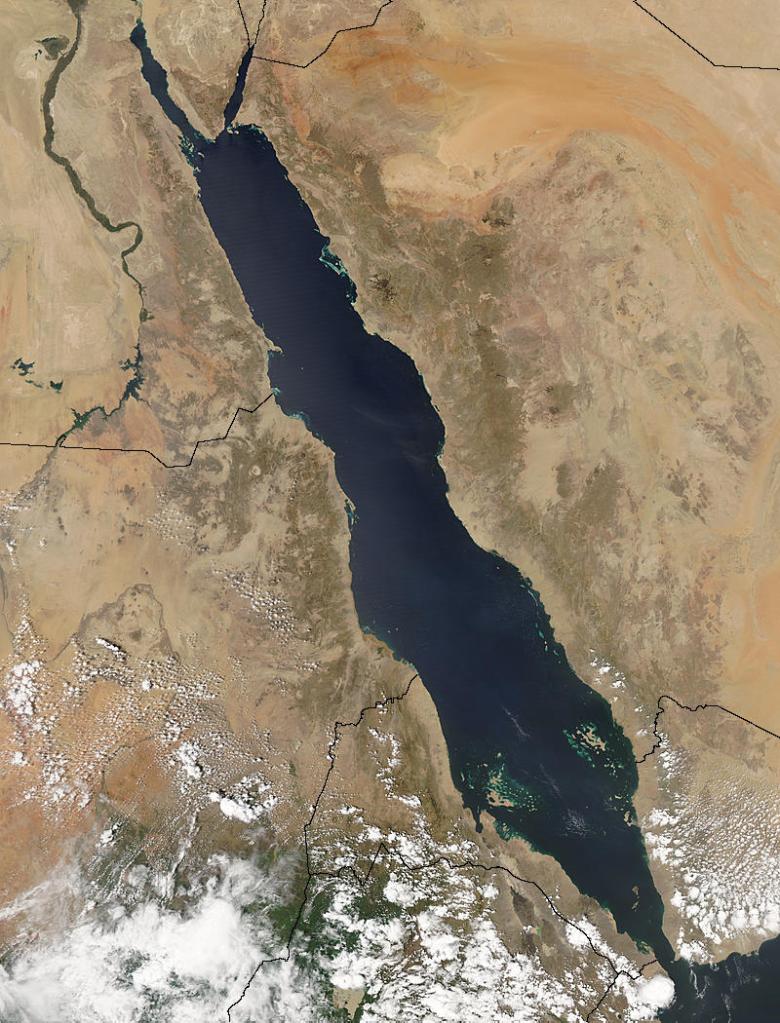
The Red Sea and the adjacent Gulf of Aden face many potential threats
to free movement, ranging from the presence of non-state armed groups
(such as the Houthis
in Yemen) and organised crime outfits, to ongoing territorial disputes
and environmental concerns. Yet maritime traffic has largely gone undisrupted in recent years.
The hitherto safe passageway of the Red Sea should not be taken for granted though, and the area has attracted significant geopolitical interest. New initiatives concerned with the shared maritime space are being conceived, including a Red Sea Forum championed by Saudi Arabia and Egypt. The African Union (AU) and Intergovernmental Authority on Development (IGAD) are also taking a greater interest. All these actors aim to address a perceived gap in management of the Red Sea space.


 Maritime Security News