The Deadly Evolution of Abu Sayyaf and the Sea

By Meghan Curran

On the morning of January 27, 2019, two bombs exploded inside the Cathedral of Our Lady of Mount Carmel, in Jolo on the Sulu Province in the southern Philippines. Tearing a hole through the cathedral during a Sunday service, the bombs claimed 20 lives, injured dozens more, and propelled Islamist extremism in the Philippines back into international headlines. In the aftermath of the blast, Philippine president Rodrigo Duterte promised to “pursue to the ends of the Earth the ruthless perpetrators behind [the] dastardly crime,”as the Abu Sayyaf Group (ASG), the country’s notoriously violent Islamic separatist group, claimed responsibility for the attack. While President Duterte may not need to go to the “ends of the Earth” to put an end to the ASG-fueled terror, his government will certainly need to act beyond its own shores. Illicit maritime activities are at the root of ASG funding and operations, and ensuring the group’s defeat will require focused government efforts to improve maritime security in its area of operations.

To continue reading, please click here.

Source: cimsec.org

Seychelles, CJTF-HOA build partnership

By Captain Olivia Cobiskey
U.S. ArmyCJTF-HOA, May 21, 2019

VICTORIA, Seychelles — The East African island nation of Seychelles is a key partner with Combined Joint Task Force-Horn of Africa, working towards increasing security and regional stability in the Indian Ocean.

U.S. Air Force Brig. Gen. James R. Kriesel, deputy commanding general of Combined Joint Task Force-Horn of Africa, recently visited the Republic of Seychelles to discuss ways to increase interoperability between CJTF-HOA and the Seychelles.

“A key, vital forecast is the fact piracy is suppressed, not eradicated,” said Kriesel, the first CJTF-HOA leader to officially visit the Seychelles since 2012. “We, as a coalition, must maintain readiness to rise to the challenge of a potential resurgence.”

Kriesel met with leaders from the Seychelles People’s Defence Force, and the U.S. Embassy Mauritius and Seychelles, to discuss the crucial role the Seychelles, a group of 115 islands, has played in the fight against illegal fishing, the ongoing threat of piracy in the western Indian Ocean, and trafficking of weapons, narcotics and people. During the meeting, Seychelles People’s Defence Force leaders elaborated on their plan to increase information sharing and force capability to police the Indian Ocean.

Kriesel also visited the Regional Coordination and Operational Centre, seeing firsthand how the center operates and its pivotal role in promoting maritime security in the region.

“CJTF-HOA and the Regional Coordination and Operational Centre would benefit from conducting training and exercises similar to our subject matter expert exchange; ultimately, furthering strategic access,” said Kriesel.

The Regional Coordination and Operational Centre’s objectives are synergistic with CJTF-HOA’s lines of effort. Strengthening individual and institutional capacity, encouraging international capacity, and facilitating mutual dialogue with international, regional and national actors form the foundation of the Regional Coordination and Operational Centre, resulting in success in their anti-piracy mission. Approximately 100 pirates have been repatriated to Somaliland; however, the government is concerned criminals are regrouping and obtaining financing for future activity, said Col. Clifford Roseline, chief of the Seychelles People’s Defence Force.

“Seychelles is proud to be a member of the Combined Maritime Forces,” said Roseline, who joined the Seychelles People’s Defence Force in 1978. The Seychelles rely on collaboration with maritime and international partners to share information and intelligence to ensure their forces are at the right place, at the right time, to continue to combat trafficking as it evolves in today’s operational landscape.

“The Combined Maritime Forces is seeing not only an increase in human trafficking, but a rise in the trafficking of both charcoal and sugar, which funds terrorist organizations in East Africa,” said Roseline.

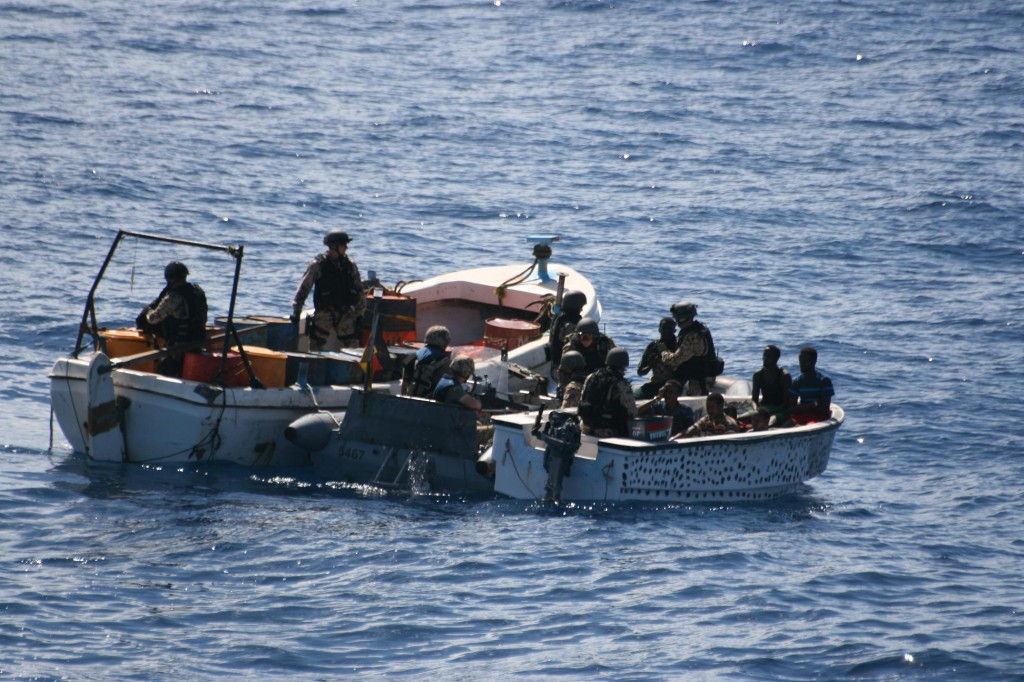
“The Seychelles is more than just a partner on the high seas,” said Melanie Zimmerman, deputy chief of mission of the U.S. Embassy Mauritius and Seychelles, who also noted the country has the ability to prosecute suspected pirates detained by European Union Naval Force ATALANTA (EU NAVFOR) forces and U.S. Naval Forces Africa.

“CJTF-HOA values its partners and looks forward to continued collaboration with Seychelles,” Kriesel said at the conclusion of his visit.

Source: hoa.africom.mil

Hijacked ship MT APECUS involved in illegal activities since 2014: NIMASA

A Palau flagged Tanker, MT APECUS, hijacked off the coast of Bonny, Nigeria last month has been conducting trading activities in Nigerian waters since 2014 without permit, the Nigerian Maritime Administration and Safety Agency (NIMASA) said Monday.

Nevertheless, the agency said it was committed to rescue the abducted seven crew, comprising five Indian nationals and two other individuals of unspecified nationality.

To continue reading, please click here.

Source: sunnewsonline.com

Maritime security: Nigerian waters now safer, says Peterside

Nigerian Maritime Administration and Safety Agency (NIMASA) Director-General  Dr. Dakuku Peterside has said piracy and other maritime crimes have reduced drastically in the Nigerian maritime domain, making it safer for investment.

Contrary to reports in a section of the media on his responses while defending the Agency’s budget before the Senate Committee on Maritime Transport in Abuja, Peterside noted that efforts being put in place by the Federal Government to tackle maritime crimes were now yielding results. He added that NIMASA would continue to up its game to ensure Nigerians benefit from the enormous potential in the sector.

To continue reading, please click here.

Source: thenationonlineng.net

Suspected pirates kidnap five oil workers in Rivers

By Victor Azubuike

Indigenous oil firm, Belemaoil has confirmed the kidnap of five oil workers on its platform in Akuku-Toru Local Government Area of Rivers State.

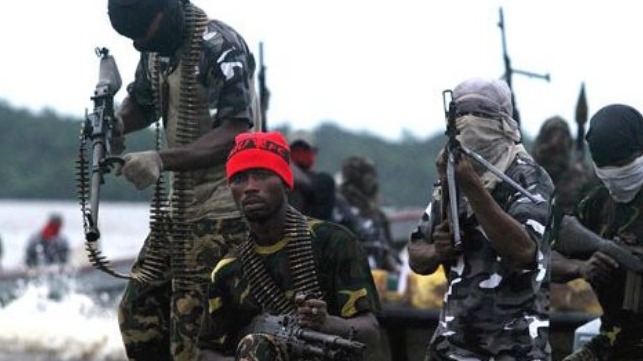
The gunmen suspected to be sea pirates had accosted their victims working on an oil installation on a high sea before whisking them away in a speedboat to an unknown destination.

To continue reading, please click here.

Source: dailypost.ng

Oil tanker owners negotiating with abductors of five Indian sailors

The Indians were reportedly abducted on April 19 when the vessel, the Palau-registered Apecus, was anchored off Lagos in Nigeria.

The owners of an oil tanker, whose five Indian crew members were kidnapped in the waters off Nigeria last month, have established contact with the abductors and are negotiating for their release, people familiar with developments said on Tuesday.

The Indians were reportedly abducted on April 19 when the vessel, the Palau-registered Apecus, was anchored off Lagos in Nigeria. There was no official word on the current status or whereabouts of the kidnapped men.

To continue reading, please click here.

Source: hindustantimes.com

Abducted Malaysian fisherman rescued from Abu Sayyaf

By: Zam Yusa

Kota Kinabalu: The Malaysian fisherman kidnapped by Abu Sayyaf last year was rescued in Sulu on Thursday but is in critical condition after being shot by the group, a Philippine military spokesman told Daily Express.

Jari Abdullah, 34, was abducted along with two Indonesians from their fishing boat in Pegasus Reef waters off Kinabatangan on Dec 6.

To continue reading, please click here.

Source: dailyexpress.com.my

Kidnapping – off Nigeria (March 20th)

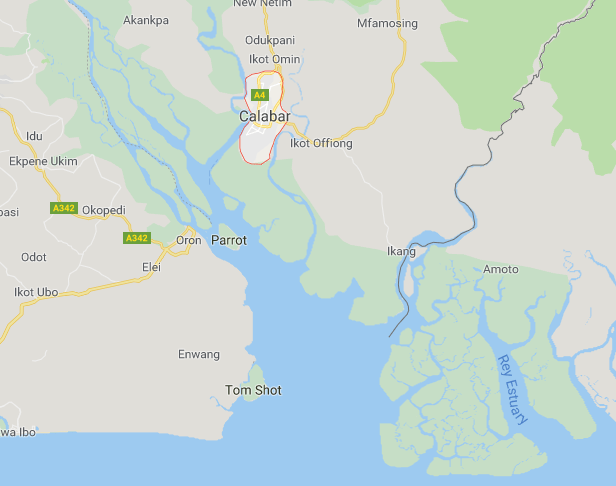
Reports state that a passenger boat was attacked by armed men around 30nm South of Calabar, Nigeria at 0600 LT. Seven armed robbers in one skiff approached the passenger/ro-ro ship and boarded her. They robbed passengers before making off with a reported five hostages.

I have additional details but am waiting for an official incident report before.

UPDATE: Pirate Attack – Gulf of Guinea (March 9th)

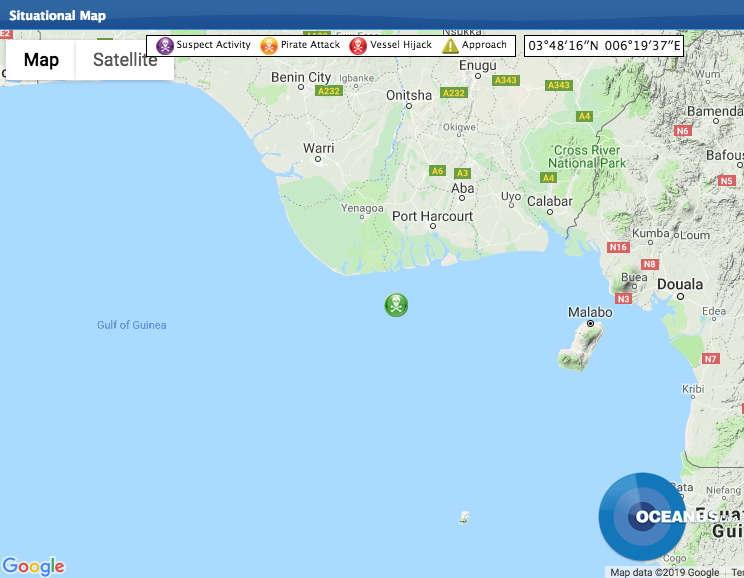
Pirates armed with machine guns in two speed boats approached an underway offshore support vessel at 1115 UTC in position 03:57.2N – 006:39E, around 32nm SE of Brass, Nigeria. Captain immediately notified the naval escort security boat which manoeuvred to engage the attackers. One speed boat closed in from port side of the vessel and crossed the bow, while the other speed boat exchanged fire with the security boat. Alarm raised, crew proceeded to the engine room and all power was shut down. The pirates boarded the vessel with the aid of an elongated ladder. They broke into the accommodation, vandalised the cabins and took crew belongings and vessel properties. The pirates then proceeded to the engine room, kidnapped five men and escaped. Remaining crew sailed the OSV under escort to a safe anchorage. One Nigerian Navy armed guard reported killed in the exchange of fire between the naval security boat and the pirates. Investigations ongoing. Reported (MDAT/IMB) 9 Mar. Via OCEANUSLive.org.

http://www.oceanuslive.org

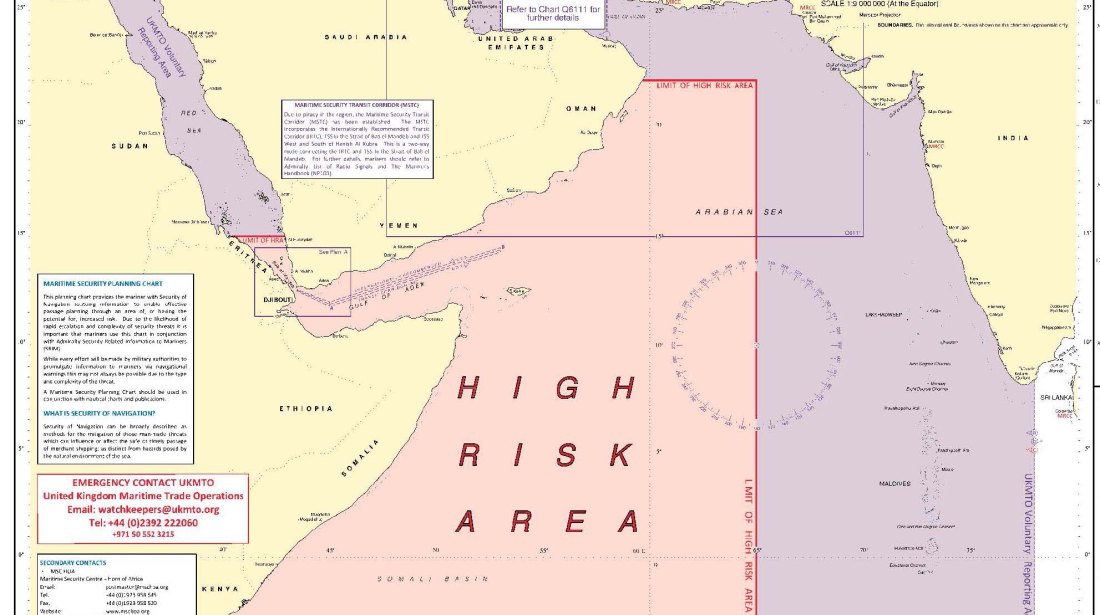
Piracy High Risk Area Boundaries Reduced In Indian Ocean

The Round Table of international shipping associations plus the Oil Companies International Marine Forum (OCIMF) have issued new advice to merchant ship operators about the boundaries, while emphasising that a serious threat from piracy still exists in the region.

The High Risk Area reflects the area where the threat from piracy exists, whilst recognising the ongoing containment of pirate attacks in the Indian Ocean. The industry group which has redefined the boundaries includes BIMCO, the International Chamber of Shipping (ICS), INTERCARGO and INTERTANKO.

To continue reading, please click here.

Source: bunkerspot.com