Combating Emerging Security Threats in the Maritime Domain

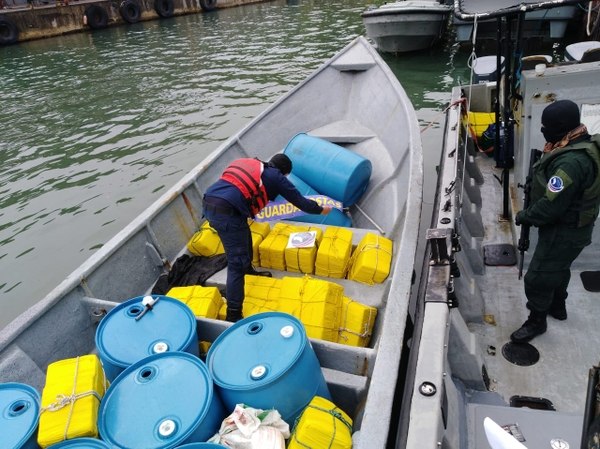
Aside the traditional crimes that have bedeviled the maritime domain for decades, Chiemelie Ezeobi writes that emerging security threats like attacks on shipping, sabotage of hydrocarbon infrastructure and maritime resource theft, as well as other transnational organised crimes, are some of the challenges being tackled by the Nigerian Navy in its quest to secure the nation’s  and the Gulf of Guinea waters 

World over, security threats keep evolving from traditional to conventional warfare. In the maritime domain, same rings true. In the past, the maritime domain was threatened by piracy, sea robbery, illicit trafficking, illegal unreported and unregulated fishing (IUUF) and marine pollution. Now, emerging security threats within the Nigerian maritime domain stem largely from non-military causes such as socio-economic agitations and unemployed youths within the coastal communities, which are manifested through attacks on shipping, sabotage of hydrocarbon infrastructure and maritime resource theft.

To continue reading, please click here.
Source: thisdaylive.com

Nigeria’s Greasy, Sleazy, Billion-Dollar Oil Theft Industry

By Michael Eboh

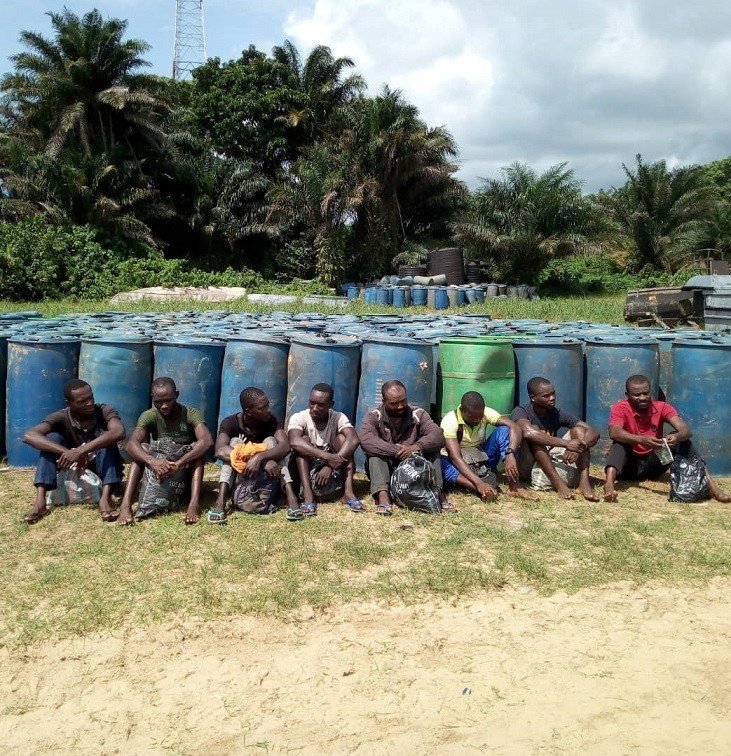
In January 2019, security operatives conducting surveillance on oil installations in Lagos State, nabbed Mr. Shuaibu Ogunmola, an alleged kingpin of oil pipeline vandalism in Lagos State, who it claimed was responsible for loss of millions of litres of petroleum products daily.

He had operated a thriving oil theft racket for decades, hacking pipelines in some island communities in Amuwo-Odofin Local Government Area of Lagos State, along the strategic System 2B pipeline network Right-of-Way. His activities had through the years, led to loss of millions of litres of products along the Lagos Atlas Cove strip.

To continue reading, please click here.
Source: allafrica.com

Navy uncovers illegal diesel depot in Akwa Ibom

The Nigerian Navy in Ikot Abasi has uncovered an illegal Automated Gas Oil (popularly known as diesel) depot in Eket Local Council of Akwa Ibom.

Leader of the team, Lieutenant Commander Umaru Sidi, made the revelation while handing over the recovered items to the state command of the Nigeria Security and Civil Defence Corps (NSCDC) yesterday in Eket.

To continue reading, please click here.

Source: guardian.ng

Oil theft: Navy deploys helicopter, other arsenals to curb crime

Ben Dunno

The Central Naval Command of the Nigerian Navy has intensified its ongoing war against illegal bunkering activities along the coastal region with the deployment of additional surveillance aircraft, gadgets and weapons to curb the menace.

The latest addition to the naval fleets in the region includes a helicopter, four ships, and two riverine patrol gunboats to boost the operational efficiency of men and officers both in aerial and land surveillance along the waterways.

To continue reading, please click here.

Source: sunnewsonline.com

Oil theft: Navy inducts 250 inshore patrol boats

Olaleye Aluko

The Nigerian Navy  has said it has inducted more than 250 Inshore Patrol Boats as well as acquired more Seaward Defence Boats to check oil theft and other maritime crimes in parts of the country.

The Chief of the Naval Staff, Vice Admiral Ibok Ete-Ibas, revealed  this on Tuesday. He said  some piracy attacks occasionally occurred on the  Nigerian waters and the Gulf of Guinea which called for more proactive actions by the military and other stakeholders.

To continue reading, please click here.

Source: punchng.com

Shell ‘losing $560,000 a day to Nigeria oil thieves’

Shell’s subsidiary in Nigeria says the oil giant is losing 10,000 barrels of oil a day to thieves in the West African nation – at a cost of $560,000 (£452,000) a day.

The losses by vandals attacking oil pipelines in the southern Niger Delta are equivalent to $204.4m over a year.

The announcement was made by Igo Weli, general manager of the Shell Petroleum Development Company of Nigeria (SPDC), which is a joint venture between Shell and the Nigerian government.

“These attacks were on critical assets that produce the crude oil, which accounts for over 90% of Nigeria’s foreign exchange earnings and the bulk of government revenue,” Mr Weli is quoted as telling a workshop on pipeline vandalism in the oil city of Port Harcourt on Monday.

Since 2012 he said the company had discovered and removed 1,160 points where thieves were stealing the oil.

But this did not seem to be stemming the problem as 9,000 barrels a day were being stolen in 2017, 11,000 last year and 10,000 this year.

Mr Weli was also critical of a lack of development in the Niger Delta, where most people remain poor despite the vast wetlands rich oil resources.

“There is a community in the Niger Delta that has received over 2bn naira ($5.5m, £4.5m) from SPDC joint venture for its development, but is yet to develop,” the Premium Times quotes him as saying.

“The region receives 13% derivation, revenue from NDDC [the Niger Delta Development Commission government agency] and funds from companies, but still has not developed,” he said.

“The Niger Delta has refused to develop despite the huge monies allocated to the area. So, we need to ask ourselves the critical questions to change the Niger Delta narratives.”

Source: bbc.com

EFCC laments incessant oil theft, pipeline vandalism

By Davies Iheamanchor

PORT HARCOURT: The Economic and Financial Crimes Commission, EFCC, has lamented the continuous activities of pipeline vandalism in the Niger Delta region.

The commission also disclosed that the commission has secured 14 convictions in its fight against corruption within few months, adding that the breakthrough was based on the level of investigation and professionalism been put at work by officials of the commission.

To continue reading, please click here.

Source: vanguardngr.com

Shell calls for vigorous campaign against pipeline vandalism

BY JIMITOTA ONOYUME

WARRI: SHELL has enjoined stakeholders in the Niger Delta to vigorously campaign against attack on oil crude oil facilities, stressing that effort should be made to save the environment from impact of oil pollution.

General Manager External Relatons, Igo Weli made the appeal in Warri, Delta state at the media launch of the 2019 edition of Shell in Nigeria briefing notes, adding that the oil giant was committed to improving quality of life in its areas of operations.

To continue reading, please click here.

Source: vanguardngr.com

Navy: Fighting crime within the waterways

Philip Nwosu

In 2015the Chief of Naval Staff, Vice Admiral Ibok-Ete Ibas launched the force’s  strategic directive 2015-1, aimed at providing security in the maritime sector, ensure effective monitoring of the nation’s waterways and sustain its effort to maintain credible presence at sea.

After four years, the Nigerian Navy says it has been able to effectively police the nation’s waterways and ensure that the maritime sector is safe.

According to the Nigerian Navy, it has impounded and destroyed illegally refined crude oil valued at N8.4 billion between January and June 2019. The navy has destroyed and impounded 131,085.06 barrels of crude oil and about 29,612,202 litres of illegally refined products during its anti-crude oil theft campaign. It also destroyed 227 illegal refineries, 2,688 storage facilities, 364 wooden boats and impounded 11 barges and 32 vessels.

To continue reading, please click here.

Source: sunnewsonline.com

Security Remains Major Challenge in Niger Delta – Oil Giant Shell

By Emmanuel Addeh

Yenagoa — Shell Petroleum Development Company of Nigeria Limited (SPDC) has said security remains a major challenge occasioned by continuing crude oil theft and vandalism of oil and gas facilities in parts of the Niger Delta.

SPDC’s General Manager, External Relations, Igo Weli, who spoke in Yenagoa, Bayelsa State, at the media launch of the 2019 edition of the Shell in Nigeria Briefing Notes, an annual publication detailing the activities of the business interests of the global energy giant, noted that the illegal activities result in the loss of 11,000 Barrels Per Day of crude oil.

To continue reading, please click here.

Source: allafrica.com