U.S. Launches Maritime Security Initiative for Strait of Hormuz

The United States is launching a new maritime security initiative for the Persian Gulf region to counter the threat of Iranian attacks on shipping, a State Department official told reporters Monday. During previous regional conflicts, the U.S. Navy has periodically provided escorts for merchant shipping through the Strait of Hormuz, but this effort would be multilateral, according to the official. 

The new program, called Sentinel, would be implemented with both material assets and monetary contributions from participating nations. The participants have not yet been named, but the official said that Secretary of State Mike Pompeo would seek the support of Saudi Arabia on Monday during a visit to Jeddah. 

To continue reading, please click here.

Source: maritime-executive.com

Middle East tanker attacks send ship insurance soaring

The recent spike in attacks on tankers near the Persian Gulf is inflating insurance premiums for ships transiting through the wider Middle East, increasing the cost of transporting oil from the region.

Insurance rates for crude oil tankers loading in the Middle East are now up to 20 times higher following the latest attacks.

To continue reading, please click here.

Source: hellenicshippingnews.com

Blast-hit tankers to be assessed off UAE coast

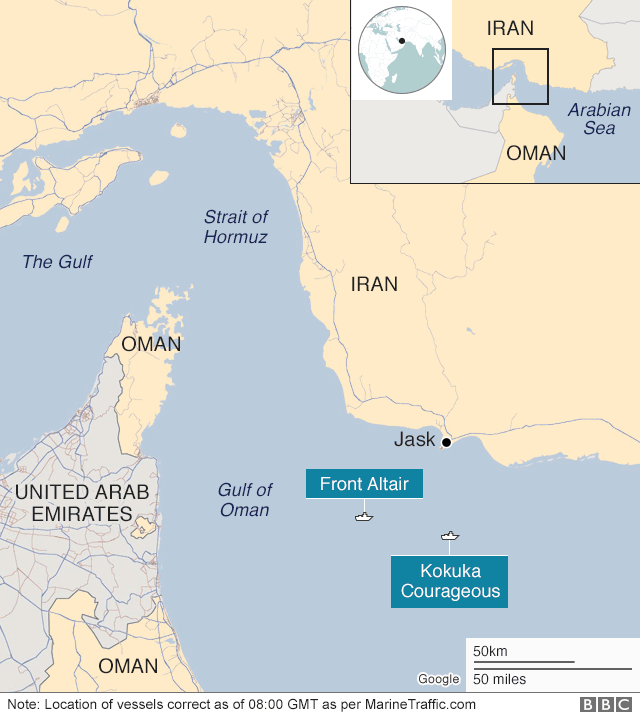
DUBAI (Reuters) – The two oil tankers crippled in attacks in the Gulf of Oman last week that Washington and Riyadh have blamed on Iran are being assessed off the coast off the United Arab Emirates before their cargos are unloaded, the ships’ operators said on Sunday.

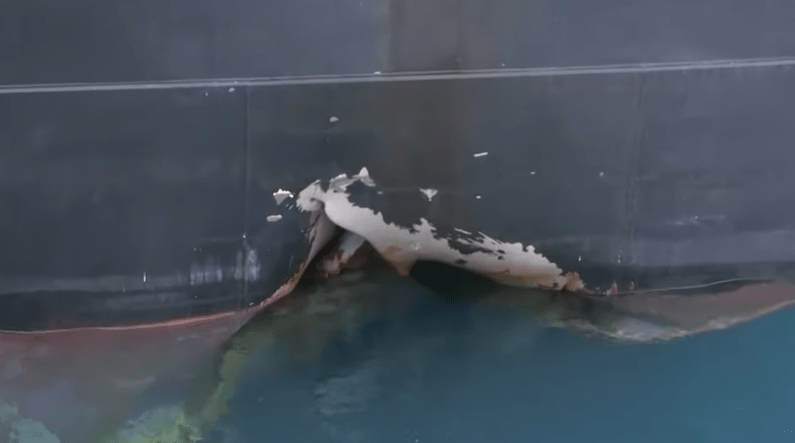
Damage assessment on Japan’s Kokuka Courageous and preparation for ship-to-ship transfer of its methanol cargo would start after authorities in Sharjah, one of the UAE’s seven emirates, complete security checks, Bernhard Schulte Shipmanagement said.

To continue reading, please click here.

Source: reuters.com

UAE tanker attacks blamed on ‘state actor’

The United Arab Emirates has told the UN Security Council a “state actor” was most likely behind attacks on four tankers off its coast.

The 12 May attacks bore the hallmarks of a “sophisticated and co-ordinated operation”, according to its report.

The UAE did not say who it thought was behind the attacks, which also targeted vessels from Saudi Arabia and Norway.

The US has accused Iran of being behind the attacks but Tehran denies this and has called for an investigation.

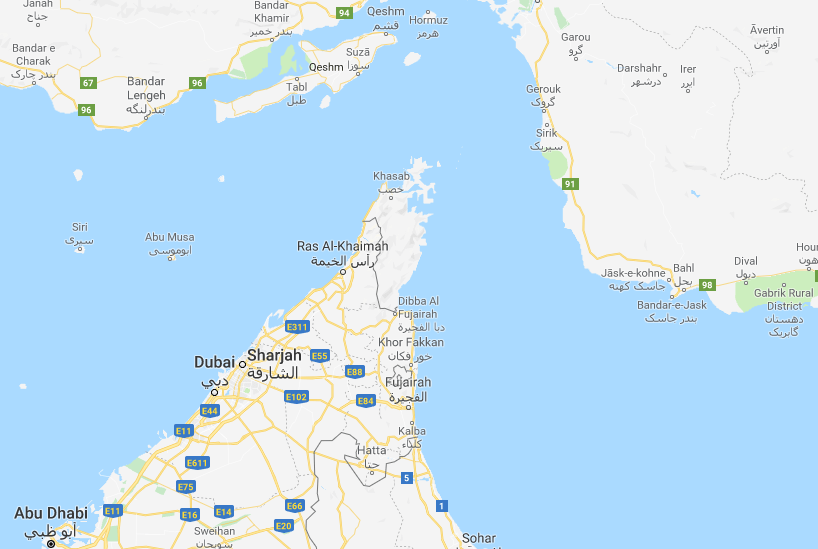
The attacks took place within UAE territorial waters east of the emirate of Fujairah, just outside the strategically vital Strait of Hormuz, in what the UAE called a “sabotage attack”.

They exacerbated long-standing tensions between Iran, and the US and its allies in the Gulf.

What does the report say happened?

According to the UAE-led investigation, which was presented to a closed session of the UN Security Council in New York, the attacks showed a “high degree of sophistication”.

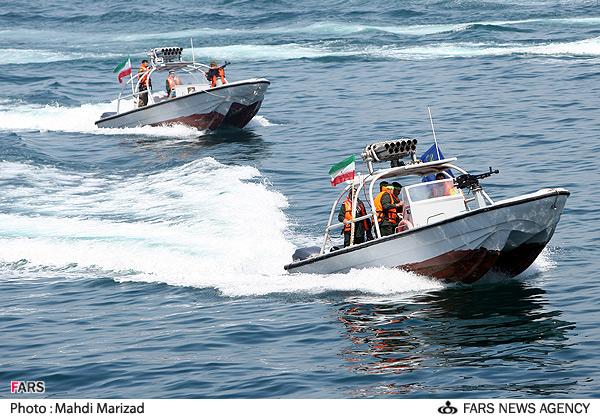
“The attacks required the expert navigation of fast boats” which “were able to intrude into UAE territorial waters”, the report’s preliminary findings say.

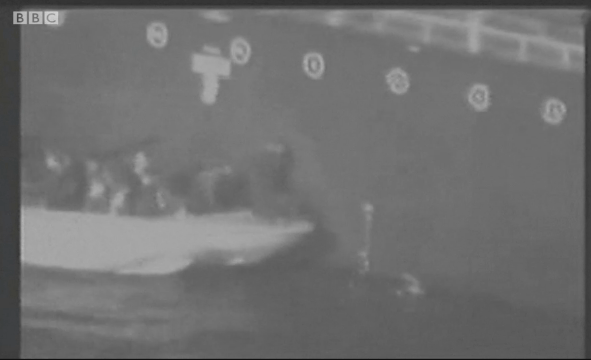
Divers were used to attack the ships using limpet mines in order to cause damage but not cause a major explosion, the presentation says.

There were no casualties but Saudi Arabia has said two of its ships suffered “significant” damage. Another tanker was Norwegian-registered, while the fourth was UAE-flagged.

Why is Iran being accused?

The attacks happened at a time of escalating tension between the US and Iran, long-time foes.

They took place days after the US sent warships and bombers to the region in response to what it said was an unspecified plan by Iran to attack US forces in the area.

While it is unclear why Iran would carry out a relatively low-level attack on the multinational tankers, observers have speculated that it could have been to send a signal to forces ranged against it that it is capable of disrupting shipping there without triggering a war.

Responding to the UAE report, the Saudi Ambassador to the UN, Abdallah Y al-Mouallimi, said the kingdom believed “that the responsibility for this action lies on the shoulders of Iran. We have no hesitation in making this statement,” Reuters news agency reported.

US National Security Adviser John Bolton previously said “naval mines almost certainly from Iran” were to blame for the damage, although he provided no evidence to support the allegation.

However, Mr Bolton, long known for his hawkish stance on Iran, denied the Trump administration was seeking to overthrow the Iranian government.

“The policy we’re pursuing is not a policy of regime change,” he told reporters last week during a visit to London. “That’s the fact and everybody should understand it that way.”

Iran’s foreign ministry has rejected the US accusations as “ludicrous” and accused Mr Bolton of being a “warmonger”.

What are the underlying tensions?

At the start of May, Washington ended exemptions from sanctions for countries still buying oil from Iran.

The decision was intended to bring Iran’s oil exports to zero, denying the government its main source of revenue.

US President Donald Trump reinstated the sanctions a year ago after abandoning the landmark 2015 nuclear deal that Iran agreed with six nations – the five permanent members of the UN Security Council and Germany.

Iran has now announced it will suspend several commitments under the deal.

Source: bbc.co.uk

Iranian naval mines likely used in UAE tankers attacks: Bolton

ABU DHABI (Reuters) – U.S. National Security Adviser John Bolton said on Wednesday that attacks on oil tankers off the coast of the United Arab Emirates this month were the work of “naval mines almost certainly from Iran”.

The UAE has not yet blamed anyone for the sabotage of four vessels, including two Saudi tankers, which was followed two days later by drone strikes on oil pumping stations in Saudi Arabia.

To continue reading, please click here.

Source: reuters.com

Tanker attacks near UAE expose weaknesses in Gulf Arab security

Persian Gulf/SoH

By Stephen Kalin, Alexander Cornwell and Dahlia Nehme

RIYADH/DUBAI (Reuters) – Attacks on Saudi tankers and other vessels off the coast of the United Arab Emirates this week expose vulnerabilities in the security of a key oil-shipping route amid rising tensions between the United States, Iran and Gulf Arab states.

The operation near the Strait of Hormuz appeared designed to test the resolve of the United States and its Sunni Muslim allies without triggering a war, after Washington tightened sanctions on Iran and beefed up its military presence nearby.

To continue reading, please click here.

Source: euronews.com

Saudi Arabia says its oil tankers among those hit off UAE coast

Persian Gulf/SoH

Rania El GamalBozorgmehr Sharafedin

DUBAI/LONDON (Reuters) – Saudi Arabia said on Monday that two of its oil tankers were among those attacked off the coast of the United Arab Emirates and said it was an attempt to undermine the security of crude supplies amid tensions between the United States and Iran.

The UAE said on Sunday that four commercial vessels were sabotaged near Fujairah emirate, one of the world’s largest bunkering hubs lying just outside the Strait of Hormuz, but did not describe the nature of the attack or say who was behind it.

To continue reading, please click here.

Source: reuters.com

Exclusive: U.S. commander says he could send carrier into Strait of Hormuz despite Iran tensions

Phil Stewart

WASHINGTON (Reuters) – The commander overseeing U.S. naval forces in the Middle East told Reuters on Thursday that American intelligence showing a threat from Iran will not prevent him from sending an aircraft carrier through the vital Strait of Hormuz, if needed.

Vice Admiral Jim Malloy, commander of the U.S. Navy’s Bahrain-based Fifth Fleet, did not say whether he would send the USS Abraham Lincoln carrier strike group into the strategic waterway off Iran, through which passes a fifth of oil consumed globally.

To continue reading, please click here.

Source: reuters.com

Iran, Russia preparing to hold joint naval drills in Persian Gulf

BEIRUT, LEBANON (9:45 A.M.) – The naval forces of Iran and Russia are preparing to hold joint drills in the Persian Gulf waters, the Mehr News Agency reported.

Citing Iranian naval commander Rear Admiral Hossein Khanzadi, the Mehr News Agency reported that the joint naval drills will take place in Iran’s southern waters.

To continue reading, please click here.

Source: almasdarnews.com

Iran, Oman to stage joint military drill: envoy

Speaking at a meeting with 120 representatives from Iranian trade and economic sectors held in Muscat, ambassador Nouri Shahroudi said the two countries will be staging a joint military drill in the coming days.

“Currently, our joint military committee is present in Oman, and we will hold a joint maneuver in the coming days,” he said.

To continue reading, please click here.

Source: en.mehrnews.com