One Month Since 2019’s First Piracy Attack Off The Somali Coast

“The need for a strong maritime security presence in the High-Risk Area remains critical for the deterrence and prevention of future incidents and attacks.”

Rear Admiral Antonio Martorell Lacave

On 21 April, suspected pirates seized a fishing dhow off the coast of Somalia, holding 23 people hostage. In a matter of hours, the European Union’s counter-piracy force EU NAVFOR Somalia Operation Atalanta had responded to the attack. Two days later, the incident was over; Operation Atalanta had detained five suspects and released 23 hostages.

An Attack Dismantled

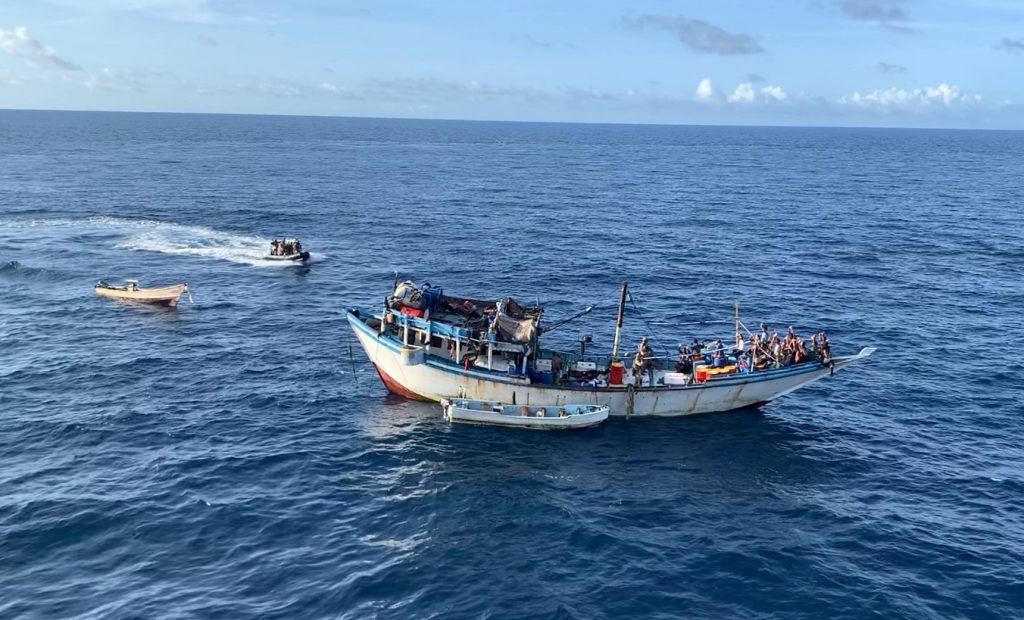
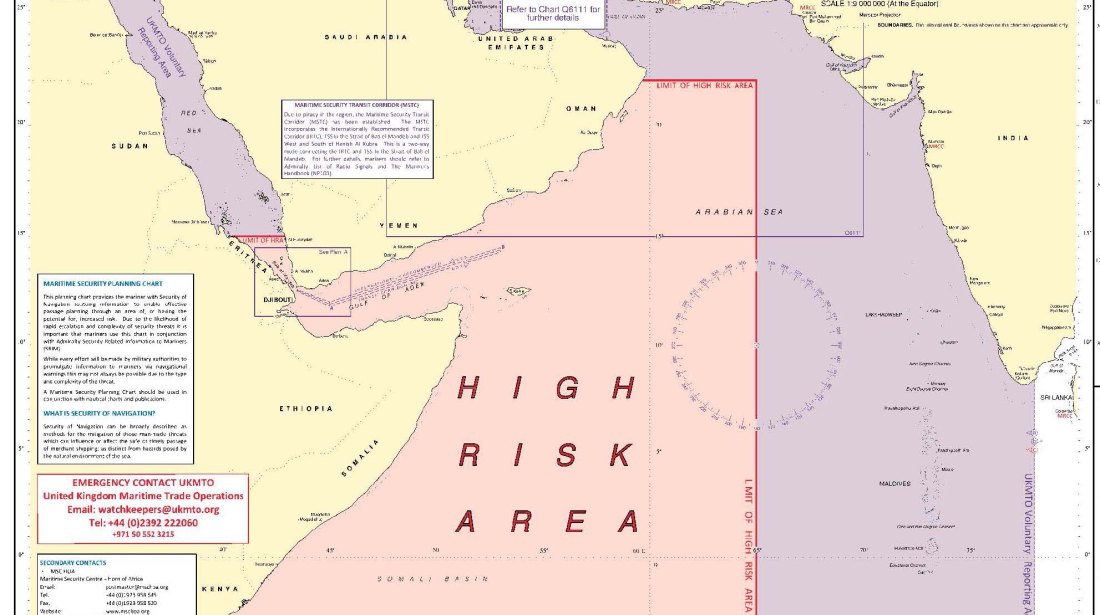
The incident began when five suspected pirates captured a fishing dhow off the coast of Somalia. The suspects proceeded to navigate the dhow along the coast, where they visited a pirate base camp and reinforced their crew with additional members. Next, using the captured dhow as a mother ship, the suspects attacked another fishing vessel, the FV Adria. This attack took place in the Indian Ocean, some 280 nautical miles off the coast of Somalia.

In self-preservation, FV Adria then conducted evasive manoeuvres and increased its speed. Another fishing vessel, the FV Txori Argi was also operating in the vicinity at the time and assisted the FV Adria as the suspects continued to chase her. After approximately one hour, the suspects approached both fishing vessels and attacked them with a rocket-propelled grenade. The Private Armed Security Teams (PAST) on board the FV Adria and the FV Txori Argi responded, and the suspects retreated.

That same day, EU NAVFOR dispatched its Maritime Patrol Aircrafts (MPRAs) and conducted a regional search, through which they were able to successfully identify and track the captured mother ship.

On 23 April, in collaboration with its MPRAs, EU NAVFOR’s flagship ESPS NAVARRA was able to approach, intercept and board the captured fishing vessel. With the support of the PAST and EU NAVFOR’s various active assets in the region—including the frigate ESPS NAVARRA and MPRAs German JESTER and Spanish CISNE—Operation Atalanta was able to control the situation and prevent any further imminent attacks.

“This incident clearly demonstrates that piracy and armed robbery at sea off the coast of Somalia have not been eradicated,” said Operation Commander Rear Admiral Antonio Martorell Lacave in an interview. “The need for a strong maritime security presence in the High-Risk Area remains critical for the deterrence and prevention of future incidents and attacks.”

Following the attack, Operation Atalanta urged the maritime industry to remain vigilant across the High-Risk Area and to comply with recommended Best Management Practises for Protection against Somalia Based Piracy, as supported by EU NAVFOR’s Maritime Security Centre Horn of Africa (MSCHOA). MSCHOA last updated the Best Management Practises for public reference in 2015, at the height of piracy attacks in the High-Risk Area.

Behind The Scenes

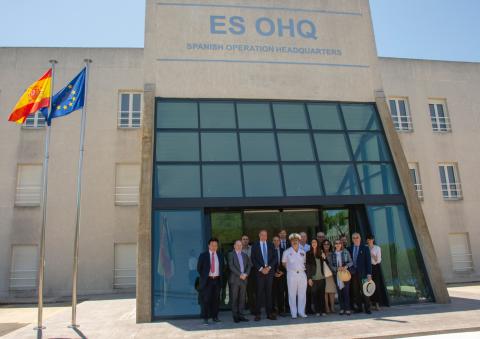
Lesser known to the public, however, was the fact that at the time of these attacks in April, Operation Atalanta was still in the midst of an important transition. Just three weeks before the attack—the first since October of last year—Operation Atalanta officially moved from its previous Operation Headquarters (OHQ) in Northwood, U.K., to its new OHQ in Rota, Spain. MSCHOA also moved from OHQ in Northwood to Brest, France, although it remains under command of OHQ in Rota. Additionally, the operation transferred command from Major General Charlie Stickland, UK Royal Marines, to Rear Admiral Antonio Martorell Lacave, Spanish Navy.

Lesser known to the public, however, was the fact that at the time of these attacks in April, Operation Atalanta was still in the midst of an important transition. Just three weeks before the attack—the first since October of last year—Operation Atalanta officially moved from its previous Operation Headquarters (OHQ) in Northwood, U.K., to its new OHQ in Rota, Spain. MSCHOA also moved from OHQ in Northwood to Brest, France, although it remains under command of OHQ in Rota. Additionally, the operation transferred command from Major General Charlie Stickland, UK Royal Marines, to Rear Admiral Antonio Martorell Lacave, Spanish Navy.

The handover and transfer of command was a careful process that lasted nearly a year in its entirety. After all arrangements for location, staffing and training were complete, the transitional phase also involved one month of parallel operational running between Northwood and Rota. However, one would never know it by the operational fluidity that the headquarters maintained throughout the process, and continues to demonstrate today. Highly skilled staff—some from the previous OHQ in Northwood, UK and some new to Operation Atalanta—maintained near perfect continuity throughout the transition.

Operation Atalanta Commander Rear Admiral Martorell Lacave says the manner in which Operation Atalanta handled this first piracy attack in its new OHQ is representative of the commitment and responsibility each branch of the operation feels to their duty.

“I am very confident in the capabilities of the staff in all branches of EU NAVFOR’s Operation and Force Headquarters,” he said. “As we have seen with this most recent incident, we continue to provide the same level and quality of operational outputs from Rota as were previously provided in Northwood.”

Source: eunavfor.eu
The European Community Shipowners’ Associations visits EU NAVFOR Somalia Operation Atalanta

Meeting reiterates: threat of piracy not eradicated off the Horn of Africa.

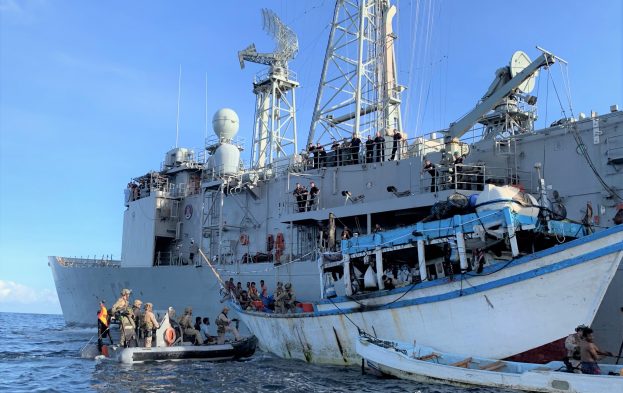
On 23 May, ECSA’s Maritime Security Working Group met with the EU NAVFOR Somalia Operation Atalanta at their operation headquarters in Rota, Spain.  

Representing the European shipping industry, the ECSA delegation met with the EU NAVFOR’s team to discuss the current state of piracy off the coast of Somalia. The delegation also visited the naval assets participating in Operation Atalanta. For the past ten years, EU NAVFOR has deterred and prevented acts of piracy and armed robbery off the coast of Somalia, protected vessels of the World Food Programme (WFP) and African Union Mission Somalia (AMISOM), and monitored acts of illegal fishing. 

While it is true that today the number of attacks is minimal, this is only a result of the industry’s implementation of Best Management Practices along with the combined action of different actors and organisations, notably the states in the region.

We know for a fact that pirate networks maintain the intent, the means and the capability to deploy and attack merchant vessels,” said R. Adm. Antonio Martorell Lacave. “It is up to us – military operations, coalitions and regional states – to uphold deterrence, operate in a flexible and agile manner and keep the seas safe.

Operation Atalanta has been a key element in the decrease of piracy attacks,” Flemming Dahl Jensen ECSA’s Maritime Security Working Group Chair mentioned. “We need to ensure there are sufficient resources allocated to guarantee its successful continuation.”

EU NAVFOR remains committed to deterring, preventing and suppressing piracy and emphasizes that the Maritime Industry must continue to adhere to BMP measures in order to maximize the safety of the ships and crews whilst transiting the high-risk area. 

The European shipowners expressed their support to EU NAVFOR Operation Atalanta and their close cooperation with other international actors. The shipping industry will continue to cooperate with the EU NAVFOR team to ensure that Somali-based piracy stays suppressed.

Source: ecsa.eu

Image via ECSA.

After pirate attack off Somalia, judge orders that 5 suspects are held in Seychelles

Only three out of the five Somali suspects appeared in court on Monday while the other two are receiving medical assistance. (Rassin Vannier)

By: Betymie Bonnelame and Rassin Vannier

(Seychelles News Agency) – Three out of five suspected pirates from Somalia who were transferred to Seychelles by EU NAVFOR last week were remanded until May 13 by the Supreme Court on Monday.  

The EU NAVFOR Somalia Operation Atalanta transferred the five suspects to Seychellois authorities after responding to piracy attacks on 21 April 2019, the local Department of Foreign Affairs said on Saturday.

The suspects were transported by Spanish flagship ESPS Navarra and transferred to Seychellois authorities in accordance with a transfer agreement between the Seychelles and the European Union with support from UN Office on Drugs and Crime (UNODC).

Only three out of the five Somali suspects appeared in court on Monday while the other two are receiving medical assistance after they were injured in the piracy attacks.

For humanitarian reasons, Operation Atalanta requested medical assistance from the Seychelles authorities for two of the suspects likely to have been wounded during the piracy attempts.

The case is being heard by Justice Laura Pillay, who remanded the suspects until May 13.

During the court session on Monday, a request was made for appropriate clothes for the detainees and a place for prayer as they are all Muslims.

According to the EU NAVFOR, the incident began on 19 April when five suspected pirates captured a Yemeni dhow off the coast of Somalia. Two days later the pirates attacked the Korean fishing vessel Adria with the dhow acting as a mothership in the Indian Ocean some 280 nautical miles off the coast of Somalia.

On April 23, the EU NAVFOR’s flagship ESPS NAVARRA successfully intercepted and boarded the captured dhow vessel and apprehended the five suspected pirates.

The forces said that this is the first notable piracy incident event since October of last year.

“This incident clearly demonstrates that piracy and armed robbery at sea, off the coast of Somalia, has not been eradicated,” said operation commander Rear Admiral Antonio Martorell.

He added that “the need for a strong maritime security presence in the High-Risk Area remains critical for the deterrence and prevention of future incidents and attacks.”

Source: seychellesnewsagency.com

Crew Of Pirates Captured By Spanish Soldiers

File image of an approach on a dhow

The crew of the frigate ‘Navarra’ has carried out the device in the framework of the Atalanta mission; the operation is still open.

Spanish soldiers of the Navarra frigate have intercepted a pirate vessel and captured the crew, which in the previous days had attacked two ships -one of them, Spanish-. The episode took place on the morning of this Tuesday in the waters of the Indian Ocean , in the framework of the Atalanta operation of the European Union to fight against piracy. The device has culminated with the release of a Yemeni fisherman who had been kidnapped for four days.

To continue reading, please click here.

Source: maritimeherald.com

Piracy attack off the coast of Somalia

File image of an approach on a dhow

On 21 April, fishing vessels FV Adria and FV Txori Argi were attacked by suspected pirates in the Indian Ocean, 280 NM off the coast of Somalia. The piracy attacks were thwarted, and the crew and vessels remained safe, thanks to the application of Best Management Practices (BMP) protection measures by the Masters, the crews and the private security teams embarked on both fishing vessels.

EU NAVFOR Somalia Operation Atalanta confirms these attacks. It is likely that the attacks were facilitated by a mothership, which was reportedly seized by armed men on 19 April off the central Somali Coast.

EU NAVFOR subsequently dispatched its Maritime Patrol and Reconnaissance Aircrafts to search the area. In addition, EU NAVFOR flagship ESPS Navarra left the port in Mombasa in order to proceed into the area.

On 23 April, ESPS NAVARA successfully intercepted and boarded the dhow being used as a mothership.

The operation is still ongoing, and more details will be provided upon completion.
EU NAVFOR remains committed to deterring, preventing and suppressing piracy and emphasizes that the Maritime Industry must adhere to BMP measures in order to maximize the safety of the ship and their crews whilst transiting the high-risk area.

Source: eunavfor.eu

The United Kingdom lowers the European flag on Northwood

Maritime Security News note: This article has been automatically translated into English by Google. As such, errors may remain.

(B2) The European Union flag will be lowered at Northwood HQ. The United Kingdom loses control of the EU’s anti-piracy operation, which it has been commanding since the beginning, a good decade ago in December 2008. At issue: Brexit.

It will be effective March 29, 2019. And there, there is no postponement. Everything has already been decided and endorsed for several months already. The command returning to the Spaniards, with the French in support. Which is just a return of things. Since without Paris and Madrid, this operation would never have seen the day (Read: France and Spain decided to act on maritime piracy).

To continue reading, please click here.

Source: bruxelles2.eu

Piracy High Risk Area Boundaries Reduced In Indian Ocean

The Round Table of international shipping associations plus the Oil Companies International Marine Forum (OCIMF) have issued new advice to merchant ship operators about the boundaries, while emphasising that a serious threat from piracy still exists in the region.

The High Risk Area reflects the area where the threat from piracy exists, whilst recognising the ongoing containment of pirate attacks in the Indian Ocean. The industry group which has redefined the boundaries includes BIMCO, the International Chamber of Shipping (ICS), INTERCARGO and INTERTANKO.

To continue reading, please click here.

Source: bunkerspot.com