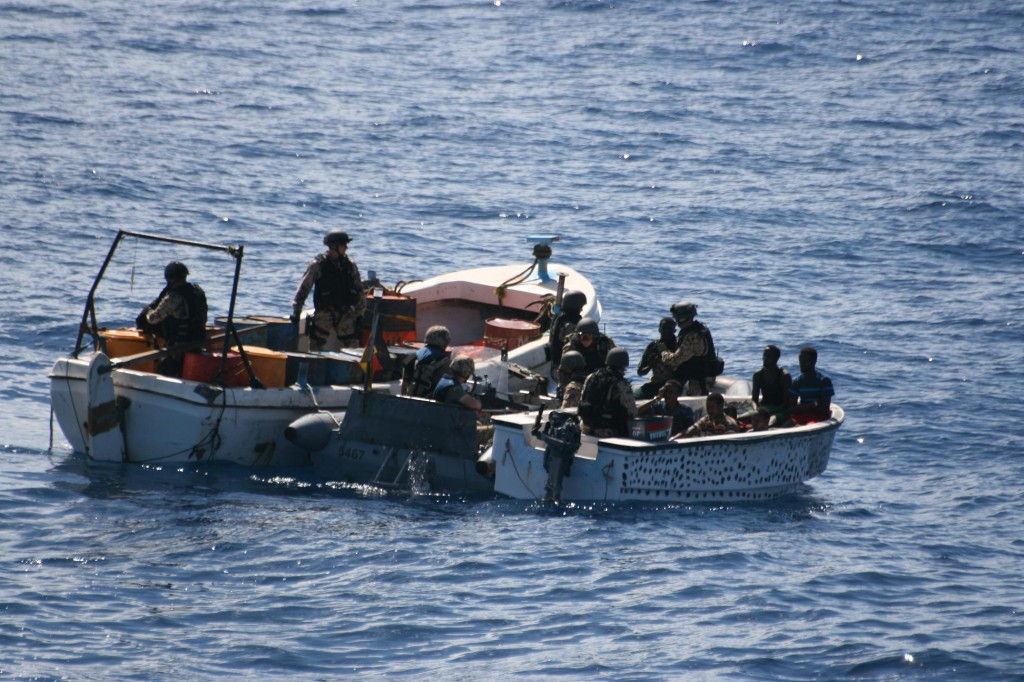
Maritime piracy incidents down in Q1 2019 but kidnapping risk in Gulf of Guinea persists

The International Chamber of Commerce International Maritime Bureau’s (IMB) report for the first quarter of 2019 reveals fewer incidents of piracy and armed robbery against ships than the first three months of 2018.

The IMB Piracy Reporting Centre, a 24-hour, free service offered by the IMB, enables shipmasters to report any incidents of piracy and armed robbery, globally against ships. Since 1991, the IMB Piracy Reporting Centre has provided the industry, government bodies and response agencies with timely data on the location of piracy and armed robbery incidents at sea.

Global trends

In the first quarter of 2019, IMB reported 38 incidents of piracy and armed robbery at sea, representing 28 fewer incidents than the first quarter of 2018 (66). IMB’s Piracy Reporting Centre detailed that 27 vessels were boarded, seven vessels were fired upon and four attempted attacks occurred in the first quarter of 2019. No vessels were reported as hijacked for the first time since the first quarter of 1994.

“These latest statistics from the IMB Piracy Reporting Centre are encouraging. However, first quarter statistics is too short a period on which to anticipate trends over the year.  It confirms the importance of information sharing and coordinated action between the industry and response agencies. Going forward, it is critical to continue to build more effective reporting structures to enable a strong, unified response when dealing with piracy incidents,” said IMB Director Pottengal Mukundan.

High risk in Gulf of Guinea

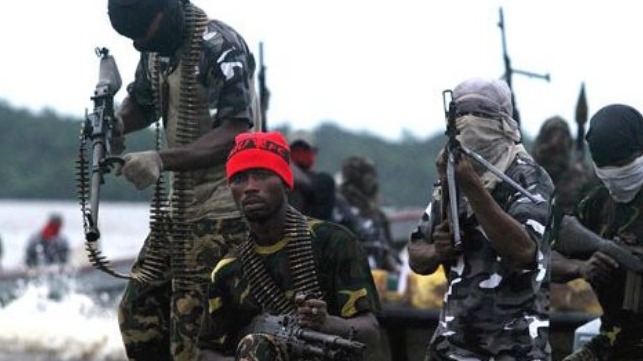
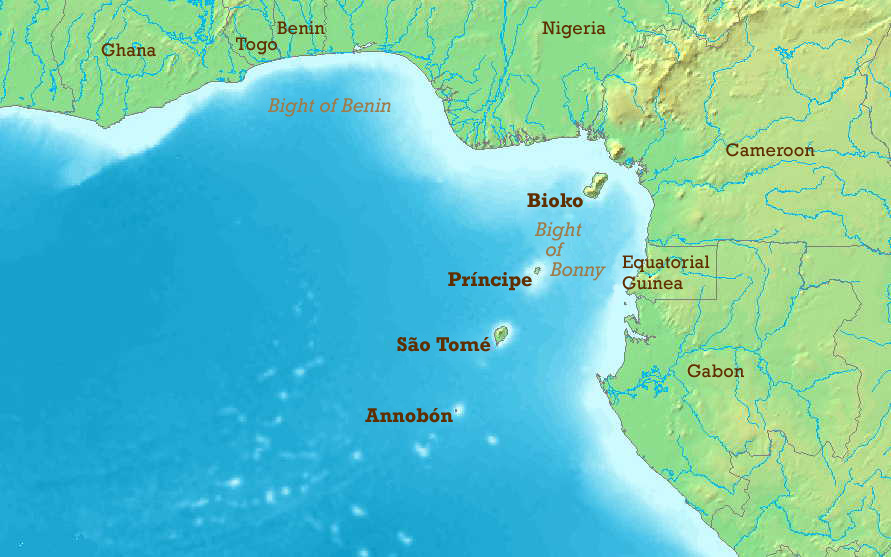
The Gulf of Guinea represented a high number of piracy and armed robbery attacks at sea, with 22 incidents reported in the first quarter of 2019. The region also accounted for all of the worldwide crew kidnappings as 21 crew members were kidnapped across five separate incidents. Incidents were reported in the coastal countries, of Benin, Cameroon, Ghana, Ivory Coast, Liberia, Nigeria and Togo in the first quarter of 2019.

Gains in Nigeria, but caution urged

Nigeria has been a hotspot for piracy incidents over the past decade. However, in the first quarter of 2019, Nigeria experienced a decrease in reported piracy incidents. Nigeria reported 14 incidents of piracy for Q1 2019, in comparison to 22 incidents in Q1 2018. These results confirm the Nigerian Navy’s increased efforts to “actively respond to reported incidents by dispatching patrol boats,” the report notes. Despite these efforts, Nigerian waters remain risky for vessels, especially the port of Lagos where four incidents have been reported.

Improvements in Asia

In Asia, Indonesia witnessed a decrease in piracy activities for the first quarter of 2019. There were only three incidents reported against anchored vessels in ports in Indonesia – the fewest reported incidents since 2010 – according to the report. As with Nigeria, increased cooperation and information sharing between the Indonesian Marine Police and IMB Piracy Reporting Centre has enabled regular patrols in high-risk areas.

Data sharing remains critical

The declining rate of piracy incidents worldwide in the first quarter of 2019 reinforces the importance of transparency, communication and coordination, between vessels and coastal authorities. By reporting all incidents to the IMB Piracy Reporting Centre and  coastal authorities the response can be better organised improving  incident response times and prompt advice to vessels aimed at a more optimal use of  resources.  National governments and coastal authorities can use this data to collaborate and strengthen their piracy prevention efforts.

Source: iccwbo.org

Shipowner Decries High Insecurity At Warri, Bonny Anchorages

By Chris

President of the Nigeria Shipowners Association (NISA), Aminu Umar has raised the alarm over high rate of insecurity at the Warri and Bonny anchorage.

In an interview with journalists in Lagos, recently, Umar said the Warri anchorage has spike insurance premium for shipowners describing it as a very tough one.  He pointed out that the Lagos anchorage is the only one anyone can sincerely lay a reasonable claim of safety or security.

To continue reading, please click here.

Source: leadership.ng

Oil theft: JTF, surveillance contractors intensify crackdown, seize vessels

By Samuel Oyadongha

RESIDENTS of Bayelsa State coastal communities have lauded the collaboration between the Joint Task Force, JTF, deployed to the Niger Delta and surveillance contractors for tackling oil theft.

This came on the heels of a  joint operation by troops of the JTF  in the region and a local surveillance group which resulted in the seizure of a tugboat and a barge laden with over 200,000 litres of suspected stolen crude off the Atlantic coast of Akassa.

To continue reading, please click here.

Source: vanguardngr.com

Adding depth to maritime defense

There was a time when a country’s maritime strategy consisted of its navy or coast guard protecting its waters, defending citizens from enemies and pirates, and going after people fishing illegally.

That’s a shallow view of maritime security in the 21st century. Groups such as the United Nations and the African Union say that a modern-day maritime strategy must protect assets, ensure sustainable economic growth, guard the environment, manage energy use, and build the ability to work with neighboring countries and regions.

To continue reading, please click here.

Source: defenceweb.co.za

Nigerian Navy detains ship for ‘suspicious movement’

By Godspower Edoza

The Nigerian Navy Ship (NNS) Pathfinder on Tuesday said its operatives arrested a motor tanker, MT Arowolo, over the vessel’s alleged ‘suspicious movement’ around Onne Anchorage in Eleme Local Government Area of Rivers State.

The navy said the anchorage was known in security circles as a notorious zone for illegal activities by oil thieves.

To continue reading, please click here.

Source: shipsandports.com.ng

“JTF Operations Increases Oil Production Output To 2m Barrel Per Day”

By OSA OKHOMINA YENAGOA

Authorities of the Joint Task Force (JTF) code named Operation Delta Safe, a special security outfit, fighting criminalities in the Niger Delta region, weekend disclosed that some of its operations led to a huge increase of daily oil production from 900bpd to over two million currently being explored in the region.

The Commander of the JTF, Operation Delta Safe (OPDS), Rear Admiral Suleiman Apochi, who made this at the weekend in Yenagoa while receiving an award of excellence from the Northern Youth Council of Nigeria (NYCN), inoted that when he took over more than two years ago, militancy and vandalism had cut oil production by about a third.

To continue reading, please click here.

Source: leadership.ng

Seafarers not involved in piracy attacks — Union

By Godfrey Bivbere & Cynthia Alo T

The  Nigeria Merchant Navy Officers and Water Transport Senior Staff Association, NMNOWTSSA,  has denied reports linking piracy attacks on the nation’s waterways to seafarers.

The Union explained that the report that was recently carried in some sections of the media is a mere move by unscrupulous individuals to tarnish the image of seafarers noting that no qualified seafarer will be involved in such illegal act.

To continue reading, please click here.

Source: vanguardngr.com

Only nine of 33 security points on Lagos waterways manned — Navy

By Godfrey Bivbere

There are indications that the Nigerian Navy may have been over-stretched in securing the waterways in the Lagos area as only nine out of 33 security points presently along the water area are manned.

Giving this indication at the meeting organised by the Nigerian Chamber of Shipping, NCS, in Lagos, the Command Operation Officer of the Western Naval Command, Capt. M. M. Braimoh said that apart from this, they have arrested 33 offending vessels in the last six months, but two of them have sunk.

To continue reading, please click here.

Source: vanguardngr.com

Security At Nigerian Ports Improves Tremendously — NIMASA DG

By Sunday Bassey

Uyo, – The Nigerian Maritime Administration and Safety Agency (NIMASA) said on Tuesday that it had improved security tremendously within the country’s maritime space .

The Director General of the agency, Mr Dakuku Peterside, who made this known in an interactive session with newsmen in Uyo, noted that the security of vessels at the ports had improved from 12 per cent to 80 per cent.

To continue reading, please click here.

Source: sundiatapost.com

Nigeria: Govt – Deep Blue Project Will End Criminalities in Our Waters

The Minister of Transportation, Rotimi Chibuike Amaechi, has reiterated the federal government’s determination to rid the Nigerian territorial waters of criminalities through the Integrated Security and Waterways Protection Infrastructure, otherwise known as the Deep Blue Project.

Amaechi disclosed this in Lagos during the graduation ceremony for participants of the C4I Intelligence System Operator Course for the Deep Blue Project.

To continue reading, please click here.

Source: allafrica.com