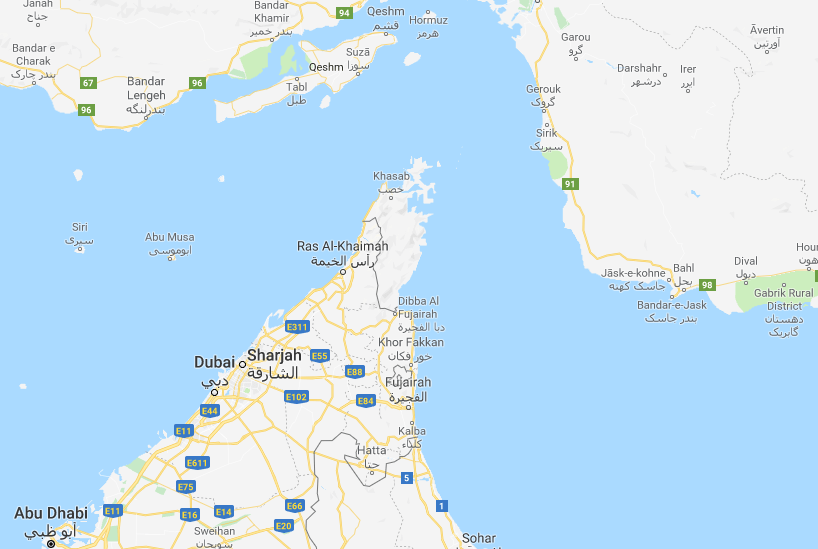
2020-001B-Persian Gulf, Strait of Hormuz, Gulf of Oman, Arabian Sea, Red Sea, Gulf of Aden, and Indian Ocean-Threat to Commercial Vessels from Iran and its Proxies

Persian Gulf/SoH
Description:

Multiple maritime threats have been reported in the vicinity of the geographic areas described above. On January 2, 2020, the U.S. military took decisive defensive action to protect U.S. personnel abroad. The Iranian response to this action, if any, is unknown, but there remains the possibility of Iranian action against U.S. maritime interests in the region.

The U.S. government is continually assessing the maritime security situation in the region to safeguard freedom of navigation, ensure the free flow of commerce, and protect U.S. vessels, personnel, and interests. U.S. Fifth Fleet Naval Cooperation and Guidance for Shipping (NCAGS) has the latest information on the dynamic maritime security threats and operational environment in this region. U.S. commercial vessels are advised to exercise caution and coordinate vessel voyage planning for transits of the Persian Gulf, Strait of Hormuz, Gulf of Oman, North Arabian Sea, Gulf of Aden, and Red Sea with NCAGS and follow NCAGS’s recommendations and guidance whenever possible.

U.S. commercial vessels operating in this area should review U.S. Maritime Advisory 2019-012, which contains contact information for U.S. Fifth Fleet NCAGS. This Alert will automatically expire on January 13, 2020. For more information about U.S. Maritime Alerts and Advisories, including subscription details, please visit http://www.marad.dot.gov/MSCI.

Source: maritime.dot.gov

2019-013-Eastern/Central Mediterranean Sea and Suez Canal-GPS Interference

 This revised Advisory cancels U.S. Maritime Advisory 2019-005

1. Reference: U.S. Maritime Alerts 2018-004A, 2018-004B, 2018-008A.

2. Issue: Multiple instances of significant GPS interference have been reported by vessels operating in the Eastern and Central Mediterranean Sea. In the Central Mediterranean Sea, these reports have been concentrated between Libya and Malta, specifically in areas offshore of Libya and to the east and the northwest of Malta. In the Eastern Mediterranean, these reports have been concentrated near Port Said, Egypt, the Suez Canal, and in the vicinity of the Republic of Cyprus. Instances of similar interference were also reported between Hadera, Israel and Beirut, Lebanon. This interference is resulting in lost GPS signals affecting bridge navigation, GPS-based timing and communications equipment. Satellite communications equipment may also be impacted.

3. Guidance: Exercise caution when transiting these areas. The U.S. Coast Guard Navigation Center (NAVCEN) and NATO Shipping Center websites contain information regarding effective navigation practices for vessels experiencing GPS interference. The information reaffirms safe navigation practices when experiencing GPS disruptions, provides useful details on reporting disruptions, and is intended to generate further discussion within the maritime community about other disruption mitigation practices and procedures. This guidance also recommends reporting such incidents in real time; noting critical information such as the location (latitude/longitude), date, time, and duration of the outage/disruption; and providing photographs or screen shots of equipment failures experienced to facilitate analysis. The NAVCEN information is available at: https://go.usa.gov/xQBaU.

4. Contact Information: GPS disruptions or anomalies should be reported immediately to the NAVCEN at https://go.usa.gov/xQBaw or via phone at 703-313-5900, 24-hours a day. NAVCEN will further disseminate reported instances of GPS interference in this region to the NATO Shipping Center.

5. Cancellation: This message will automatically expire on March 22, 2020.

For more information about U.S. Maritime Alerts and Advisories, including subscription details, please visit http://www.marad.dot.gov/MSCI.

Source: maritime.dot.gov