S. Korea to send troops to Hormuz Strait independently to safeguard people, vessels

Persian Gulf/SoH

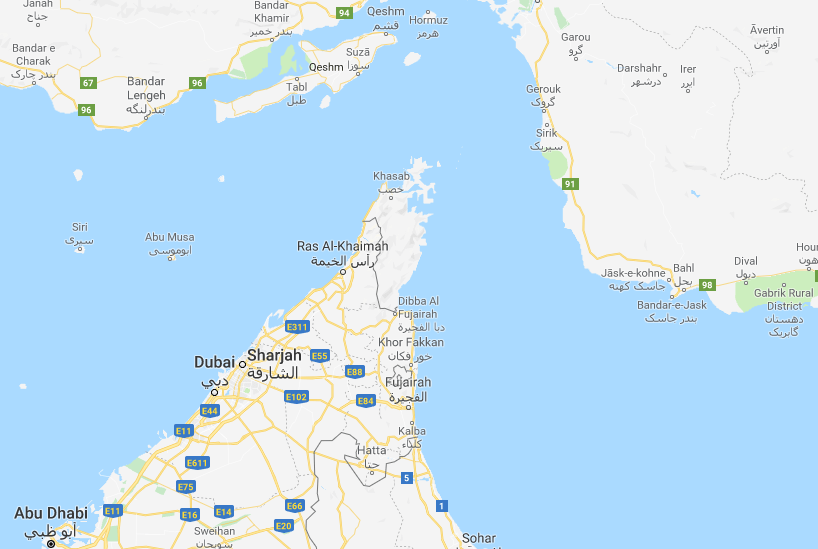
SEOUL, Jan. 21 (Yonhap) — South Korea will dispatch troops to the Strait of Hormuz by expanding operational areas of its anti-piracy unit deployed nearby to help protect its vessels passing through the strategic waterway, the defense ministry announced Tuesday.

The forces, however, will not join a U.S.-led coalition, but conduct independent operations, the ministry noted, apparently in consideration of relations with Tehran and Washington’s request for contribution to its campaign to secure the waters off Iran.

To continue reading, please click here.

Source: en.yna.co.kr

Eight Countries Back European-Led Naval Mission In Strait Of Hormuz

Eight European Union member states have given their support for a European-led maritime surveillance mission in the Strait of Hormuz, a strategic route for world oil supplies.

Belgium, Denmark, France, Germany, Greece, Italy, the Netherlands, and Portugal backed the new force, they said in a “political statement” issued by France’s Foreign Ministry on January 20.

To continue reading, please click here.

Source: rferl.org

Iran seizes 3 trespassing Kuwaiti fishing boats, arrests crew

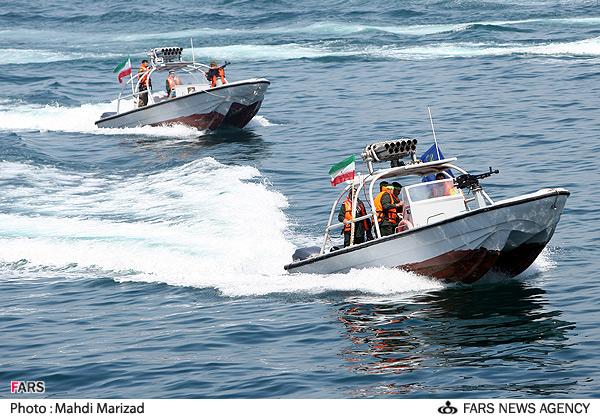
The Islamic Revolution Guard Crops Navy announced that its forces have seized three trespassing Kuwaiti fishing boats off the coast of Mahshahr, Khuzestan province.

According to Captain Alireza Ahmadi, the commander of IRGC’s Imam Hassan fleet, the boats had illegally entered Iran’s territorial waters.

To continue reading, please click here.

Source: en.mehrnews.com

Gulf of Oman attacks prompt rise in armed guard requests

The Financial Times reports that the recent incidents in the Gulf of Oman have seen a rise in calls to maritime security companies by concerned shipping firms.

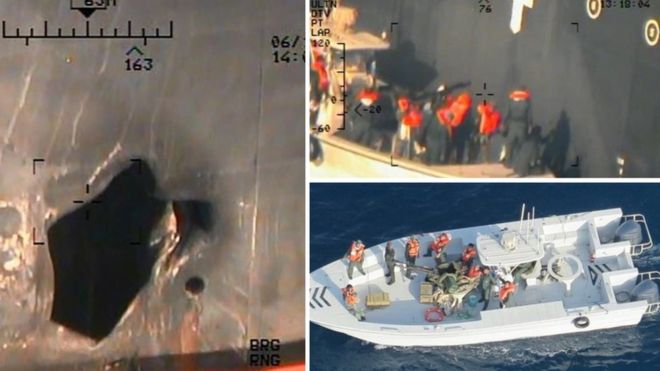
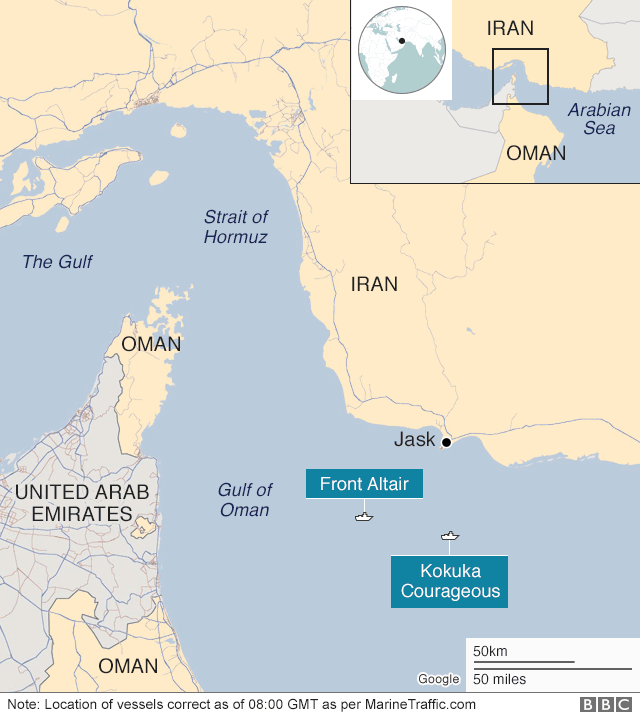
Since the attacks on the Front Altair and Kokuka Courageous, shipping companies who transit the region on a regular basis have been looking into additional protection for their vessels. During the height of Somali piracy in the region, it was the norm for the merchant marine to employ teams of armed guards in order to deter any potential attack, and it worked. No merchant vessel with armed guards has ever been hijacked in the Indian Ocean. That, combined with more aggressive and visible patrolling by the international naval forces present in the region, has seen the issue of piracy off Somalia reduce considerably since 2012.

The current threat, believed to be from Iran’s IRGC – an accusation denied by Iran – is leading to an increase in demand for armed protection services, a sector which has suffered considerably from rate cuts and an influx of cheaper personnel in recent years.

The main UK Private Maritime Security Companies (PMSC), such as Ambrey Risk and MAST report an increase in demand from previous and prospective clients keen to ensure the safety of their ships in the region.

While a team of armed guards is no match for the IRGC, even an unarmed security detail can offer additional security. Well trained guards on Watch duties can spot threats that crew might miss or dismiss as the local pattern of life and, while engaging hostile state actors is unlikely, they can offer the Master an early warning system that he may lack.

With the situation in the region fluid, it’s possible that a convoy escort programme, similar to that used in the Internationally Recognised Transit Corridor (IRTC) in the Gulf of Aden may be adopted, with support from the US Navy. Russia, China, South Korea and Japan’s MSDF have all run escorts through the Gulf of Aden, and a multi-national force may be more palatable to states bordering Iran.

However, nothing has been officially announced, leaving the shipping industry scrambling to come up with its own solutions, as is so often the case. The threat posed to vessels in the region continues to be real and the situation dangerous for crews.

Gulf crisis: US confirms drone was shot down by Iranian missile

A US military surveillance drone has been shot down by Iranian forces while flying over the Strait of Hormuz.

Iran’s Islamic Revolution Guards Corps (IRGC) said the drone had violated Iranian airspace. But US military said it had been over international waters.

IRGC commander-in-chief Maj-Gen Hossein Salami said the downing of the drone sent a “clear message to America” that Iran’s borders were its “red line”.

It comes at a time of escalating tension between the US and Iran.

On Monday, the US defence department said it was deploying 1,000 extra troops to the region in response to “hostile behaviour” by Iranian forces.

The US has also accused Iran of attacking two oil tankers with mines last Thursday just outside the Strait of Hormuz, in the Gulf of Oman. Iran rejects the allegation.

It was the second time in a month tankers have been attacked close in the region, through which a fifth of the world’s oil passes each day.

Tensions were further fuelled on Monday when Iran announced its stockpile of low-enriched uranium would next week exceed limits it agreed with world powers under a landmark nuclear deal in 2015.

Iran stepped up its production in response to tightening economic sanctions from the US, which unilaterally withdrew from the deal last year.

What happened on Thursday?

The IRGC said its air force shot down the US drone in the early hours of Thursday after the unmanned aircraft violated Iranian airspace near Kuhmobarak in the southern province of Hormozgan.

The drone was identified by the IRGC as a RQ-4 Global Hawk, but the US military official told Reuters news agency the drone was a US Navy MQ-4C Triton, a maritime patrol and reconnaissance aircraft based on the RQ-4B Global Hawk.

Later, in a speech carried live on Iranian state TV, Gen Salami warned the US that it needed to respect Iran’s territorial integrity and national security.

“The downing of the American drone was a clear message to America… our borders are our red line and we will react strongly against any aggression.”

He added: “Iran is not seeking war with any country, but we are fully prepared to defend Iran.”

Is this the first time Iran has targeted a US drone?

Last week, the US military accused Iran of attempting to shoot down a US MQ-9 Reaper armed drone with a surface-to-air missile in an attempt to disrupt surveillance of one of the tankers that was attacked, the Kokuka Courageous.

The drone had earlier observed a fire on board the other tanker, the Front Altair.

The previous week, another US MQ-9 Reaper was shot down over Yemen by a surface-to-air missile fired by the Iran-backed rebel Houthi movement.

The US military said the altitude of the engagement “indicated an improvement over previous Houthi capability, which we assess was enabled by Iranian assistance”. Iran denies providing weapons to the Houthis.

In 2011, Iran said it had captured a US RQ-170 Sentinel reconnaissance drone that had been reported lost by US forces in neighbouring Afghanistan. It developed its own version of the drone, one of which was shot down by Israel last year.

Source: bbc.co.uk