UAE takes over the chair of IORA

Ismail Sebugwaawo

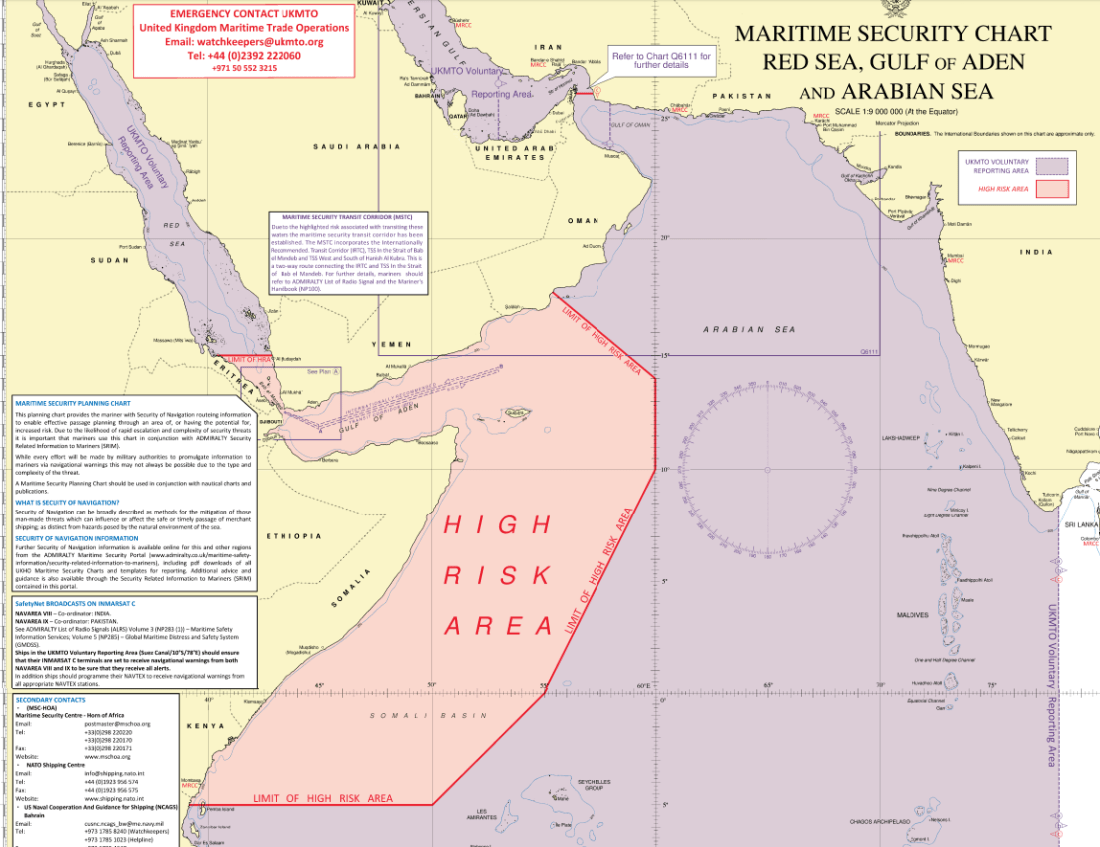
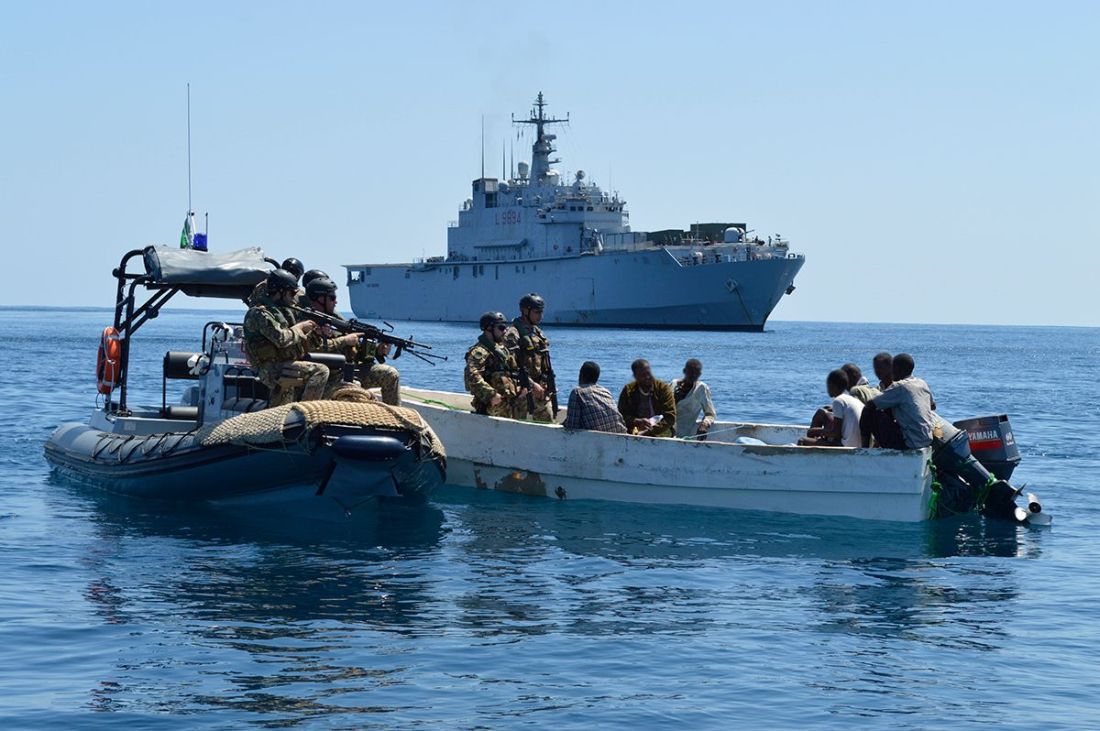
Piracy, armed robbery, drug smuggling and human trafficking are some of the major challenges faced in the Indian Ocean waters, according to members of the Indian Ocean Rim Association (IORA).

Speaking at a Press conference on the sidelines of the 19th meeting of the Council of Ministers of the Indian Ocean Rim Association (IORA) that concluded in Abu Dhabi on Thursday, Khurshed Alam, secretary of the Bangladesh Ministry of Foreign Affairs and deputy secretary-general of the IORA, said almost 40,000 ships are passing through the waters of Indian Ocean daily.

To continue reading, please click here.

Source: khaleejtimes.com


Iranian Naval Flotilla Begins Overseas Mission

Iranian Navy ships in Velayat-90 military exercise, by Mohammad Sadegh Heydari via Wikipedia

TEHRAN (Tasnim) – The Iranian Navy’s 64th flotilla departed the country’s southern coast on Tuesday for a mission in international waters.

The Iranian “intelligence-combat” flotilla includes a destroyer, dubbed Alvand, and the Bandar Abbas logistical warship.

The flotilla set sail for the high seas immediately after the return of the 63rd naval flotilla, which traveled 15,000 nautical miles in international waters during a 100-day mission.

To continue reading, please click here.

Source: tasnimnews.com


EU-funded exercise to boost maritime security cooperation

Through the MASE programme funded by the European Union, the Indian Ocean Commission organised the first MASE POLMAR 2019 wide-ranging regional exercise from 16 to 20 October in Madagascar.

The event brought together representatives of the MASE agreements’ signatories countries: Comoros, Djibouti, France, Reunion Island, Madagascar, Mauritius, Seychelles and Somalia as an observer, International liaison officers and watch-standers from the Regional Maritime Information Fusion Centre and the Regional Coordination of Operation Centre, as well as a representative of the European Navy – EUNAVFOR.

To continue reading, please click here.

Source: neweurope.eu

Japan notifies US of plan to send defence forces to Middle East

Persian Gulf/SoH

TOKYO — Japanese Foreign Minister Toshimitsu Motegi on Tuesday informed the United States’ government that Tokyo plans to send defence forces to help safeguard waterways in the Middle East without joining a US-led maritime security coalition, Japanese officials said.

During phone talks between Motegi and US Secretary of State Mike Pompeo, the two also pledged close co-operation on Middle East issues so as to ease tensions, which remain high amid a standoff between the US and Iran.

To continue reading, please click here.

Source: vietnamnews.vn


RAAF deploys P-8A Poseidon to Middle East for maritime security

File image of US Navy P-8A Poseidon

The Royal Australian Air Force (RAAF) has deployed a P-8A Poseidon aircraft to the Middle East in support of a US-led internal maritime security coalition.

Australia is a member of the International Maritime Security Construct (IMSC), which includes the US, Saudi Arabia, Bahrain and the UK.

To continue reading, please click here.

Source: airforce-technology.com

Iran Says US, Saudi, Israel behind ‘Cowardly’ Tanker Attack

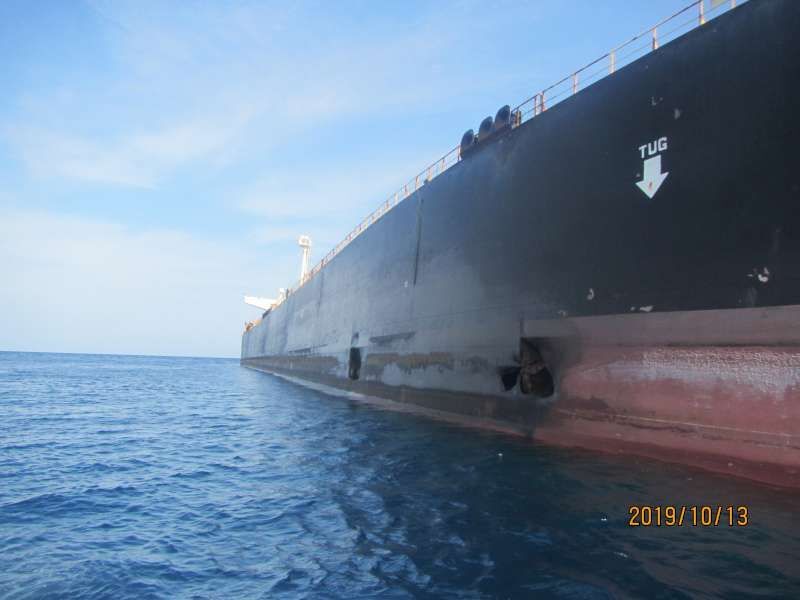
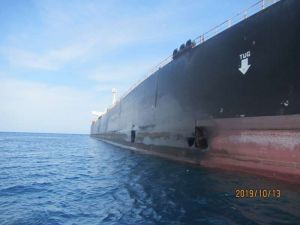
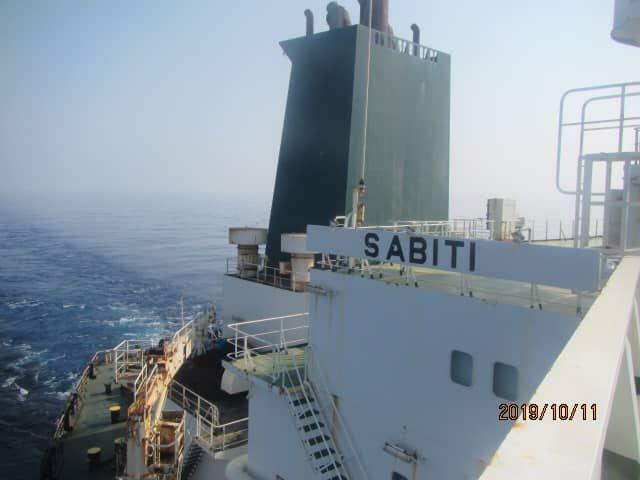
Damage seen on MT Sabiti, images via Iranian Oil Ministry

Iran says Israel, the US, and Saudi Arabia might be behind the recent “cowardly” attack on its oil tanker in the Red Sea, to which Iran will definitely give a crushing response.

Ali Shamkhani, the secretary of Iran’s Supreme National Security Council, said on Wednesday video evidence had provided leads about the incident. “A special committee has been set up to investigate the attack on Sabiti… with two missiles and its report will soon be submitted to the authorities for decision,” Shamkhani noted.

To continue reading, please click here.

Source: ifpnews.com

Zarif: Attack on Iranian oil tanker was state-sponsored

Damage seen on MT Sabiti, images via Iranian Oil Ministry

EHRAN – Iranian Foreign Minister Mohammad Javad Zarif announced on Tuesday that “one or more countries” had directed or facilitated the Friday morning attack on the Iranian SABITI oil tanker off the Saudi coast in the Red Sea.

Zarif also said the raid on SABITI was a “state-sponsored act”. He added, “According to received intelligence the Friday assault on the Iranian oil tanker was a complicated move done by one or more states.”

To continue reading, please click here.

Source: tehrantimes.com

Iran releases images of damaged tanker

Following Friday’s (12th) reported attack on the Iranian oil tanker, MT Sabiti, the Iranian Oil Ministry has finally released images showing the damage to the vessel. The incident on Friday reportedly took place around 60 miles off Jeddah, Saudi Arabia, in the Red Sea as the ship reportedly transited towards Suez. The Iranian National Oil Company (NOIC) initially suggested that the ship had been struck by two missiles.

Iran accused Saudi Arabia of attacking the vessel, something which Saudi Arabia naturally denied.

The images released appear to show three holes above the water line. The impact caused a small oil spill which has now been sealed, according to Iranian sources. The US Navy stated on Friday that it was aware of the reports but had nothing further to add.

The incident remains extremely curious. Reports have also suggested that the Iranian ‘spy ship’ MV Saviz was seen close by the Sabiti following the incident. The vessel’s AIS appears to have been disabled shortly afterwards. According to Maritime Bulletin:

SAVIZ as of now, is full of arms and military equipment, plus her own 4 50-mm guns, surveillance equipment, special forces team and 3 RHIBs.

While it’s very easy to speculate as to who could have perpetrated such an attack and the motivation behind it, logic dictates that we await further information. Iran has announced an investigation into the incident, which may take some time to complete and is unlikely to involve independent inspectors.

Damage seen on MT Sabiti, images via Iranian Oil Ministry

‘Explosion’ on Iranian oil tanker off Saudi coast – reports

An explosion has caused a fire on an Iranian tanker near the coast of Saudi Arabia, Iranian media say.

The vessel, from Iran’s national oil company (NOIC), was 60 miles (97km) from the Saudi port city of Jeddah when the incident took place, reports said.

The ship’s two main storage tanks were said to be damaged, causing an oil spill into the Red Sea, but no-one was injured.

NOIC claimed the vessel was hit by missiles, but did not provide evidence.

Iran’s national tanker company (NITC) said the fire had been put out and the oil spillage reduced to a minimum, according to the news site Iran Front Page.

Iranian state TV identified the ship as the oil tanker Sinopa. The maritime vessel tracking firm Tanker Trackers said the tanker was regularly used to ferry oil to the Syrian government, despite international sanctions.

The incident came amid heightened tension between Iran and Saudi Arabia.

Last month, 18 drones and seven cruise missiles hit a major oil field and processing facility in Saudi Arabia, which blamed Iran for the attack.

And US officials said Iran was responsible for attacks on two oil tankers in the Gulf in June and July, as well as attacks on another four tankers in May.

Iran denied involvement in all the incidents.

Source: bbc.co.uk

The ‘Sabiti’ oil tanker after the attack, on Oct. 11th Source: National Iranian Tanker Co.

Royal Navy guardians protect 7m tonnes of shipping in Gulf

Over seven million tonnes of British shipping – the equivalent of around 20 wartime convoys – have been guided safely through the Strait of Hormuz by the Royal Navy.

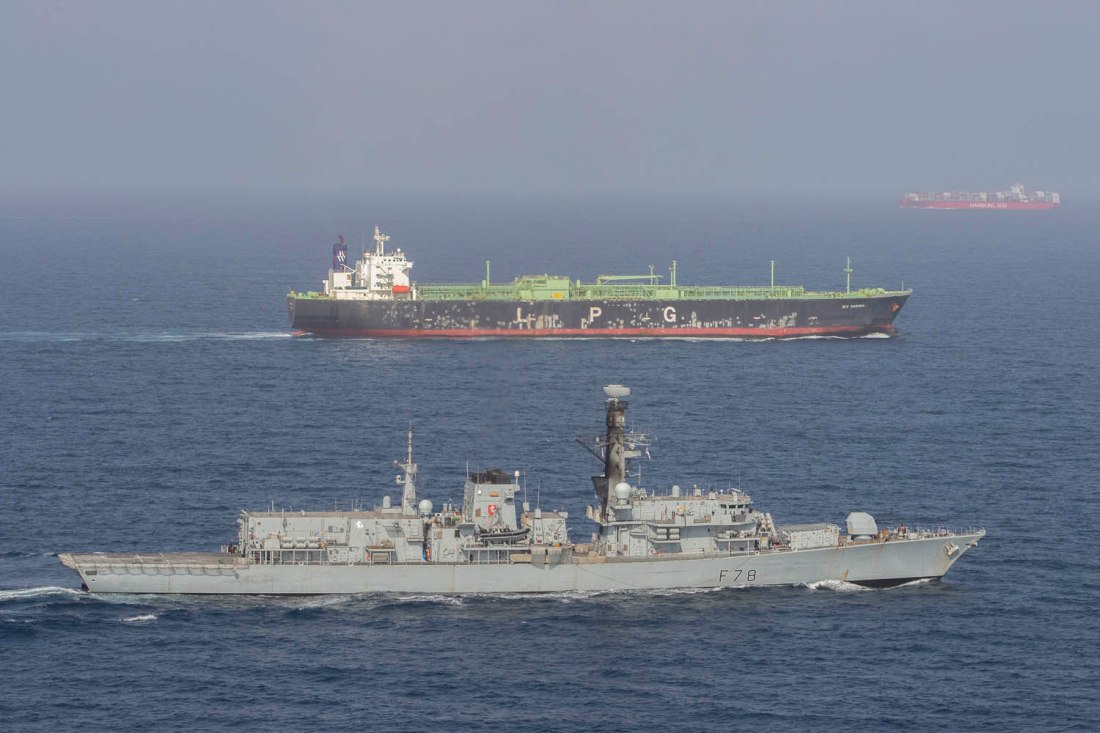
HMS Montrose, her sister frigate HMS Kent and destroyers HM Ships Duncan and Defender – have accompanied British flagged and registered merchant ships in and out of the Gulf amid tensions with Iran.

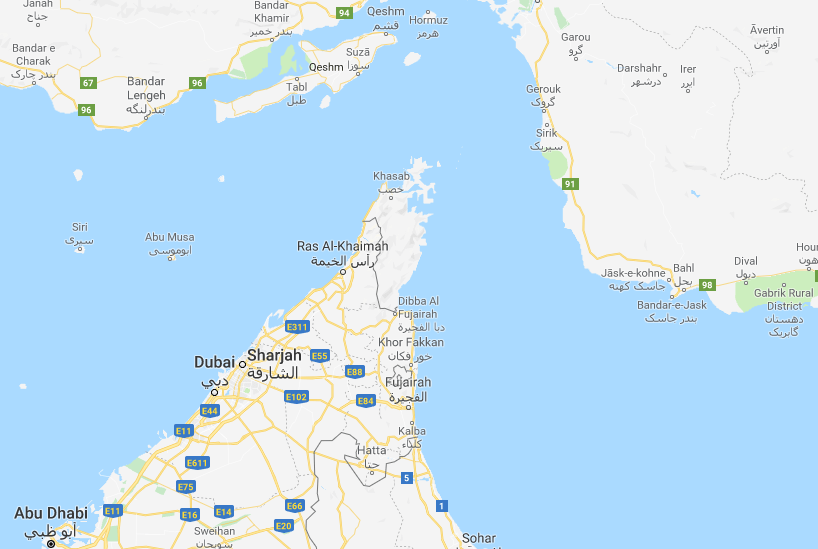
Grateful seafarers have labelled the Royal Navy vessels ‘guardians of the Gulf’ for their efforts providing protection in the narrow waters separating Iran on the north shore and Oman and the UAE since the beginning of July.

The warships, plus their helicopters, have been used to accompany and watch over merchant shipping to ensure they can pass into and out of the Gulf safely, keeping international trade – especially oil and natural gas – flowing in the face of threats.

Most recently HMS Kent has borne the burden of patrols, spending three weeks in the strait, providing safe passage for in excess of 800,000 tonnes of shipping.

“We are a close-knit team and I am extremely proud of what my sailors have achieved over the last few months,” said Commander Andrew Brown, HMS Kent’s Commanding Officer.

The ship uses her Wildcat helicopter to scour hundreds of square miles of the Gulf for any signs of danger – merchant shipping needs accompanying through an area twice the size of Wales.

“Controlling our helicopter in such a busy area of the world can at times be extremely stressful,” said Leading Aircraft Controller Lewis Jackson. “The constant training we receive enables us to do our job in a calm and safe manner and at an extremely professional level.”

Beyond the physical and mental challenges of the escort mission, the 200-plus sailors and Royal Marines aboard the warships are still contending with demanding temperatures – in the high 30s Celsius by day – even at the end of September.

HMS Duncan, which returned to Portsmouth at the weekend, made 29 runs through the Strait, watching over 1,287,209 tonnes of merchant shipping.

Commander Tom Trent said his ship’s company found the mission challenging but also “very rewarding. We had emails from the ships we helped thanking us for getting them through safely.

“Protecting shipping is what the Royal Navy has done for hundreds of years. The whole operation is a reminder of how critical the Royal Navy is.”

Operations in the Strait of Hormuz to protect British shipping continues on a daily basis.

Source: royalnavy.mod.uk