A presentation by the Ministerial Maritime Security in Eastern and Southern Africa and Indian Ocean (ESA-OI) took place at the Prime Minister’s Office (PMO) on Tuesday 11 June. The meeting was attended by Minister Mentor Sir Anerood Jugnauth and Minister of Foreign Affairs Nando Bodha.
“The Indian Ocean has become a hub of drug trafficking,” said the minister’s mentor. He explained that “we must take steps to counter this problem.”
Indian leader Narendra Modi on Saturday inaugurated a coastal radar system and military training center in the Maldives on Saturday, as New Delhi seeks to fend off Chinese influence in the strategically-placed nation
The Maldives, a low-lying archipelago of more than a thousand tiny coral islands south of the Indian subcontinent, straddles the world’s busiest east-west maritime route.
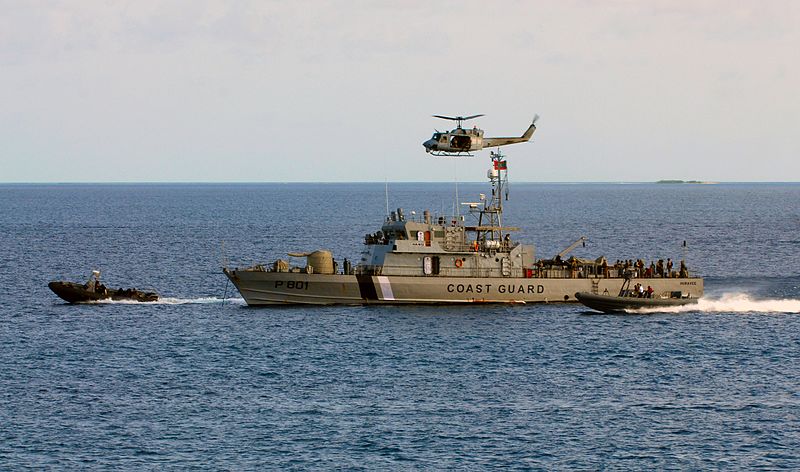
A Maldivian coast guard ship Hurawee (801) (formerly Indian Navy Ship Tillanchang T62) serves as a non-compliant vessel during an exercise for a visit, board, search and seizure team assigned to the amphibious transport dock ship USS Dubuque (LPD 8). Dubuque is participating in Operation Bungalow Breeze with the Maldives National Defense Forces. (U.S. Navy photo by Mass Communication Specialist 1st Class David McKee/Released)
The French Government has commended Kenya for establishing a Coast Guard Unit to police its vast Coastal maritime waters.
President Uhuru Kenyatta late last year unveiled the Kenya Coast Guard Service (KCGS) and launched into service its first offshore patrol boat christened Doria in Mombasa.
For the past few weeks, Kenya’s diplomatic relations with the Federal Republic of Somalia has steadily been getting worse, thanks to the ongoing maritime row pitting oil wells along the Indian Ocean.
Amid the row, it is apparent that Kenya could be staring at fresh security threats from terrorist groups as Al-Shabaab, and to some extent, the ISIS who might be watching from a distance, hoping that Kenya gets into a war with Somalia.
The United Arab Emirates has told the UN Security Council a “state actor” was most likely behind attacks on four tankers off its coast.
The 12 May attacks bore the hallmarks of a “sophisticated and co-ordinated operation”, according to its report.
The UAE did not say who it thought was behind the attacks, which also targeted vessels from Saudi Arabia and Norway.
The US has accused Iran of being behind the attacks but Tehran denies this and has called for an investigation.
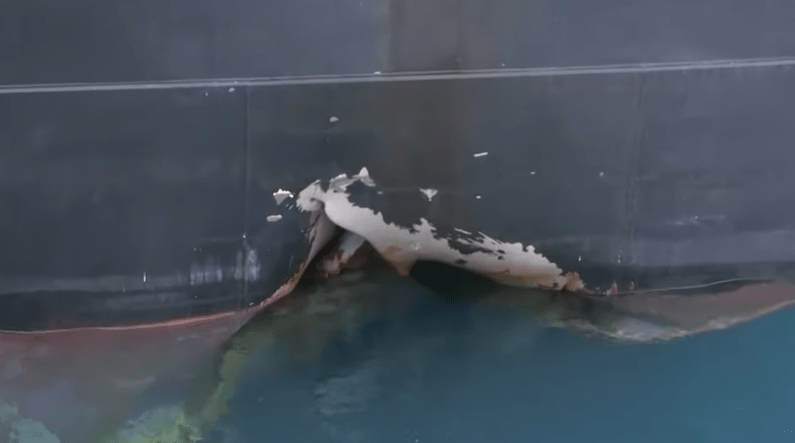
The attacks took place within UAE territorial waters east of the emirate of Fujairah, just outside the strategically vital Strait of Hormuz, in what the UAE called a “sabotage attack”.
They exacerbated long-standing tensions between Iran, and the US and its allies in the Gulf.
What does the report say happened?
According to the UAE-led investigation, which was presented to a closed session of the UN Security Council in New York, the attacks showed a “high degree of sophistication”.
“The attacks required the expert navigation of fast boats” which “were able to intrude into UAE territorial waters”, the report’s preliminary findings say.
Divers were used to attack the ships using limpet mines in order to cause damage but not cause a major explosion, the presentation says.
There were no casualties but Saudi Arabia has said two of its ships suffered “significant” damage. Another tanker was Norwegian-registered, while the fourth was UAE-flagged.
Why is Iran being accused?
The attacks happened at a time of escalating tension between the US and Iran, long-time foes.
They took place days after the US sent warships and bombers to the region in response to what it said was an unspecified plan by Iran to attack US forces in the area.
While it is unclear why Iran would carry out a relatively low-level attack on the multinational tankers, observers have speculated that it could have been to send a signal to forces ranged against it that it is capable of disrupting shipping there without triggering a war.
Responding to the UAE report, the Saudi Ambassador to the UN, Abdallah Y al-Mouallimi, said the kingdom believed “that the responsibility for this action lies on the shoulders of Iran. We have no hesitation in making this statement,” Reuters news agency reported.
However, Mr Bolton, long known for his hawkish stance on Iran, denied the Trump administration was seeking to overthrow the Iranian government.
“The policy we’re pursuing is not a policy of regime change,” he told reporters last week during a visit to London. “That’s the fact and everybody should understand it that way.”
Iran’s foreign ministry has rejected the US accusations as “ludicrous” and accused Mr Bolton of being a “warmonger”.
The decision was intended to bring Iran’s oil exports to zero, denying the government its main source of revenue.
US President Donald Trump reinstated the sanctions a year ago after abandoning the landmark 2015 nuclear deal that Iran agreed with six nations – the five permanent members of the UN Security Council and Germany.
The geographic mandate of the Contact Group on Piracy off the Coast of Somalia (CGPCS) might be broadened to combat piracy in the Gulf of Guinea, Russia‘s Deputy Permanent Representative to the UN Dmitry Polyanskiy said during UN Security Council consultations on the situation in the Central African region.
“Our country has had a positive experience in international efforts to fight piracy in the northwestern part of the Indian Ocean as part of the Contact Group on this fight off the coast of Somalia. We hope that this experience might be useful for resolving similar issues in the Gulf of Guinea, including in the context of possibly broadening the geographic mandate of the Contact Group to include the Gulf of Guinea,” Polyanskiy said on Tuesday.
US said set to present evidence on ‘pretty impressive’ attack — including materials gathered by Israel — to UN Security Council
Intelligence materials collected by Israel’s Mossad agency played a role in linking Iran to the sabotaging of four oil tankers off the coast of the United Arab Emirates last month, prompting the United States to accuse Tehran of carrying out the attack, according to a report on Monday.
The US is slated to present the intelligence — including evidence gathered by Israel — in the coming days, likely before the UN Security Council, the Kan public broadcaster said, as tensions between Washington and Tehran continued to simmer.
Kenya has banned fishing activities off the Coast near the Somalia border over security concerns.
Lamu County Commissioner Joseph Kanyiri says all fishermen are prohibited from carrying out their activities in Ras Kamboni and any other areas past Kiunga Town, all of which lie close to the Kenya-Somalia border.
In an expansion of its Mission Based Deployments (MBD) in the Indian Ocean Region (IOR), the Navy deployed its P-8I long-range maritime surveillance aircraft for anti-piracy sorties from Salalah in Oman to patrol the Gulf of Aden.
“Long-range maritime reconnaissance Anti-Submarine Warfare aircraft P-8I undertakes anti-piracy patrol sorties from Salalah in the Gulf of Aden and other piracy prone areas in keeping with our MBD philosophy, to keep IOR safe and secure for all,” Navy spokesperson Captain D.K. Sharma said in a tweet on Saturday.
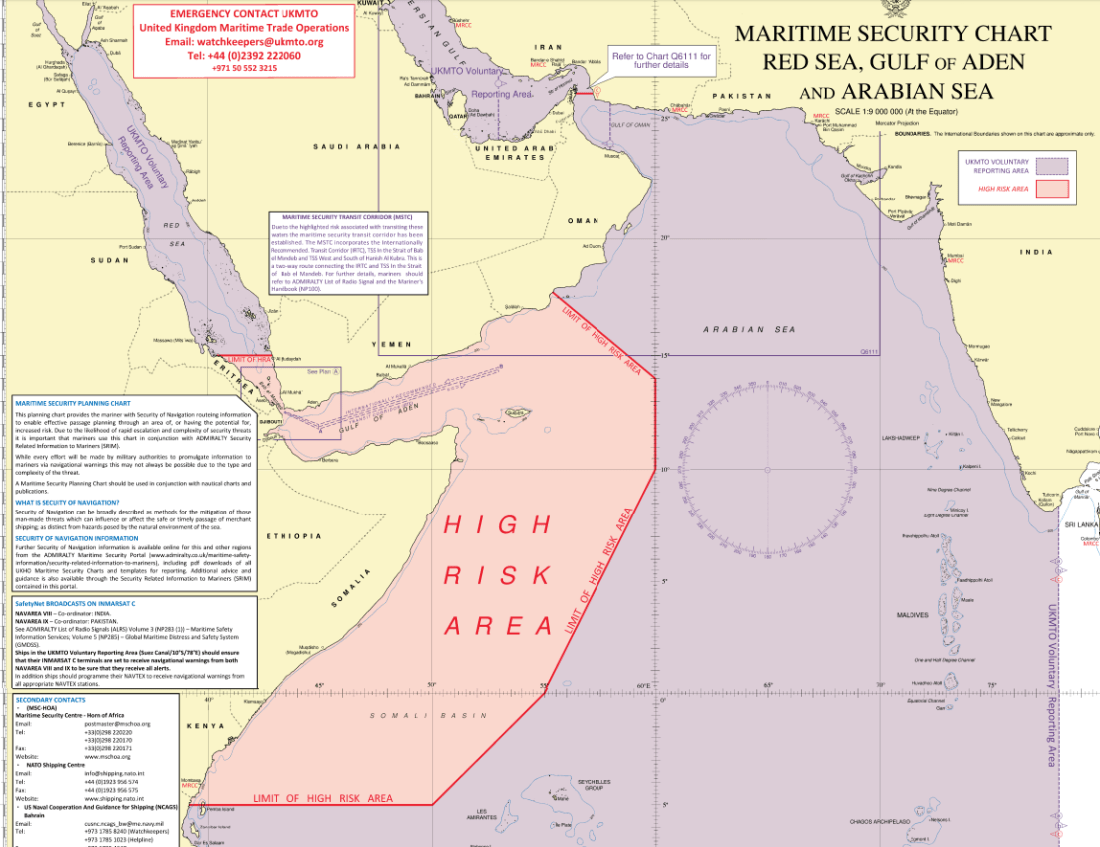
“The need for a strong maritime security presence in the High-Risk Area remains critical for the deterrence and prevention of future incidents and attacks.”
Rear Admiral Antonio Martorell Lacave
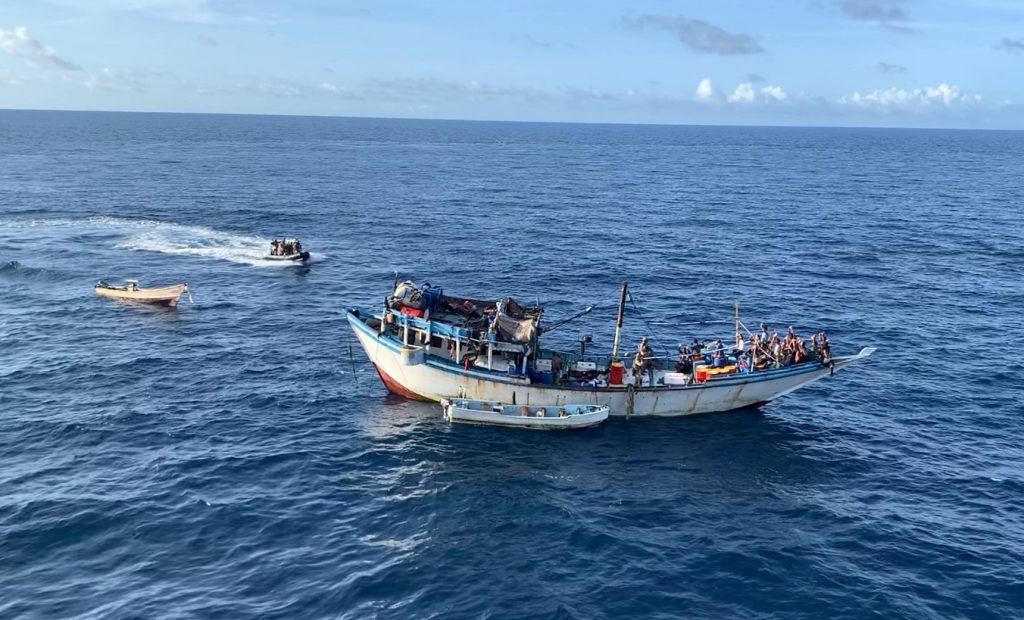
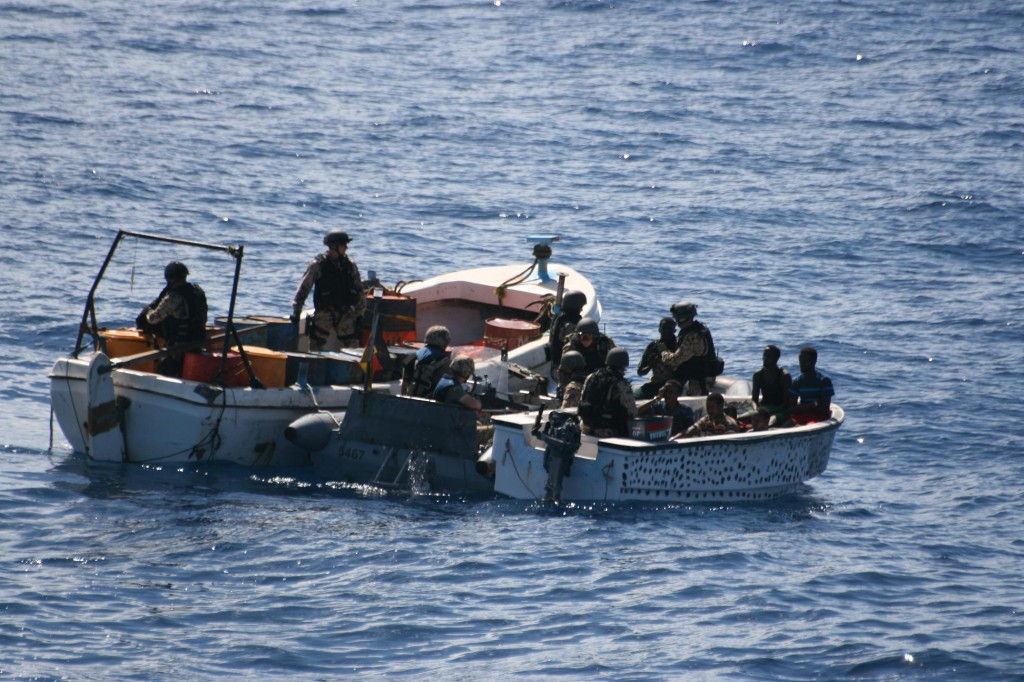
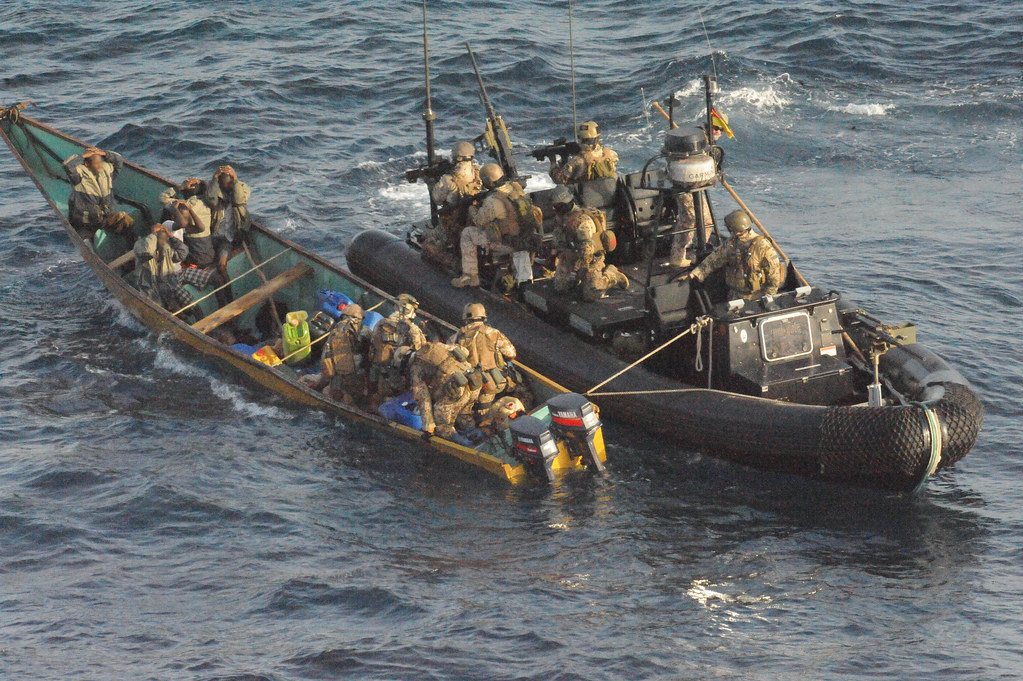
On 21 April, suspected pirates seized a fishing dhow off the coast of Somalia, holding 23 people hostage. In a matter of hours, the European Union’s counter-piracy force EU NAVFOR Somalia Operation Atalanta had responded to the attack. Two days later, the incident was over; Operation Atalanta had detained five suspects and released 23 hostages.
An Attack Dismantled
The incident began when five suspected pirates captured a fishing dhow off the coast of Somalia. The suspects proceeded to navigate the dhow along the coast, where they visited a pirate base camp and reinforced their crew with additional members. Next, using the captured dhow as a mother ship, the suspects attacked another fishing vessel, the FV Adria. This attack took place in the Indian Ocean, some 280 nautical miles off the coast of Somalia.
In self-preservation, FV Adria then conducted evasive manoeuvres and increased its speed. Another fishing vessel, the FV Txori Argi was also operating in the vicinity at the time and assisted the FV Adria as the suspects continued to chase her. After approximately one hour, the suspects approached both fishing vessels and attacked them with a rocket-propelled grenade. The Private Armed Security Teams (PAST) on board the FV Adria and the FV Txori Argi responded, and the suspects retreated.
That same day, EU NAVFOR dispatched its Maritime Patrol Aircrafts (MPRAs) and conducted a regional search, through which they were able to successfully identify and track the captured mother ship.
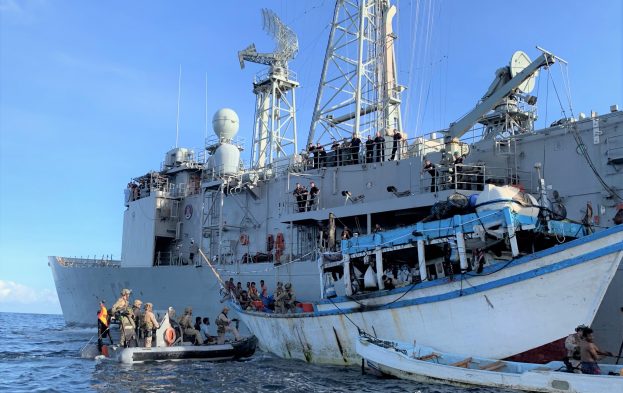
On 23 April, in collaboration with its MPRAs, EU NAVFOR’s flagship ESPS NAVARRA was able to approach, intercept and board the captured fishing vessel. With the support of the PAST and EU NAVFOR’s various active assets in the region—including the frigate ESPS NAVARRA and MPRAs German JESTER and Spanish CISNE—Operation Atalanta was able to control the situation and prevent any further imminent attacks.
“This incident clearly demonstrates that piracy and armed robbery at sea off the coast of Somalia have not been eradicated,” said Operation Commander Rear Admiral Antonio Martorell Lacave in an interview. “The need for a strong maritime security presence in the High-Risk Area remains critical for the deterrence and prevention of future incidents and attacks.”
Following the attack, Operation Atalanta urged the maritime industry to remain vigilant across the High-Risk Area and to comply with recommended Best Management Practises for Protection against Somalia Based Piracy, as supported by EU NAVFOR’s Maritime Security Centre Horn of Africa (MSCHOA). MSCHOA last updated the Best Management Practises for public reference in 2015, at the height of piracy attacks in the High-Risk Area.
Behind The Scenes
Lesser known to the public, however, was the fact that at the time of these attacks in April, Operation Atalanta was still in the midst of an important transition. Just three weeks before the attack—the first since October of last year—Operation Atalanta officially moved from its previous Operation Headquarters (OHQ) in Northwood, U.K., to its new OHQ in Rota, Spain. MSCHOA also moved from OHQ in Northwood to Brest, France, although it remains under command of OHQ in Rota. Additionally, the operation transferred command from Major General Charlie Stickland, UK Royal Marines, to Rear Admiral Antonio Martorell Lacave, Spanish Navy.
Lesser known to the public, however, was the fact that at the time of these attacks in April, Operation Atalanta was still in the midst of an important transition. Just three weeks before the attack—the first since October of last year—Operation Atalanta officially moved from its previous Operation Headquarters (OHQ) in Northwood, U.K., to its new OHQ in Rota, Spain. MSCHOA also moved from OHQ in Northwood to Brest, France, although it remains under command of OHQ in Rota. Additionally, the operation transferred command from Major General Charlie Stickland, UK Royal Marines, to Rear Admiral Antonio Martorell Lacave, Spanish Navy.
The handover and transfer of command was a careful process that lasted nearly a year in its entirety. After all arrangements for location, staffing and training were complete, the transitional phase also involved one month of parallel operational running between Northwood and Rota. However, one would never know it by the operational fluidity that the headquarters maintained throughout the process, and continues to demonstrate today. Highly skilled staff—some from the previous OHQ in Northwood, UK and some new to Operation Atalanta—maintained near perfect continuity throughout the transition.
Operation Atalanta Commander Rear Admiral Martorell Lacave says the manner in which Operation Atalanta handled this first piracy attack in its new OHQ is representative of the commitment and responsibility each branch of the operation feels to their duty.
“I am very confident in the capabilities of the staff in all branches of EU NAVFOR’s Operation and Force Headquarters,” he said. “As we have seen with this most recent incident, we continue to provide the same level and quality of operational outputs from Rota as were previously provided in Northwood.”


 Maritime Security News