Maritime security firms have seen demand soar following the attacks on oil tankers on June 13. But defending ships from allegedly involved state-backed forces such as Iran’s Revolutionary Guard may not be easy.
Author Ashutosh Pandey
The demand for private maritime security personnel has shot up since the attacks on oil tankers in the Gulf of Oman on June 13, as shippers step up efforts to protect their ships and keep global trade going.
The US has blamed Iran for the attacks, which took place near the Strait of Hormuz, which is used to transport a third of the world’s seaborne crude. Iran has denied the accusations.
Somalia has launched a diplomatic offensive against Kenya in their dispute over the Indian Ocean waters prompting the Arab League to condemn Nairobi for annexing Mogadishu’s territory.
The Arab Parliament in which Somali has members claimed Kenya was drawing up an illegal map that includes taking away Somali territory. The taking sides in the disputes could now complicate the war on piracy in which more than 30 Indian Ocean rim countries have cooperated to decimate attacks and their success.
In a major development the Indian Navy has launched Operation Sankalp in the Persian Gulf/Gulf of Oman as a measure to re-assure Indian flagged vessels transiting through the region. The development has come in the wake of the attack on oil tankers raising tensions between US and Iran.
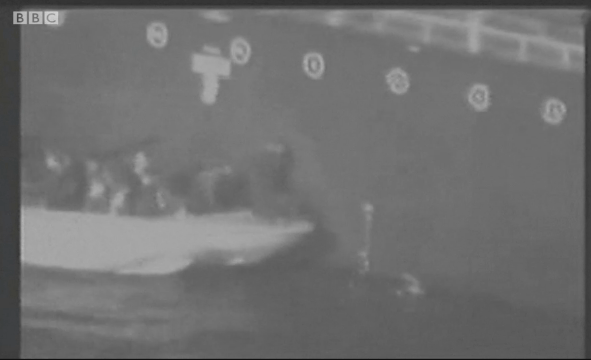
While Tehran denies involvement, Washington says that the West Asian country was behind it. Pentagon has released footage of Iran’s special forces removing unexploded mine.
Kenya has been elected the chair of the Contact Group on Piracy off the Coast of Somalia (CGPCS) for a period of two years beginning January 2020.
The chairmanship will afford Kenya the opportunity to coordinate regional and international efforts to deal with the challenge of piracy which remains a threat to the Maritime sector, despite being suppressed in recent times.
An SA Navy decision not to comment on an Operation Copper anti-piracy deployment has not improved the public image or perception of the maritime service of the national defence force, with experts cautioning this is a step backwards in terms of transparency.
When defenceWeb earlier this month requested some detail on an apparent upcoming deployment to the Mozambique Channel the official SA Navy response was: “This is an operational matter and we cannot comment on it”.
Head of the Houthis’ Supreme Political Council Mahdi al-Mashat has threatened to target the commercial navigation waterways and oil tankers in the Red Sea and the Arabian Sea, saying that they possess missiles that can reach Egypt and Sudan.
Mashat affirmed that the militias would continue to target cities and airports in Saudi Arabia.
Western commercial oil exploration in disputed areas of Somalia and discrepancies over which authorities can issue licenses to companies could spark further conflict in the African nation, U.N. monitors warned in a confidential report.
In the U.N. Monitoring Group’s latest annual report to the Security Council’s sanctions committee on Somalia and Eritrea, the experts said the Somali constitution gives considerable autonomy to regional governments to enter commercial oil deals.
The US military has released a video which it says shows Iran’s Revolutionary Guard removing an unexploded mine from the side of an oil tanker damaged in an attack in the Gulf of Oman on Thursday.
US officials also shared a photo of the Japanese tanker, apparently showing the unexploded mine before it was removed.
A Norwegian tanker was also damaged.
The US accused Iran of being behind the mine attacks. Iran said it “categorically rejects” the allegation.
The blasts came a month after four oil tankers were damaged in an attack off the coast of the United Arab Emirates. The US blamed Iran for that attack, but did not produce evidence. Iran also denied those accusations.
Tensions between the two countries have escalated significantly since US President Donald Trump took office in 2017. He abandoned a nuclear deal that was brokered by the Obama administration and imposed heavy sanctions on Iran.
Oil prices jumped as much as 4% after Thursday’s incident. The Gulf of Oman lies at one end of a vital shipping lane through which a third of the world’s transported oil – worth hundreds of millions of dollars – passes every year.
What we know about the explosions
According to the US account of events, US naval forces in the region received distress calls from the Norwegian-owned Front Altair at 06:12 local time (02:13 GMT) and from the Kokuka Courageous at 07:00, following explosions, and moved towards the area.
It said the USS Bainbridge observed Iranian naval boats operating in the area in the hours after the explosions, and later removing the unexploded mine from the side of the Kokuka Courageous.
The crews of both vessels were evacuated to other ships nearby. Both Iran and the US later released pictures showing rescued crew members on board their vessels.
The operator of the Kokuka Courageous, BSM Ship Management, said its crew abandoned ship after observing a fire and an unexploded mine.
The Kokuka Courageous was about 20 miles off the Iranian coast when it sent its emergency call.
The Front Altair was carry naphtha, a petrol product, from the United Arab Emirates to Taiwan. The Kokuka Courageous was carrying methanol from Saudi Arabia to Singapore.
What did the US say?
US Secretary of State Mike Pompeo said at a news conference in Washington: “It is the assessment of the United States that the Islamic Republic of Iran is responsible for the attacks.
“This assessment is based on intelligence, the weapons used, the level of expertise needed to execute the operation, recent similar Iranian attacks on shipping, and the fact that no proxy group operating in the area has the resources and proficiency to act with such a high degree of sophistication.”
UK Foreign Secretary Jeremy Hunt said his country’s “starting point” was to “believe our US allies”.
“We are taking this extremely seriously and my message to Iran is that if they have been involved it is a deeply unwise escalation which poses a real danger to the prospects of peace and stability in the region,” Mr Hunt said.
How did Iran respond?
In a statement released on Friday, the Iranian mission to the United Nations said it rejected what it called an “unfounded” and “Iranophobic” allegation by the US.
“Iran categorically rejects the US’ unfounded claim with regard to 13 June oil tanker incidents and condemns it in the strongest possible terms,” the statement said.
Foreign Minister Javad Zarif on Twitter accused the US of making an allegation “without a shred of factual or circumstantial evidence” and attempting to “sabotage diplomacy”.
The alleged attacks took place as Iran’s Supreme Leader Ayatollah Ali Khamenei was meeting Japan’s Prime Minister Shinzo Abe during a two-day visit by Mr Abe to Iran.
Issues related to human and drug trafficking, maritime piracy and the legal aspects of combating these challenges are being discussed by experts at the Maritime Information Sharing Workshop, (MISW).
Stressing on the need for greater maritime collaboration, Deputy Chief of the Naval Staff Vice Admiral MS Pawar said there is a need to forge bonds based on trust, between partner countries in the region.
COLOMBO, June 11 (Xinhua) — Sri Lanka’s leading tour operators said on Tuesday that luxury cruise ships have begun calling at Sri Lanka’s ports following the improved security situation in the island country after the Easter terror attacks on April 21 which killed over 250 people.
Aitken Spence Maritime, agents for Hapag-Lloyd, was quoted by local media as saying that the shipping groups MS Europa 2 cruise ship called at Sri Lanka’s Colombo Port in the capital and Hambantota port in the south recently with 309 passengers and 356 crew onboard.



 Maritime Security News