India to have Central Marine Police Force to guard coastline

India has a vast coastline of 7,516 km touching 13 states and union territories. It also has around 1,197 islands.

New Delhi: The Ministry of Home Affairs has completed the modalities of setting up a new armed force — Central Marine Police Force — to strengthen coastal security. A final proposal would be sent to the Cabinet by early next month for approval, a source in the ministry said on Saturday.

About the structure of the force, a senior ministry officer said, “Unlike other Central Armed Police Forces, the Central Marine Police Force will have it own cadre, rules, manual, Act, infrastructure and would be headed by a Director-General rank officer.”

To continue reading, please click here.

Source: telanganatoday.com
 

Maritime terrorism in Asia: An assessment

Abhijit Singh

This paper evaluates the possibility of an increase in maritime terrorist violence in Asia, based on a recounting and analysis of some of the most recent past incidents in these waters. It argues that the vulnerability of high seas shipping to criminal acts of violence and the weak and inconsistent nature of maritime governance raises the possibility of a terrorist strike in the Asian littorals. In assessing the odds of a major terrorist attack in coastal regions, the paper also explores the terrorism-piracy nexus and the state of port security in key continental spaces, highlighting measures to improve maritime readiness against acts of terror.

Introduction

In recent years, sea-borne terrorism has emerged as a major security threat in littoral-Asia. Since the November 2008 attacks in Mumbai—when ten Pakistani terrorists infiltrated the city from the sea, killing 166 people and injuring over 300—regional watchers have been wary of the possibility of another attack from the seas. Within India’s security establishment, the anxiety has been palpable. In November 2018, a few weeks shy of the tenth anniversary of the Mumbai attacks, intelligence emerged that Pakistan-based militant outfits Lashkar-e-Taiba and Jaish-e-Mohammed had been training their cadres to execute another strike on Indian ports, cargo ships and oil tankers.[1]Reportedly, Pakistani militant commanders had been training volunteers at modified training sites and canals in Lahore and Faisalabad for “samundari jihad” (seaborne jihad). Unlike 26/11, when terrorists had used the sea route to enter Mumbai and stage attacks on land targets, the plan this time around was to deploy trained jihadi divers to target an Indian or coastal facility.[2]

To read the entire paper, please click here.

Source: orfonline.org

India starts sharing maritime data

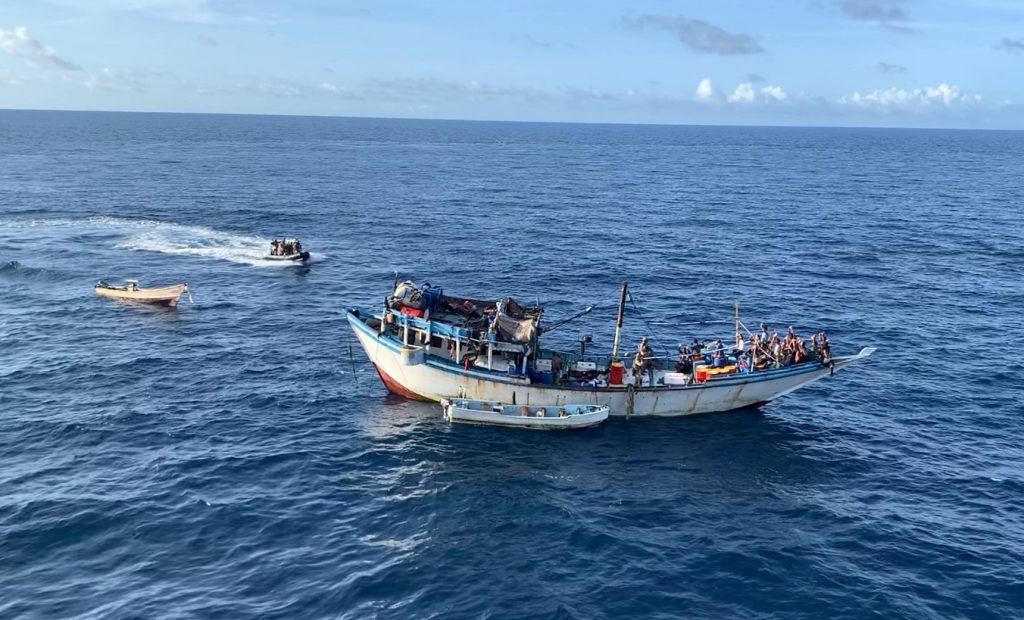
File image of an approach on a dhow

Dinakar Peri

Information Fusion Centre — Indian Ocean Region (IFC-IOR) was set up last year

The Information Fusion Centre – Indian Ocean Region (IFC-IOR) set up last year has started functioning as an information sharing hub of maritime data and “cuing incident responses” to maritime security situations through a collaborative approach, Navy sources said.

At the just concluded Goa Maritime Conclave (GMC), National Security Adviser Ajit Doval had offered countries in the IOR use of the facility to track movement of vessels on the high seas.

To continue reading, please click here.

Source: thehindu.com

Indian maritime authority issues alert on Nigerian waters

By Godwin Oritse

AT the backdrop of high incidences of piracy in the Gulf of Guinea, GoG, coterminous with Nigeria’s continental shelf, the Indian maritime authority has warned its seafarers to steer clear of Nigerian waters for fear of falling victims.

Disclosing this at the just concluded World Maritime celebration in Lagos, Director General of the Nigerian Maritime Administration and Safety Agency, NIMASA, Dr. Dakuku Senibo Peterside said that NIMASA was currently working on the development with a view to assuaging the fears of the Indian authorities.

To continue reading, please click here.

Source: vanguardngr.com

India seizes Myanmar vessel with 1.1 tonnes of ketamine

John Liu

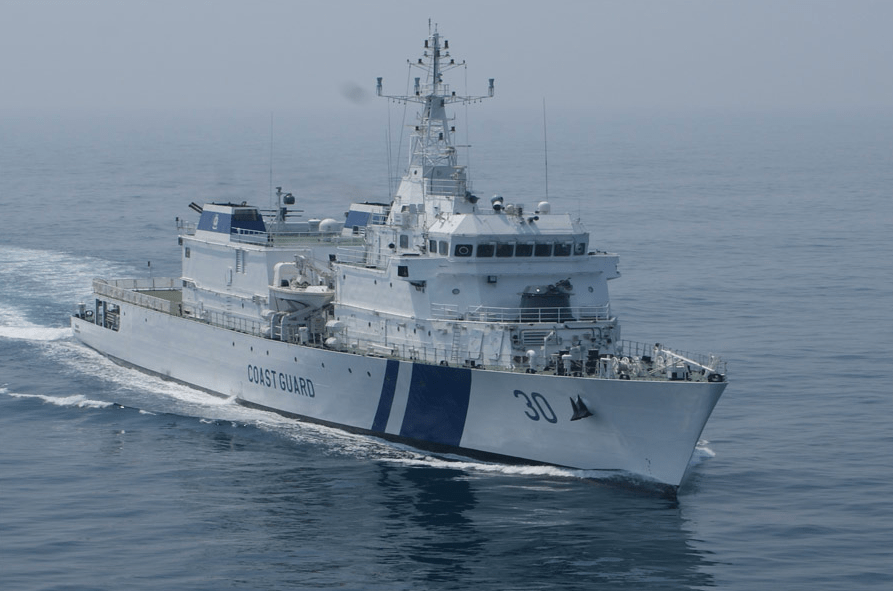
The Indian Coast Guard has seized a Myanmar vessel loaded with over 1.1 tonnes of ketamine off India’s Nicobar Islands, Indian authorities said.

Six Myanmar crew members on the ship were arrested after it was boarded by Indian Coast Guard members on Thursday. India’s maritime security agency said the vessel was navigating suspiciously in the Andaman Sea, prompting its officers to conduct a search, which yielded 1160 kilograms of ketamine. Six Myanmar crew members on the ship were arrested after it was boarded by Indian Coast Guard members on Thursday.

To continue reading, please click here.

Source: mmtimes.com

Pirate Attacks Continue Worldwide Despite Efforts to Control Them

ASIA – AFRICA – Although the rash of serious pirate attacks off the Somalian coast which we reported on almost a daily basis in the years leading up to 2017 have since diminished, that does not mean the seas of the world are now always a safe place to ply one’s trade. It was a concentrated, internationally coordinated policy of increased naval surveillance which managed to largely control the hijacking of container ships and tankers in the Indian Ocean, but elsewhere every day brings the risk of assault on the innocent.

The Information Fusion Centre (IFC) is a division of the Indian Navy and its semi-annual report for South East Asia shows the state of play in the region. What should be made clear here is that the vast bulk of incidents worldwide are not truly ‘piracy’. To qualify for that title the vessel being assaulted must be at sea, therefore only one true pirate attack has taken place recently according to the IFC, that of the South Korean flagged bulk carrier CK Bluebell on July 22 near the Singapore Strait which passes Indonesia, Malaysia and Singapore.

To continue reading, please click here.

Source: handyshippingguide.com

India hands over interceptor boats to Mozambique

India has handed over two fast interceptor boats to Mozambique as part of an agreement to strengthen defence cooperation between the two countries.

The boats were handed over on 29 July during a ceremony at Mozambican Naval Headquarters, coinciding with a visit by India’s Defence Minister Shri Rajnath Singh. It was Singh’s first visit abroad as Defence Minister and the first-ever visit of an Indian Defence Minister to Mozambique.

To continue reading, please click here.

Source: defenceweb.co.za

Indian Navy signs contract with ISRO for a new military satellite

For the procurement of a new military satellite to ease communications between its warships, aircrafts and shore- based units, the Indian Navy has placed an order with the Indian Space Research Organisation (ISRO), for which the launch is likely to happen within a year.

The new missile satellite, named “GSAT 7R”, costs Rs 1,589 crore, inclusive of launch cost and procurement of key infrastructure on ground. The “GSAT 7”, first dedicated Indian military satellite, launched in 2013, is likely to be replaced by the new satellite system.

To continue reading, please click here.

Source: newdelhitimes.com

India launches Operation Sankalp to reassure Indian vessels

The development has come in the wake of the attack on oil tankers raising tensions between US and Iran

WRITTEN BY Sidhant Sibal

In a major development the Indian Navy has launched Operation Sankalp in the Persian Gulf/Gulf of Oman as a measure to re-assure Indian flagged vessels transiting through the region. The development has come in the wake of the attack on oil tankers raising tensions between US and Iran.

While Tehran denies involvement, Washington says that the West Asian country was behind it. Pentagon has released footage of Iran’s special forces removing unexploded mine.

To continue reading, please click here.

Source: dnaindia.com

Need for greater maritime collaboration in the Indian Ocean Region: Indian Navy Deputy Chief

Issues related to human and drug trafficking, maritime piracy and the legal aspects of combating these challenges are being discussed by experts at the Maritime Information Sharing Workshop, (MISW).

Stressing on the need for greater maritime collaboration, Deputy Chief of the Naval Staff Vice Admiral MS Pawar said there is a need to forge bonds based on trust, between partner countries in the region.

To continue reading, please click here.

Source: financialexpress.com