The threat of Houthi unmanned explosives-laden boats

by Shay, Shaul (Dr.)

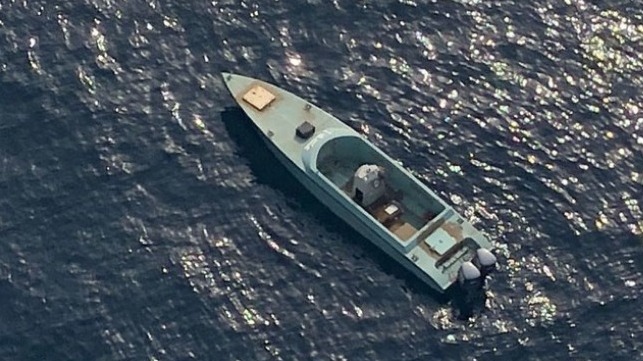
The Saudi-led coalition said it intercepted and destroyed an unmanned explosives-laden boat launched from Yemen by the Iran-aligned Houthi group on September 19, 2019, an incident that could further increase regional tensions after the attack on Saudi oil installations. Since 2017, in fact, there have been several reports of attacks or discovery of these unmanned explosive vessels in the country.

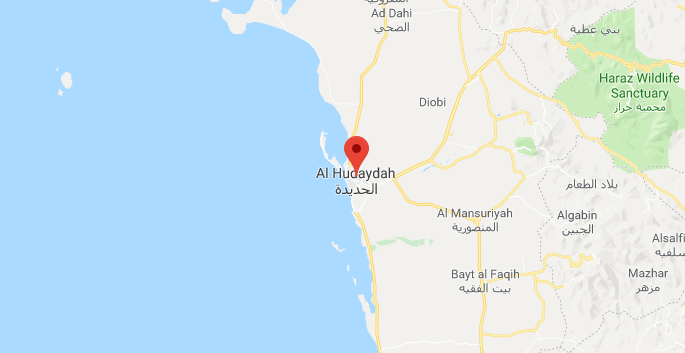
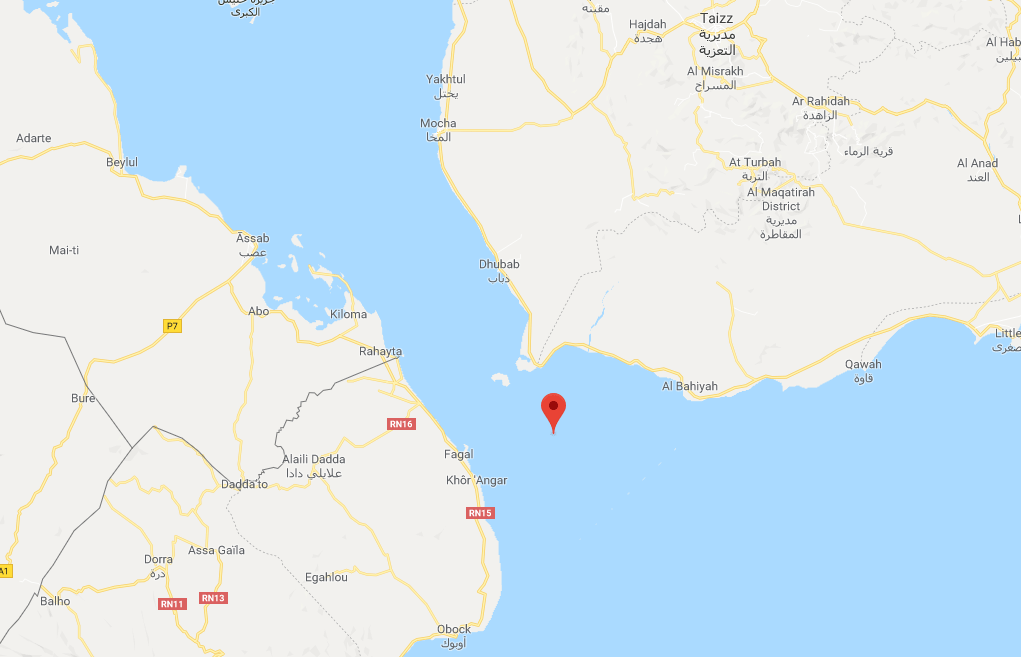
“The coalition’s naval forces detected an attempt by the terrorist Houthi militia backed by Iran to carry out an imminent act of aggression and terrorism south of the Red Sea using an unmanned, rigged boat … launched from Hodeidah province,” coalition spokesman Colonel Turki al-Malki said in a statement. Malki said that the foiled attack represented a threat to regional and international security and the safety of maritime routes and international trade. He did not specify the intended target.[1]

To continue reading, please click here.

Source: ict.org.il

Safety in the Red Sea corridor can’t be taken for granted

by Omar S Mahmood

The Red Sea and the adjacent Gulf of Aden face many potential threats to free movement, ranging from the presence of non-state armed groups (such as the Houthis in Yemen) and organised crime outfits, to ongoing territorial disputes and environmental concerns. Yet maritime traffic has largely gone undisrupted in recent years.

The hitherto safe passageway of the Red Sea should not be taken for granted though, and the area has attracted significant geopolitical interest. New initiatives concerned with the shared maritime space are being conceived, including a Red Sea Forum championed by Saudi Arabia and Egypt. The African Union (AU) and Intergovernmental Authority on Development (IGAD) are also taking a greater interest. All these actors aim to address a perceived gap in management of the Red Sea space.

To continue reading, please click here.

Source: issafrica.org

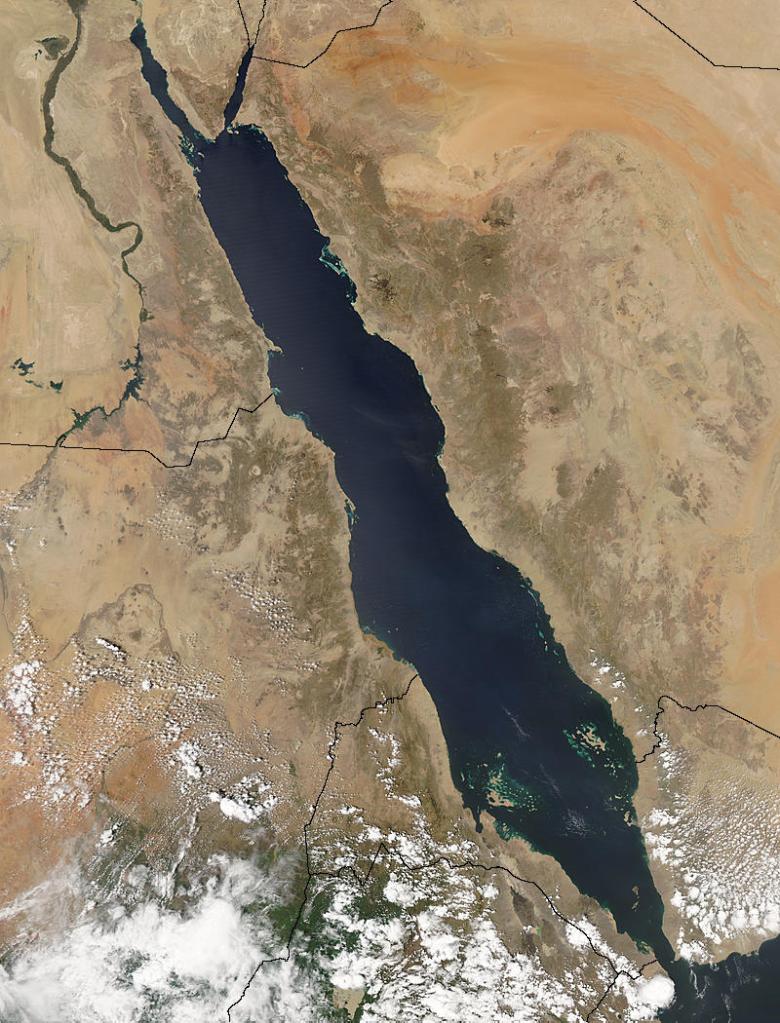
Red Sea, via NASA
Red Sea (NASA)

Houthis Obstruct Oil Tankers to Threaten Maritime Security

Asma al-Ghabri

The Iran-backed Houthi militias’ refusal to implement a legitimate Yemen government order on collecting customs fees on all oil derivative revenues at Hodeidah port has led the halt of ten vessels in the Red Sea.

At Houthi orders, the oil tankers did not pay the revenues and did not disclose the certificate of origin of the shipment that ensures its legality.

To continue reading, please click here.

Source: aawsat.com

Saudi Arabia moves to secure Yemen Red Sea ports after UAE drawdown

Aziz El YaakoubiMohamed Ghobari

DUBAI/ADEN (Reuters) – Saudi Arabia’s military in Yemen has moved in to secure two strategic Red Sea ports and the Bab al-Mandeb Strait after its leading ally the United Arab Emirates substantially reduced its presence there, four sources familiar with the matter said.

The UAE has drawn down its numbers in some parts of Yemen, where it had set up large bases amid a four-year-old multi-layered war that is widely seen as a proxy battle between regional rivals Saudi Arabia and Iran.

To continue reading, please click here.

Source: reuters.com

Saudi-led coalition says it foiled Red Sea ship attack, Houthis deny

RIYADH (Reuters) – Naval forces from the Saudi-led coalition fighting in Yemen foiled an attempted attack on an unidentified commercial ship in the southern Red Sea on Monday by the Iran-aligned Houthis, which the group denied.

Spokesman Colonel Turki al-Malki said the Western-backed military alliance had destroyed an unmanned boat laden with explosives which the militants had used for the attack, Saudi state news agency SPA reported without providing more details.

To continue reading, please click here.

Source: reuters.com

Renewed Clashes in Hodeidah as Peace Talks Continue

Despite a U.N.-backed ceasefire agreement, fighting between Houthi rebels and government forces has resumed on the south side of the port city of Hodeidah, Yemen. Pro-government militia leaders told Xinhua that Houthi units had shelled several neighborhoods, damaging homes and destroying part of a hospital. 

Under the terms of an agreement negotiated in Stockholm last December, Iranian-backed Houthi rebels were to withdraw from the port, and Saudi- and UAE-backed Yemeni government forces were to pull back from their positions surrounding the city. Houthi security units at the port have transferred control to the Yemeni Coast Guard, but the head of the UN mission in Hodeidah, Lt. Gen. Michael Lollesgaard, said last month that considerable work remains to demilitarize the port complex. 

To continue reading, please click here.

Source: maritime-executive.com

Houthi Leader Threatens to Target Int’l Navigation

Ali Rabee

Head of the Houthis’ Supreme Political Council Mahdi al-Mashat has threatened to target the commercial navigation waterways and oil tankers in the Red Sea and the Arabian Sea, saying that they possess missiles that can reach Egypt and Sudan.

Mashat affirmed that the militias would continue to target cities and airports in Saudi Arabia.

To continue reading, please click here.

Source: aawsat.com

UAE added to insurers Joint War Committee risk list following tanker attacks

Following the 12 May sabotage attacks on four tankers off Fujairah the LMA Joint War Commission (JWC) has added the United Arab Emirates (UAE) to its listed areas for Hull War, Piracy, Terrorism and Related Perils.

The decision by the JWC was taken on Friday, following a meeting earlier in the week where it had deferred a decision on amending its list of war risk areas.

To continue reading, please click here.

Source: seatrade-maritime.com

Yemen war: Houthis withdraw from key ports, says UN

The UN says Houthi rebels have pulled out of three key Red Sea ports in Yemen, in partial implementation of a ceasefire deal agreed six months ago.

Hudaydah, Salif and Ras Issa were handed over to the coast guard.

The UN said work was still needed to remove trenches, barriers and mines – and to implement the rest of the deal.

The Houthis and pro-government forces, which are backed by a Saudi-led coalition, agreed to leave the ports to allow in vital humanitarian aid.

However, the BBC’s Lyse Doucet says some Yemenis are sceptical about the latest pull-out and accuse the Houthis of leaving fighters in the ports disguised as coast guard personnel.

Yemen’s government has previously warned that the withdrawal would be a rebel “ploy”.

The UN says at least 7,070 civilians have been killed and 11,205 injured in the fighting, with 65% of the deaths attributed to Saudi-led coalition air strikes.

Thousands more civilians have died from preventable causes, including malnutrition, disease and poor health.

About 80% of the population – 24 million people – need humanitarian assistance and protection, and almost 10 million who the UN says are just a step away from famine. Almost 240,000 of those people are facing “catastrophic levels of hunger”.

What does the UN say?

Lt Gen Michael Lollesgaard, head of the UN’s Redeployment Co-ordination Committee (RCC) in Hudaydah, welcomed the Houthi withdrawal from the ports in western Yemen.

He said that since Saturday there had been “very good co-operation” with Houthi commanders and that the UN had been given access to all areas of the ports.

“Today we have together seen the redeployment and we have also agreed that there are a few outstanding issues,” he said.

“There are two minefields in Ras Issa and Salif and trenches in this port [Hudaydah] that need to be removed.”

He urged all sides to help implement the next stages of the peace deal.

Why is Hudaydah important?

Hudaydah port is the main lifeline for two-thirds of Yemen’s population and its closure has had a devastating impact.

Under the local ceasefire deal brokered by the UN in Stockholm last December, the warring parties agreed to redeploy their forces from Hudaydah city and the ports of Hudaydah, Salif and Ras Issa.

The Houthi withdrawal marked the first major step in bringing that ceasefire agreement into being.

Pro-government forces have twice tried to seize the port, and accuse the Houthis of using it to smuggle in weapons from Iran. The rebels and Tehran both deny these accusations.

Source: https://www.bbc.co.uk

Yemen warring parties hold fresh talks as Houthis withdraw from Hodeidah

ADEN (Reuters) – Yemen’s warring parties started fresh U.N.-sponsored talks in Jordan on Monday, Yemeni officials said, two days after Houthi forces began withdrawing from the ports of Hodeidah, breaking a six month stalemate.

The talks will focus on sharing out revenues from Hodeidah’s three Red Sea ports to help relieve an urgent humanitarian crisis, they said.

To continue reading, please click here.

Source: reuters.com