Growing maritime insecurity raises question on NIMASA’s $195m maritime security contract to Israeli firm

By Samson Echenim

Despite a running $195 million maritime security contract awarded to Israeli firm, Messrs HLSI Security Systems and Technologies by the Nigerian Maritime Administration and Safety Agency, Nigeria is seeing growing incidences of piracy attacks and vessel hijacking.

The situation has led to shipping companies now spending millions of dollars in providing security onboard the vessels while in Nigerian waters.

To continue reading, please click here.

Source: businessamlive.com

Oil discovery: Boost security at sea to ward off pirates – Oquaye to Navy

The Speaker of Parliament, Prof. Aaron Mike Oquaye has charged the Ghana Navy to step up security along Ghana’s coast.

He said Ghana’s oil sites are sea-based, hence exposes the country to various criminal threats. The Speaker cited issues that are associated with the increase in crime on the shores of oil-rich countries.

To continue reading, please click here.

Source: ghanaweb.com

Departure of EU naval force risky for coast, report warns

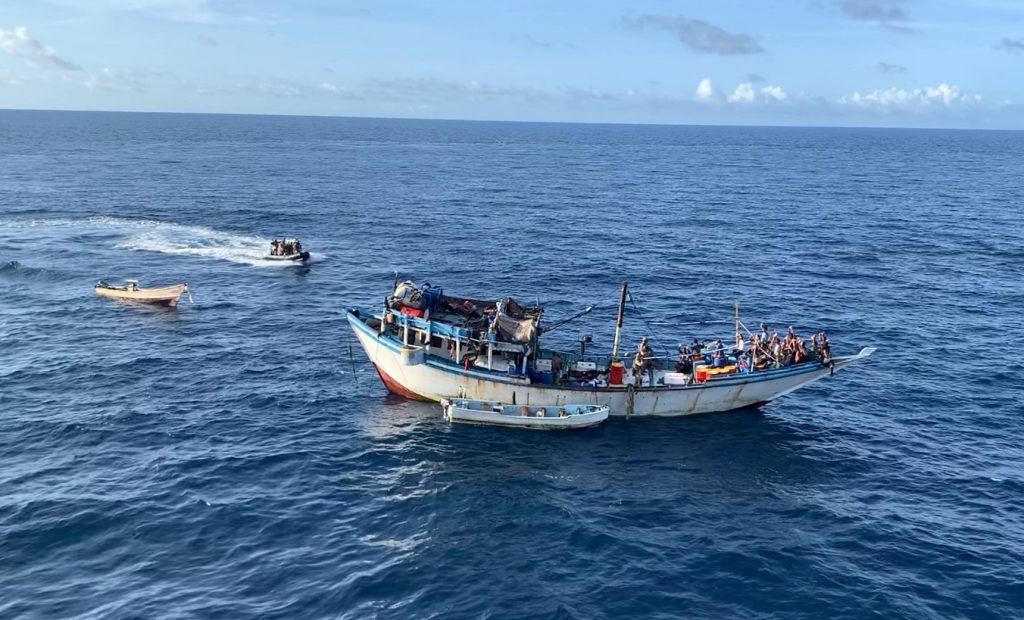
File image of an approach on a dhow

By Samuel Baya

The possible withdrawal of the European Union Naval Force from the Indian Ocean waters has raised the need for other plans to ensure piracy does not rise again in the region, a new maritime report says.

A report by the Intergovernmental Standing Committee on Shipping (ISCOS) says that though piracy has been on the decline, the possibility of a withdrawal of the EU naval force that has been stationed in the Indian Ocean waters for years heralds uncertainty.

To continue reading, please click here.

Source: businessdailyafrica.com

Here’s why West Africa is becoming the world’s piracy hotspot

INEMESIT UDODIONG

West Africa is turning into the world’s piracy hotspot according to One Earth Future, which produces an annual State of Maritime Piracy report.

The newly released 2018 statistics show a decline in the number of incidents of hijacking, kidnapping and robberies in East Africa. West Africa, on the other hand, recorded an alarmingly increase in pirate attacks from 54 incidents in 2015 to 112 in 2018.

To continue reading, please click here.

Source: pulse.ng

Nigeria’s Waters As Haven for Pirates

The recent admission by the former Minister of Transportation, Mr. Rotimi Amaechi, that the security situation in the maritime sector has become bad and last Monday’s Q2 report by the International Maritime Bureau naming Nigeria as a hotbed of piracy in the Gulf of Guinea, leaves much to be desired.

As stakeholders in the nation’s maritime industry await the deployment of the $195 million maritime security equipments approved by President Muhammadu Buhari, a not very cheery news broke last Monday about the increasing pirates attacks on Nigeria’s territorial waters. Put simply, Nigeria was again rated number one in pirates attack in the Gulf of Guinea by the International Maritime bureau (IMB).

To continue reading, please click here.

Source: hellenicshippingnews.com

NIMASA dismisses report placing Nigeria top on piracy list

Anna Okon

The Nigerian Maritime Administration and Safety Agency has described as unverified, reports stating that Nigeria had again taken the lead in piracy attacks in the second quarter of 2019.

The report released by the International Maritime Bureau, indicated that between January and June, Nigeria led the table of pirate attacks with 21 recorded incidents, beating Indonesia that recorded 11, Venezuela with six attacks and Peru with four attacks.

To continue reading, please click here.

Source: punchng.com

Pirates on Nigerian waters risk life imprisonment, N500 million fines

By Sulaimon Salau

Hard times await pirates that operate on Nigerian waters, as the Suppression of Piracy and other Maritime Offences Bill, signed into law by President Muhammadu Buhari recommended a life sentence for culprits.

A copy obtained by The Guardian, showed the law recommended various punishments for piracy, armed robbery, and other maritime-related offences ranging from life imprisonment to fines of N500 million, N250 million, and 12- 15 years imprisonment, depending on the gravity of the offence.

To continue reading, please click here.

Source: guardian.ng

Kidnapping risk in Gulf of Guinea persists with 21 crew members kidnapped in Q1 2019

American, African & Chinese Navies Gathering at The International Maritime Defence Exhibition and Conference in Ghana This July 

– International Maritime Bureau: 22 Piracy Attacks in Q1, 2019 

Admiral James G. Foggo, III: A safe, stable, and secure Africa is in the interest of the global community, our shared goals of a secure, stable, and prosperous Africa benefits not only our African partners and the U.S., but also the international community 

 Rear Admiral Koi Alexis Maomou: IMDEC is a great opportunity to give, receive and discover new technological and scientific inventions in the field of defence and maritime safety 

20 captains, commodores, rear admirals, vice admirals, & admirals discussing illegal oil-bunkering, piracy, unregulated and unreported fishing, smuggling, human and drug trafficking, illegal bunkering and crude oil theft on the 24th & 25th of July in Accra 

Dubai and Accra, 27 June 2019 

In the first quarter of 2019, IMB reported 38 incidents of piracy and armed robbery at sea, representing 28 fewer incidents than the first quarter of 2018 (66). IMB’s Piracy Reporting Centre detailed that 27 vessels were boarded; seven vessels were fired upon and four attempted attacks occurred in the first quarter of 2019. No vessels were reported as hijacked for the first time since the first quarter of 1994. 

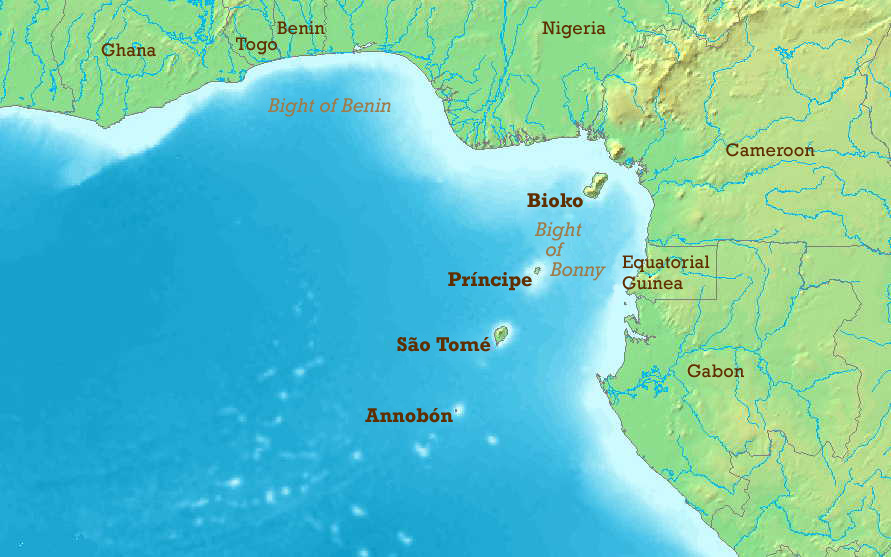
The Gulf of Guinea represented a high number of piracy and armed robbery attacks at sea, with 22 incidents reported in the first quarter of 2019. The region also accounted for all of the worldwide crew kidnappings as 21 crew members were kidnapped across five separate incidents. Incidents were reported in the coastal countries, of Benin, Cameroon, Ghana, Ivory Coast, Liberia, Nigeria and Togo in the first quarter of 2019. 

To continue reading, please click here.

Source: businessghana.com

Piracy is back to infest West African waters, but what’s driving it?

ABHISHEK MISHRA

What makes the waters of the Gulf of Guinea vulnerable to piracy?

When it comes to discussing the concept of maritime security, the concept can be discussed in a variety of contexts. Broadly defined, maritime security concerns the protection of states’ land and maritime territories, and is affected by a broad range of illegal activities, including arms, drugs, and human trafficking, illegal, unreported, and unregulated (IUU) fishing, and pollution at sea. But, such acts only tends to get media coverage when pirates are involved.

African maritime security is particularly severely affected by maritime piracy and armed robbery at sea. Maritime piracy is not a new phenomenon; it has existed for as long as people and commodities have traversed the oceans. Under article 101 of UN Convention on the Law of the Sea, piracy is defined as:

Any acts of violence, detention, or depredation committed on the high seas by the crew or passengers of a private ship or aircraft against another ship, aircraft, persons, or property in a place outside the jurisdiction of any state for private ends.”

To continue reading, please click here.

Source: orfonline.org

Wave of Delta kidnappings rings alarm bells

After a relative calm period, unrest in the Niger delta could be on the rise

Eromo Egbejule

Fears that militant violence and sabotage in the Niger delta are about to take off again has been fuelled by a spate of kidnappings of oil industry workers over recent weeks.

In one incident, two Royal Dutch Shell workers were abducted in Nigeria’s oil rich Rivers state in late April 2019, while their police escorts were killed. The two workers—from Canada and the UK—were released after a week, but there are concerns that there will be more problems to come, as Delta unrest picks up after a relatively quiet period.

To continue reading, please click here.

Source: petroleum-economist.com