Saudi Arabia’s role in banishing piracy from regional waters

JENNIFER BELL

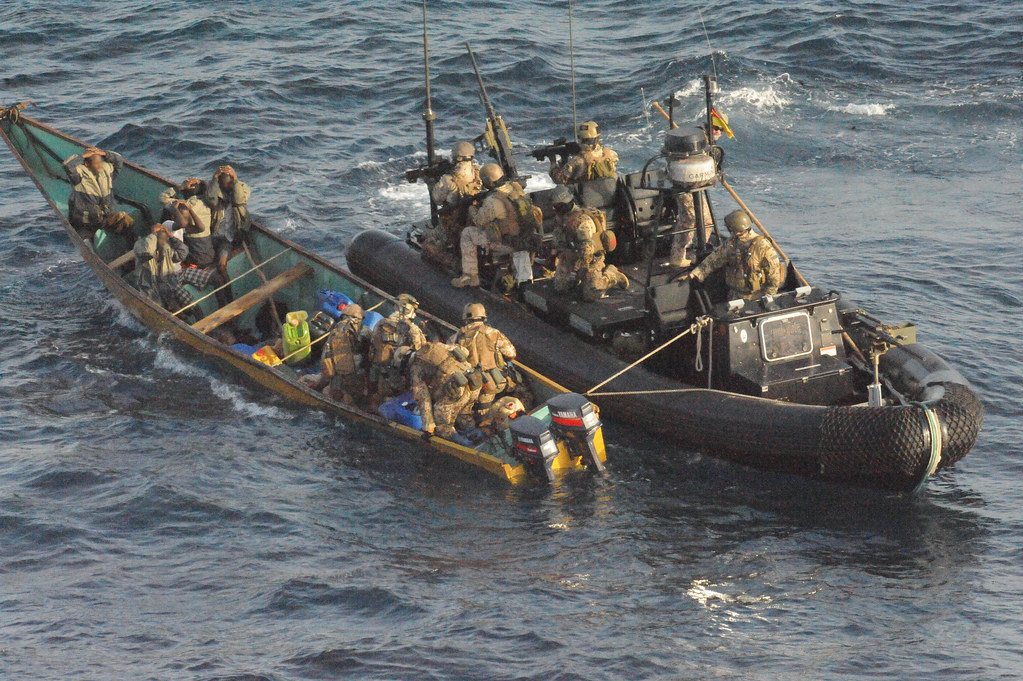
DUBAI: A decade ago, during the peak years of the Somali piracy crisis, the waters of the Arabian Gulf faced frequent threats from armed criminals at sea, who disrupted the economy by terrorizing shipping routes.

But experts say regional action — with Saudi Arabia at the forefront — has meant crimes on the high seas have dipped to some of the lowest records in years. 

To continue reading, please click here.

Source: arabnews.com

Task force to co-ordinate regional interventions

By FRED OLUOCH

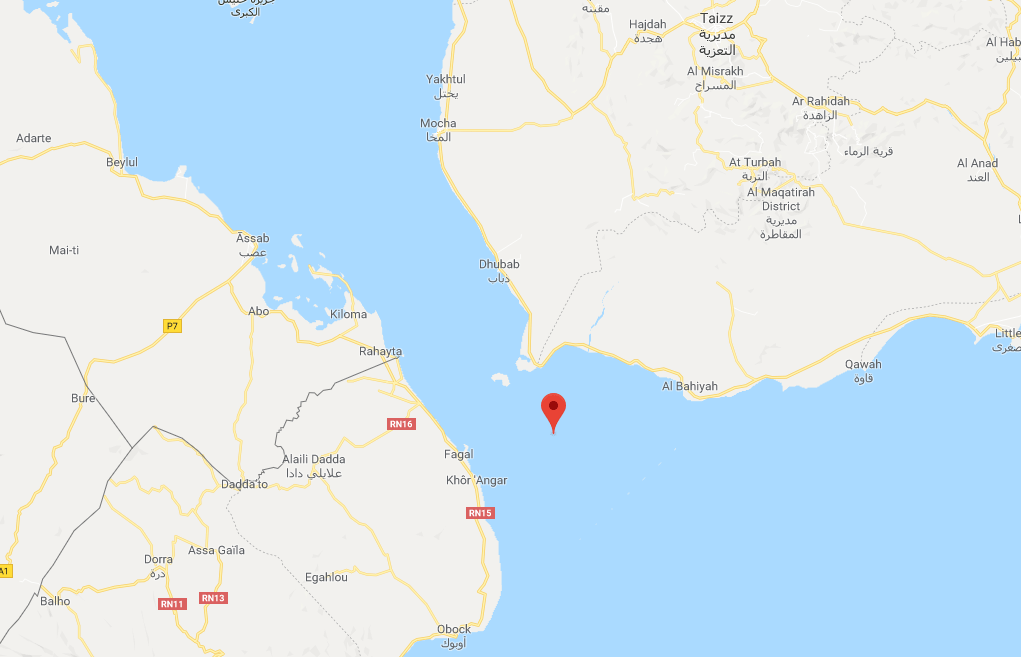
Countries in the Horn of Africa have formed a task force to co-ordinate regional interventions in the face of threats to marine resources and security around the Red Sea and the Gulf of Aden.

The team was formed on Thursday in Nairobi by the Committee of Ambassadors from the Inter-Governmental Authority on Development (Igad) partner states of Kenya, Uganda, Ethiopia, Sudan, Djibouti, Somalia and South Sudan.

To continue reading, please click here.

Source: theeastafrican.co.ke

Adding depth to maritime defense

There was a time when a country’s maritime strategy consisted of its navy or coast guard protecting its waters, defending citizens from enemies and pirates, and going after people fishing illegally.

That’s a shallow view of maritime security in the 21st century. Groups such as the United Nations and the African Union say that a modern-day maritime strategy must protect assets, ensure sustainable economic growth, guard the environment, manage energy use, and build the ability to work with neighboring countries and regions.

To continue reading, please click here.

Source: defenceweb.co.za

The United Kingdom lowers the European flag on Northwood

Maritime Security News note: This article has been automatically translated into English by Google. As such, errors may remain.

(B2) The European Union flag will be lowered at Northwood HQ. The United Kingdom loses control of the EU’s anti-piracy operation, which it has been commanding since the beginning, a good decade ago in December 2008. At issue: Brexit.

It will be effective March 29, 2019. And there, there is no postponement. Everything has already been decided and endorsed for several months already. The command returning to the Spaniards, with the French in support. Which is just a return of things. Since without Paris and Madrid, this operation would never have seen the day (Read: France and Spain decided to act on maritime piracy).

To continue reading, please click here.

Source: bruxelles2.eu

Migrant ship capture: Maltese armed forces take control of hijacked tanker

UN file image of migrants being rescued.

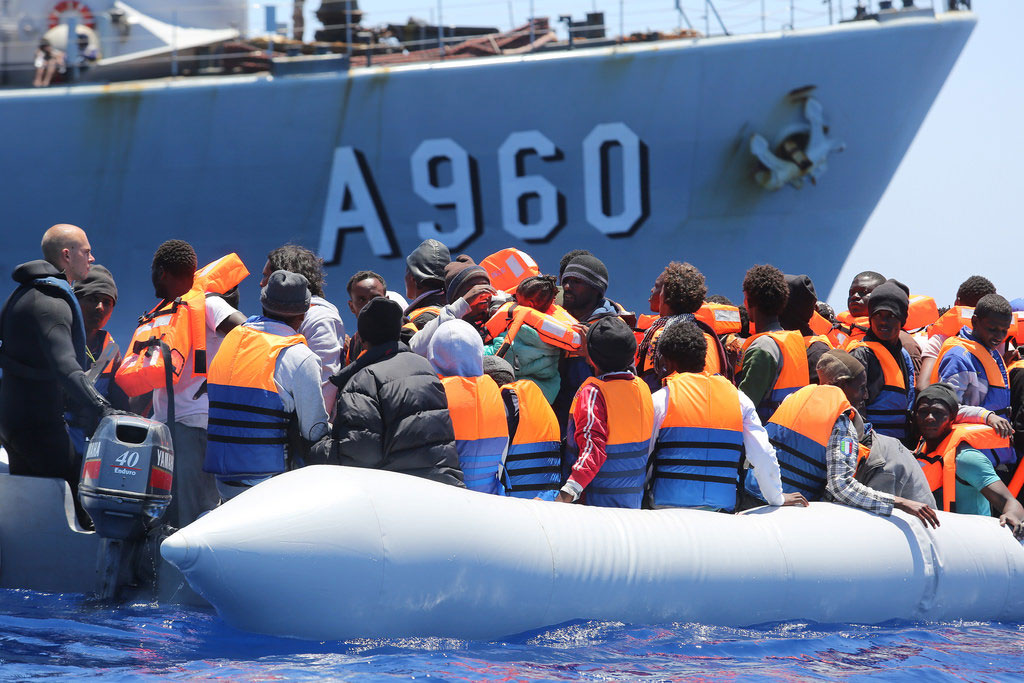
Malta’s armed forces have taken control of a tanker which had been seized by migrants off the coast of Libya on Wednesday.

The tanker, Elhibru 1, is now heading to a Maltese port with the crew and migrants, who will be handed over to police.

More than 100 migrants who had been rescued by the ship hijacked it after being told they would return to Libya.

They had ordered the ship’s captain to head north towards Europe.

In a statement, the Armed Forces of Malta (AFM) said they had established communications with the captain of the ship when it was still proceeding towards Malta.

The captain said he was not in control of the vessel and that he and his crew were being forced and threatened by a number of migrants to proceed to Malta.

A patrol vessel stopped the tanker from entering Maltese territorial waters, and a special operations unit team was dispatched to board and secure the vessel, the AFM said in a statement.

Italy’s interior minister, Matteo Salvini, had earlier called the migrants “pirates” and said they would not be allowed to dock in Italy.

He described the act as “the first piracy on the high seas with migrants”, according to the Associated Press news agency.

The incident comes as the EU says it is ending navy patrols in the Mediterranean.

The EU says the decision to suspend Operation Sophia in September follows a request by Italy.

The mission was put in place four years ago to deter people smugglers and rescue migrants trying to reach Europe by boat. Tens of thousands have been saved.

Lately, the mission has largely targeted smuggling networks as the number of people making the crossing dropped sharply following a controversial deal between the EU and Libya.

But Mr Salvini, the leader of the right-wing League party, has blamed Operation Sophia for continuing to bring rescued migrants to Italian shores.

He has been at the centre of a number of international row over his refusal to allow migrant ships dock in Italian ports.

Source: bbc.co.uk

Seafarers not involved in piracy attacks — Union

By Godfrey Bivbere & Cynthia Alo T

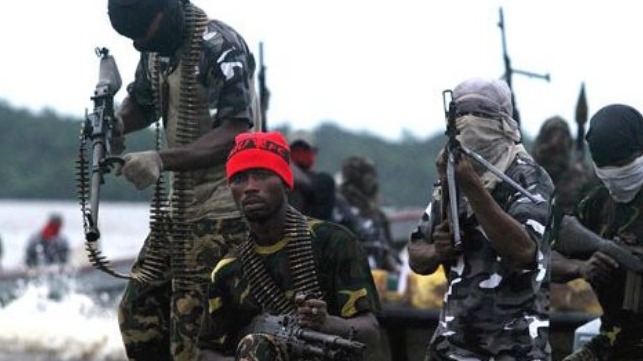
The  Nigeria Merchant Navy Officers and Water Transport Senior Staff Association, NMNOWTSSA,  has denied reports linking piracy attacks on the nation’s waterways to seafarers.

The Union explained that the report that was recently carried in some sections of the media is a mere move by unscrupulous individuals to tarnish the image of seafarers noting that no qualified seafarer will be involved in such illegal act.

To continue reading, please click here.

Source: vanguardngr.com

Ship Captain Wants Agencies To Support Nigerian Navy To Fight Piracy

By Uchenna Eletuo

Lagos – Mr Bayo Oyekan, a ship captain, on Monday appealed to stakeholders to support the Nigerian Navy to check the incidence of piracy on the nation’s waters.

Oyekan told the News Agency of Nigeria (NAN) in Lagos that the lukewarm attitude of other agencies that were supposed to support the Navy in checking piracy had made the incidence to rise in the Gulf of Guinea.

To continue reading, please click here.

Source: sundiatapost.com

Navy seeks better pact with maritime stakeholders for effective prosecution

By Odita Sunday, Jesutomi Akomolafe (Lagos), Kanayo Umeh, Sodiq Omolaoye (Abuja) and Ayodele Afolabi (Ado-Ekiti)

The Nigerian Navy (NN) is seeking better collaboration and understanding with maritime stakeholders for effective prosecution of pirates and sea robbers.

It said that lack of collaboration among relevant government agencies had been the reason why suspects are granted bail in court.

To continue reading, please click here.

Source: guardian.ng

The Forgotten Key to Maritime Security in the Sulu-Celebes Seas

Economic development in coastal communities will help stem the flow of illegal behavior.

By Jay Benson

Maritime insecurity in the Sulu and Celebes Seas is a persistent challenge. These waterways have recently been used  to conduct incursions into Lahad Datu, orchestrate kidnap for ransom activities by militant groups such as Abu Sayyaf, and facilitate illegal wildlife trafficking. Governments in the Philippines, Indonesia, and Malaysia have responded with increased maritime enforcement capacity and presence, as well as enhanced international coordination. Although these are important efforts that need to be maintained, an exclusive focus on enforcement capacity risks ignoring an equally important facet of maritime insecurity: economic exclusion and inequality in coastal communities.

To continue reading, please click here.

Source: thediplomat.com

Nigerian Waters Are Safe for Merchant Shipping – Shippers’ Council Boss

By Godwin Oritse

The Executive Secretary/ Chief Executive, Nigerian Shippers ‘Council, NSC, Hassan Bello, has said that the imposition of surcharges on Nigerian bound cargo due to imaginary security concerns along the Gulf of Guinea region is a misconception of foreign shipping lines.

He lambasted foreign shipping firms for miscategorization and exaggeration of the security situation in the country to justify surcharges they unjustly levied on cargo destined to Nigeria.

To continue reading, please click here.

Source: allafrica.com