Seychelles, CJTF-HOA build partnership

By Captain Olivia Cobiskey
U.S. ArmyCJTF-HOA, May 21, 2019

VICTORIA, Seychelles — The East African island nation of Seychelles is a key partner with Combined Joint Task Force-Horn of Africa, working towards increasing security and regional stability in the Indian Ocean.

U.S. Air Force Brig. Gen. James R. Kriesel, deputy commanding general of Combined Joint Task Force-Horn of Africa, recently visited the Republic of Seychelles to discuss ways to increase interoperability between CJTF-HOA and the Seychelles.

“A key, vital forecast is the fact piracy is suppressed, not eradicated,” said Kriesel, the first CJTF-HOA leader to officially visit the Seychelles since 2012. “We, as a coalition, must maintain readiness to rise to the challenge of a potential resurgence.”

Kriesel met with leaders from the Seychelles People’s Defence Force, and the U.S. Embassy Mauritius and Seychelles, to discuss the crucial role the Seychelles, a group of 115 islands, has played in the fight against illegal fishing, the ongoing threat of piracy in the western Indian Ocean, and trafficking of weapons, narcotics and people. During the meeting, Seychelles People’s Defence Force leaders elaborated on their plan to increase information sharing and force capability to police the Indian Ocean.

Kriesel also visited the Regional Coordination and Operational Centre, seeing firsthand how the center operates and its pivotal role in promoting maritime security in the region.

“CJTF-HOA and the Regional Coordination and Operational Centre would benefit from conducting training and exercises similar to our subject matter expert exchange; ultimately, furthering strategic access,” said Kriesel.

The Regional Coordination and Operational Centre’s objectives are synergistic with CJTF-HOA’s lines of effort. Strengthening individual and institutional capacity, encouraging international capacity, and facilitating mutual dialogue with international, regional and national actors form the foundation of the Regional Coordination and Operational Centre, resulting in success in their anti-piracy mission. Approximately 100 pirates have been repatriated to Somaliland; however, the government is concerned criminals are regrouping and obtaining financing for future activity, said Col. Clifford Roseline, chief of the Seychelles People’s Defence Force.

“Seychelles is proud to be a member of the Combined Maritime Forces,” said Roseline, who joined the Seychelles People’s Defence Force in 1978. The Seychelles rely on collaboration with maritime and international partners to share information and intelligence to ensure their forces are at the right place, at the right time, to continue to combat trafficking as it evolves in today’s operational landscape.

“The Combined Maritime Forces is seeing not only an increase in human trafficking, but a rise in the trafficking of both charcoal and sugar, which funds terrorist organizations in East Africa,” said Roseline.

“The Seychelles is more than just a partner on the high seas,” said Melanie Zimmerman, deputy chief of mission of the U.S. Embassy Mauritius and Seychelles, who also noted the country has the ability to prosecute suspected pirates detained by European Union Naval Force ATALANTA (EU NAVFOR) forces and U.S. Naval Forces Africa.

“CJTF-HOA values its partners and looks forward to continued collaboration with Seychelles,” Kriesel said at the conclusion of his visit.

Source: hoa.africom.mil
Anti-piracy patrol targets Yemen fishermen

BySAEED AL-BATATI, QUSAYIR, YEMEN

A global anti-piracy task force deployed in the Arabian Sea to protect shipping lanes has engaged in invasive and violent searches and seizures of small Yemeni fishing vessels with apparent impunity, fishermen told Asia Times.

Multiple fishermen from Yemen’s southeastern province of Hadramout say international warships, most recently from the Indian navy, have targeted them in deep water and sometimes even in Yemen’s territorial waters. The perceived harassment has spread panic in fishing communities along the Yemeni coast, compelling many to shorten their voyages and others to abandon the profession entirely – some even taking up arms in the war.

To continue reading, please click here.

Source: asiatimes.com

Naval service specialists deliver training to Kenyan forces

Royal Marines and Royal Navy specialists have been showing Kenyan security forces how to improve their ability to fight piracy, illegal fishing and drugs trafficking.

Specialists from 1 Assault Group Royal Marines’ Board and Search School and landing craftsmen from 43 Commando Fleet Protection Group travelled to Mombasa – Kenya’s second-largest city and one of Africa’s biggest trading hubs – to deliver training and share expertise.

The contingent, made up of Royal Marines and Royal Navy ranks, were part of the Tri-Service British Peace Support Team, an organisation that aims to aid United Nations and African Union Peace Support Operations.

The training group sought to understand the current situation that is impacting Kenya’s economy and create a coherent strategy for the future as they look to shore up security in the Indian Ocean port.

The training aimed to help Kenyan security forces become better equipped to deal with the threats they face and develop a clear plan to continue protecting their waters.

The majority of Kenyan trade comes through Mombasa and shutting down criminal activity is a priority for the country’s security forces.

Around 30 personnel from a variety of Kenyan agencies came to train and learn how to conduct successful board and search of suspicious vessels.

The first part of the training consisted of classroom-based sessions on board and search operations at sea, before phase two saw coastguard, police and port authority teams work together to practise their new skills in the water.

The training included an opening and closing ceremony attended by high ranking dignitaries, which included a demonstration of the skills learned during the sessions.

A further training package is now being arranged later this year.

Source: royalnavy.mod.uk

Iran, Russia preparing to hold joint naval drills in Persian Gulf

BEIRUT, LEBANON (9:45 A.M.) – The naval forces of Iran and Russia are preparing to hold joint drills in the Persian Gulf waters, the Mehr News Agency reported.

Citing Iranian naval commander Rear Admiral Hossein Khanzadi, the Mehr News Agency reported that the joint naval drills will take place in Iran’s southern waters.

To continue reading, please click here.

Source: almasdarnews.com

Crew Of Pirates Captured By Spanish Soldiers

File image of an approach on a dhow

The crew of the frigate ‘Navarra’ has carried out the device in the framework of the Atalanta mission; the operation is still open.

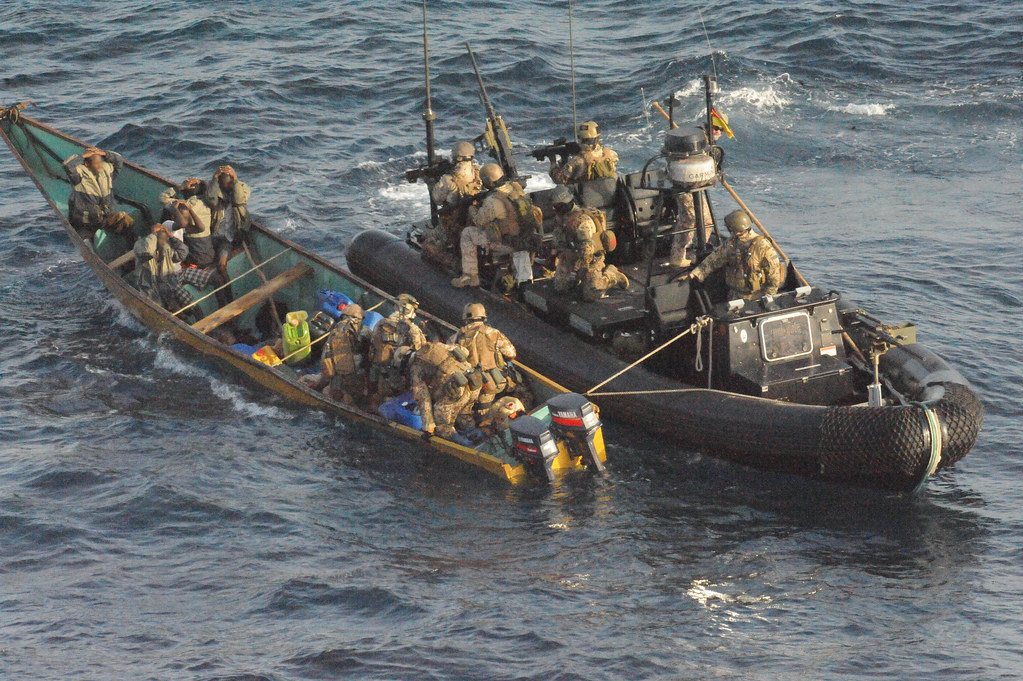
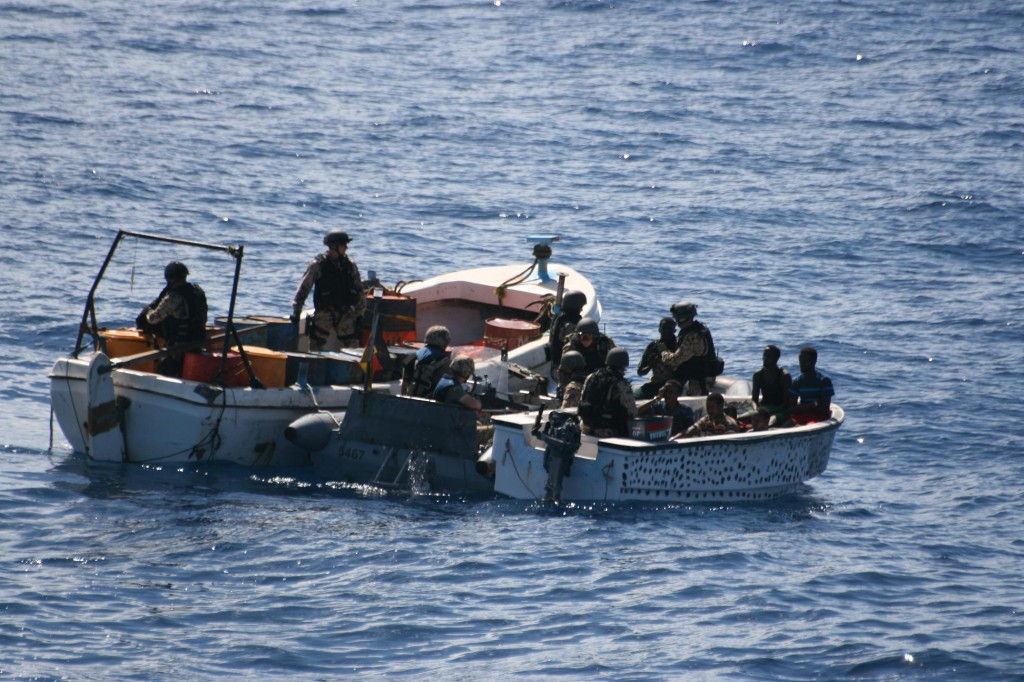
Spanish soldiers of the Navarra frigate have intercepted a pirate vessel and captured the crew, which in the previous days had attacked two ships -one of them, Spanish-. The episode took place on the morning of this Tuesday in the waters of the Indian Ocean , in the framework of the Atalanta operation of the European Union to fight against piracy. The device has culminated with the release of a Yemeni fisherman who had been kidnapped for four days.

To continue reading, please click here.

Source: maritimeherald.com

Root of maritime crime ‘must be addressed,’ says Saudi Border Guards chief

JEDDAH: The head of the Saudi Border Guards has warned that maritime security in the Red Sea and elsewhere can only be achieved if the root of piracy and maritime crime are addressed.

Gen. Awad bin Eid Al-Balwi, director general of the Saudi Border Guards, was speaking at the opening of an international workshop on Tuesday on dealing with piracy and other crimes at the Mohammed bin Naif Institute for Maritime Science and Security Studies in Jeddah.

To continue reading, please click here.

Source: arabnews.com

Indian Navy reviews outcome of Sea Vigil exercise

The Indian Navy and several other agencies involved in coastal defence and maritime security brainstormed over the outcome of the ‘Sea Vigil’ exercise — the first-of-its-kind multi-agency drill covering the entire 7,516 km-long Indian coastline and exclusive economic zone.

The mega exercise took place on January 22 and 23 with participation of 13 coastal states and union territories along with all maritime stakeholders with an aim to check the efficacy of maritime security and surveillance.

To continue reading, please click here.

Source: business-standard.com

Saudi Arabia’s role in banishing piracy from regional waters

JENNIFER BELL

DUBAI: A decade ago, during the peak years of the Somali piracy crisis, the waters of the Arabian Gulf faced frequent threats from armed criminals at sea, who disrupted the economy by terrorizing shipping routes.

But experts say regional action — with Saudi Arabia at the forefront — has meant crimes on the high seas have dipped to some of the lowest records in years. 

To continue reading, please click here.

Source: arabnews.com

Task force to co-ordinate regional interventions

By FRED OLUOCH

Countries in the Horn of Africa have formed a task force to co-ordinate regional interventions in the face of threats to marine resources and security around the Red Sea and the Gulf of Aden.

The team was formed on Thursday in Nairobi by the Committee of Ambassadors from the Inter-Governmental Authority on Development (Igad) partner states of Kenya, Uganda, Ethiopia, Sudan, Djibouti, Somalia and South Sudan.

To continue reading, please click here.

Source: theeastafrican.co.ke

Maritime piracy incidents down in Q1 2019 but kidnapping risk in Gulf of Guinea persists

The International Chamber of Commerce International Maritime Bureau’s (IMB) report for the first quarter of 2019 reveals fewer incidents of piracy and armed robbery against ships than the first three months of 2018.

The IMB Piracy Reporting Centre, a 24-hour, free service offered by the IMB, enables shipmasters to report any incidents of piracy and armed robbery, globally against ships. Since 1991, the IMB Piracy Reporting Centre has provided the industry, government bodies and response agencies with timely data on the location of piracy and armed robbery incidents at sea.

Global trends

In the first quarter of 2019, IMB reported 38 incidents of piracy and armed robbery at sea, representing 28 fewer incidents than the first quarter of 2018 (66). IMB’s Piracy Reporting Centre detailed that 27 vessels were boarded, seven vessels were fired upon and four attempted attacks occurred in the first quarter of 2019. No vessels were reported as hijacked for the first time since the first quarter of 1994.

“These latest statistics from the IMB Piracy Reporting Centre are encouraging. However, first quarter statistics is too short a period on which to anticipate trends over the year.  It confirms the importance of information sharing and coordinated action between the industry and response agencies. Going forward, it is critical to continue to build more effective reporting structures to enable a strong, unified response when dealing with piracy incidents,” said IMB Director Pottengal Mukundan.

High risk in Gulf of Guinea

The Gulf of Guinea represented a high number of piracy and armed robbery attacks at sea, with 22 incidents reported in the first quarter of 2019. The region also accounted for all of the worldwide crew kidnappings as 21 crew members were kidnapped across five separate incidents. Incidents were reported in the coastal countries, of Benin, Cameroon, Ghana, Ivory Coast, Liberia, Nigeria and Togo in the first quarter of 2019.

Gains in Nigeria, but caution urged

Nigeria has been a hotspot for piracy incidents over the past decade. However, in the first quarter of 2019, Nigeria experienced a decrease in reported piracy incidents. Nigeria reported 14 incidents of piracy for Q1 2019, in comparison to 22 incidents in Q1 2018. These results confirm the Nigerian Navy’s increased efforts to “actively respond to reported incidents by dispatching patrol boats,” the report notes. Despite these efforts, Nigerian waters remain risky for vessels, especially the port of Lagos where four incidents have been reported.

Improvements in Asia

In Asia, Indonesia witnessed a decrease in piracy activities for the first quarter of 2019. There were only three incidents reported against anchored vessels in ports in Indonesia – the fewest reported incidents since 2010 – according to the report. As with Nigeria, increased cooperation and information sharing between the Indonesian Marine Police and IMB Piracy Reporting Centre has enabled regular patrols in high-risk areas.

Data sharing remains critical

The declining rate of piracy incidents worldwide in the first quarter of 2019 reinforces the importance of transparency, communication and coordination, between vessels and coastal authorities. By reporting all incidents to the IMB Piracy Reporting Centre and  coastal authorities the response can be better organised improving  incident response times and prompt advice to vessels aimed at a more optimal use of  resources.  National governments and coastal authorities can use this data to collaborate and strengthen their piracy prevention efforts.

Source: iccwbo.org