
The Financial Times reports that the recent incidents in the Gulf of Oman have seen a rise in calls to maritime security companies by concerned shipping firms.
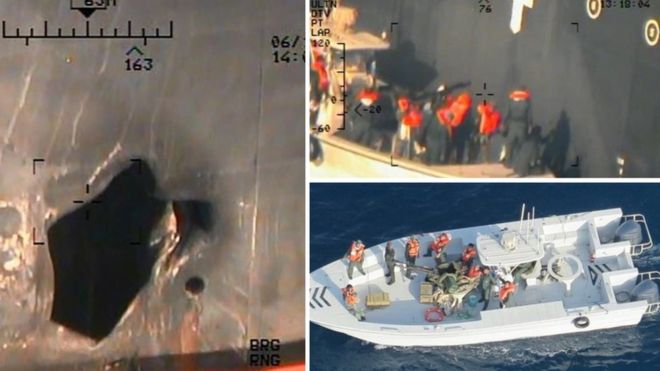
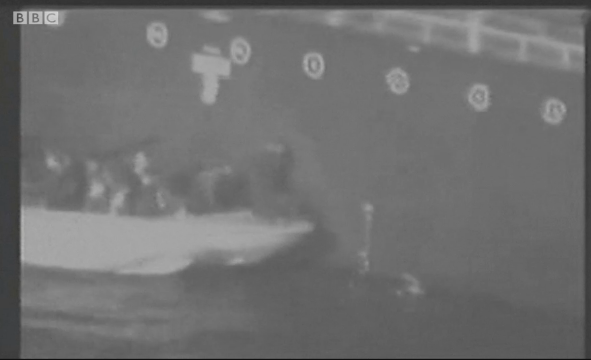
Since the attacks on the Front Altair and Kokuka Courageous, shipping companies who transit the region on a regular basis have been looking into additional protection for their vessels. During the height of Somali piracy in the region, it was the norm for the merchant marine to employ teams of armed guards in order to deter any potential attack, and it worked. No merchant vessel with armed guards has ever been hijacked in the Indian Ocean. That, combined with more aggressive and visible patrolling by the international naval forces present in the region, has seen the issue of piracy off Somalia reduce considerably since 2012.
The current threat, believed to be from Iran’s IRGC – an accusation denied by Iran – is leading to an increase in demand for armed protection services, a sector which has suffered considerably from rate cuts and an influx of cheaper personnel in recent years.
The main UK Private Maritime Security Companies (PMSC), such as Ambrey Risk and MAST report an increase in demand from previous and prospective clients keen to ensure the safety of their ships in the region.
While a team of armed guards is no match for the IRGC, even an unarmed security detail can offer additional security. Well trained guards on Watch duties can spot threats that crew might miss or dismiss as the local pattern of life and, while engaging hostile state actors is unlikely, they can offer the Master an early warning system that he may lack.
With the situation in the region fluid, it’s possible that a convoy escort programme, similar to that used in the Internationally Recognised Transit Corridor (IRTC) in the Gulf of Aden may be adopted, with support from the US Navy. Russia, China, South Korea and Japan’s MSDF have all run escorts through the Gulf of Aden, and a multi-national force may be more palatable to states bordering Iran.
However, nothing has been officially announced, leaving the shipping industry scrambling to come up with its own solutions, as is so often the case. The threat posed to vessels in the region continues to be real and the situation dangerous for crews.

 Maritime Security News