Indian media reports ‘pirate’ incident

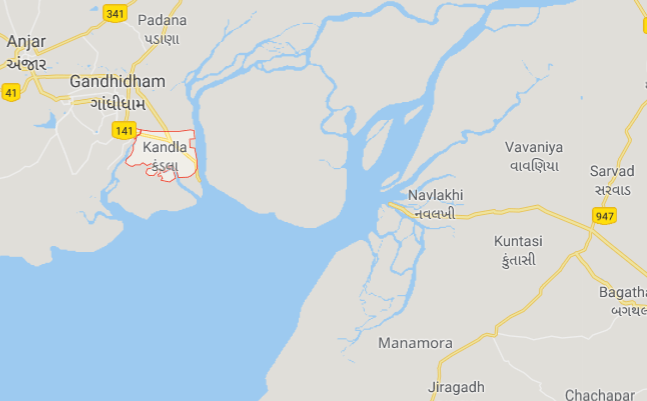
The Times of India carried an article on Dec. 8th, which stated that Kandla Marine Police had opened a case against three unknown suspects who carried out ‘mid-sea piracy’ against the MV Jeetsagar on November 13th.

According to the report, three ‘pirates’ boarded the cargo ship off the Indian cosat, between Kandla and Navlakhi ports during the night.

“They boarded the ship and looted barrels containing 190 litres of diesel and a cellphone,” according to the paper, as well as threatening crew. Given the location and apparent threats made to the vessel before the incident, it would appear that this was the work of opportunists rather than a concerted piracy effort. The incident does not appear to have been reported to the IMB.

Japan plans to deploy escort ship, patrol aircraft in Arabian Sea in 2020

Nathan Gain

Japan plans to send one escort ship, one patrol aircraft and 270 sailors from the Maritime Self-Defense Force (JMSDF) to the northern part of the Arabian Sea to protect international merchant vessels, the Nikkei business daily said yesterday.

The Japanese government is expected to green light the deployment plan by the end of this year. The JMSDF assets will be deployed on a one-year mission that could be renewed on an annual basis. Japan said it would not join the U.S.-led coalition Sentinel the Pentagon is forming in the region with countries such as Australia, Bahrain, and Saudi Arabia.

To continue reading, please click here.

Source: navalnews.com

Commander CTF 150 speaks at Djibouti Code of Conduct Maritime Security Conference

Djibouti Code of Conduct Conference (DCoC), Kenya

Commodore Ed Ahlgren OBE Royal Navy, Commander CTF150 (CCTF150), visited Mombasa, Kenya to deliver a maritime security threat update to the Djibouti Code of Conduct Conference (DCoC).

The Djibouti Code of Conduct has been instrumental in repressing piracy and armed robbery against ships in the western Indian Ocean and the Gulf of Aden. In 2017, under the Jeddah Agreement, it saw its scope significantly broadened to cover other illicit maritime activities, including human trafficking and illegal, unreported and unregulated (IUU) fishing.

Commodore (Cdre) Ahlgren’s speech focused on the threats, as seen by Combined Maritime Forces (CMF), to law abiding shipping, the fishing industry and recreational craft in the region. Cdre Ahlgren briefed the attending delegates on how CMF operates and how collaboration, information exchange and the sharing of best practices makes the 33 nation coalition a formidable force.

“Maritime Security is a huge undertaking given the size of the ocean against the assets that are available. It cannot be done by one entity alone, we must collaborate, share information and pool our resources if we are to combat those that wish to do us harm. These problems are not just national, nor regional but international. It’s everybody’s business” Cdre Ahlgren said.

21 countries are signatories to the DCoC and they meet on a six-monthly basis to discuss how the maritime domain can be protected from a wide range of threats including piracy, threats to oil and gas installations, dangers to transport systems and illegal and unreported fishing. DCoC works closely with other security organisations in the region including European Union Naval Force (EUNAVFOR), the International Maritime Organisation (IMO) and the United Nations Office on Drugs and Crime (UNODC) to tackle these threats.

While in Mombasa, Cdre Ahlgren took the time to meet with the Director General of the Kenyan Coast Guard, Brigadier Loonena Naisho and Kenyan Deputy Fleet Commander, Colonel Lawrence Gitumo. The senior officers discussed how Kenya can engage further with CMF.

Cdre Ahlgren concluded, “This visit was particularly rewarding as it showcased how CMF can work with security organisations to make the western Indian Ocean and Gulf of Aden a safer, more sustainable and increasing prosperous region of CMF’s area of operations.”

Source: combinedmaritimeforces.com

CTF150 (FS Nivose) Achieves Major Drugs Bus in Arabian Sea

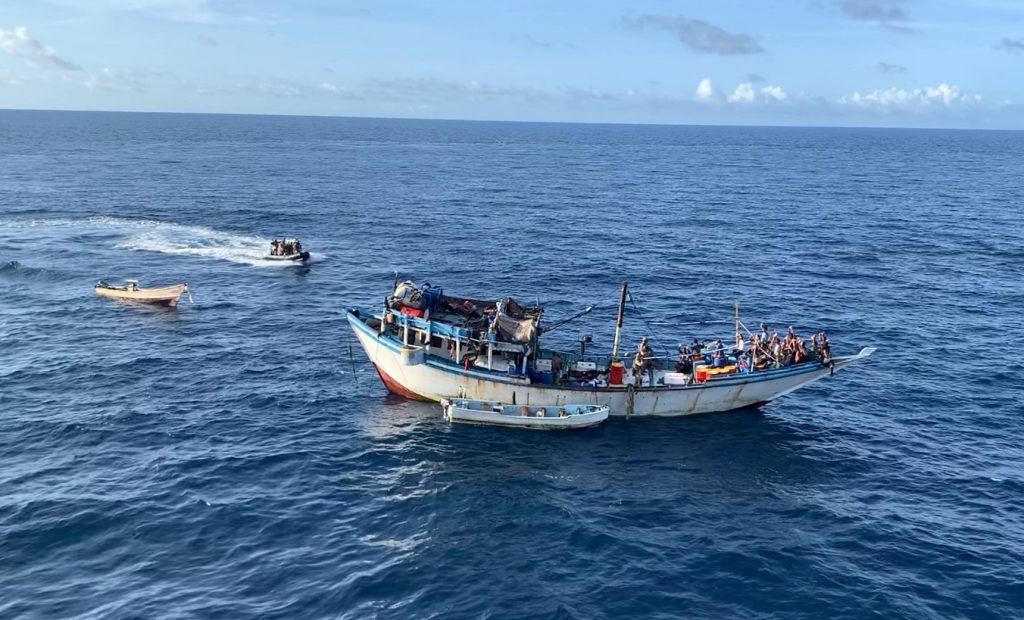
A French warship, representing Combined Task Force 150 (CTF 150) seized a huge amount of hashish from a rogue dhow on Wednesday 25 September.  The dhow had been tracked for a short period and did not respond to requests from the warship, FS NIVOSE, on her intentions.  Highly trained French sailors, in military rigid inflatable boats, conducted a boarding and in the subsequent search, over 2.5 tonnes of the illegal narcotic was discovered and subsequently destroyed.

Commodore Ed Ahlgren Royal Navy, the Commander of Combined Task Force 150, said, ”This substantial seizure clearly and unequivocally demonstrates the true value and significant impact of CMF operations on those malign actors who choose to use the sea for their unlawful purposes.  The French warship, FS NIVOSE, operating in Direct Support of the joint UK and French CTF 150 Command, has sought tenaciously those who wish to do us harm and incite instability in both this region and further afield.  Thanks to their efforts, they have disrupted a vital flow of funding to nefarious organisations and I congratulate the crew of FS NIVOSE on their success and wish them good hunting for their forthcoming operations.”

CTF 150 is a great example of how the cooperation between international maritime members of the CMF can work together to achieve the common goal of deterring or catching those who risk being a part of illegal narcotics smuggling.

Source: combinedmaritimeforces.com

Bags of Hashish onboard the captured Dhow

Maritime security: “The Indian Ocean has become a hub for drug trafficking,” says SAJ

File image of an approach on a dhow

BY EMILY PAYEN, BY PREITY RAMESSUR-BHOYROO

A presentation by the Ministerial Maritime Security in Eastern and Southern Africa and Indian Ocean (ESA-OI) took place at the Prime Minister’s Office (PMO) on Tuesday 11 June. The meeting was attended by Minister Mentor Sir Anerood Jugnauth and Minister of Foreign Affairs Nando Bodha.

“The Indian Ocean has become a hub of drug trafficking,” said the minister’s mentor. He explained that “we must take steps to counter this problem.”

To continue reading, please click here.

Source: defimedia.info

HMCS Regina completes two more drug busts in 4 days

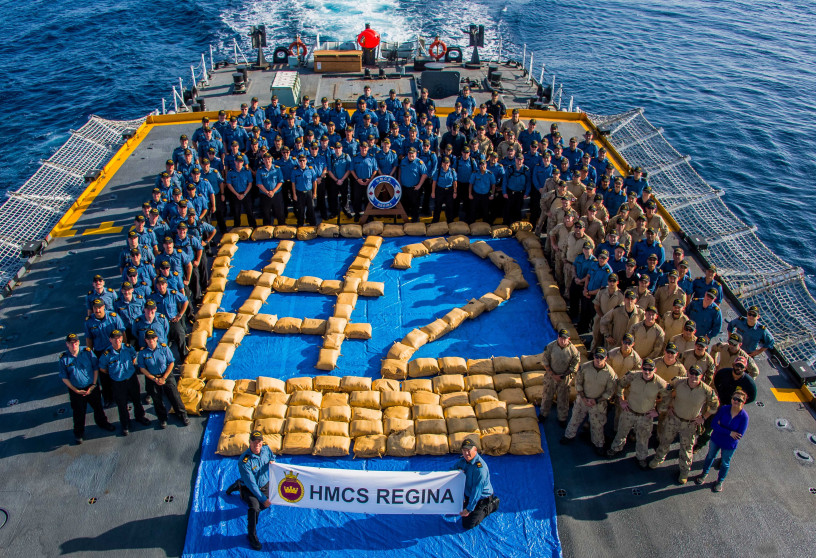
In just 4 days, Her Majesty’s Canadian Ship (HMCS) Regina, under the command of the Pakistan led Combined Task Force (CTF) 150, conducted its second and third illegal narcotic hauls, seizing and destroying just over 4,500Kgs of hashish and 10 Kgs of heroin.

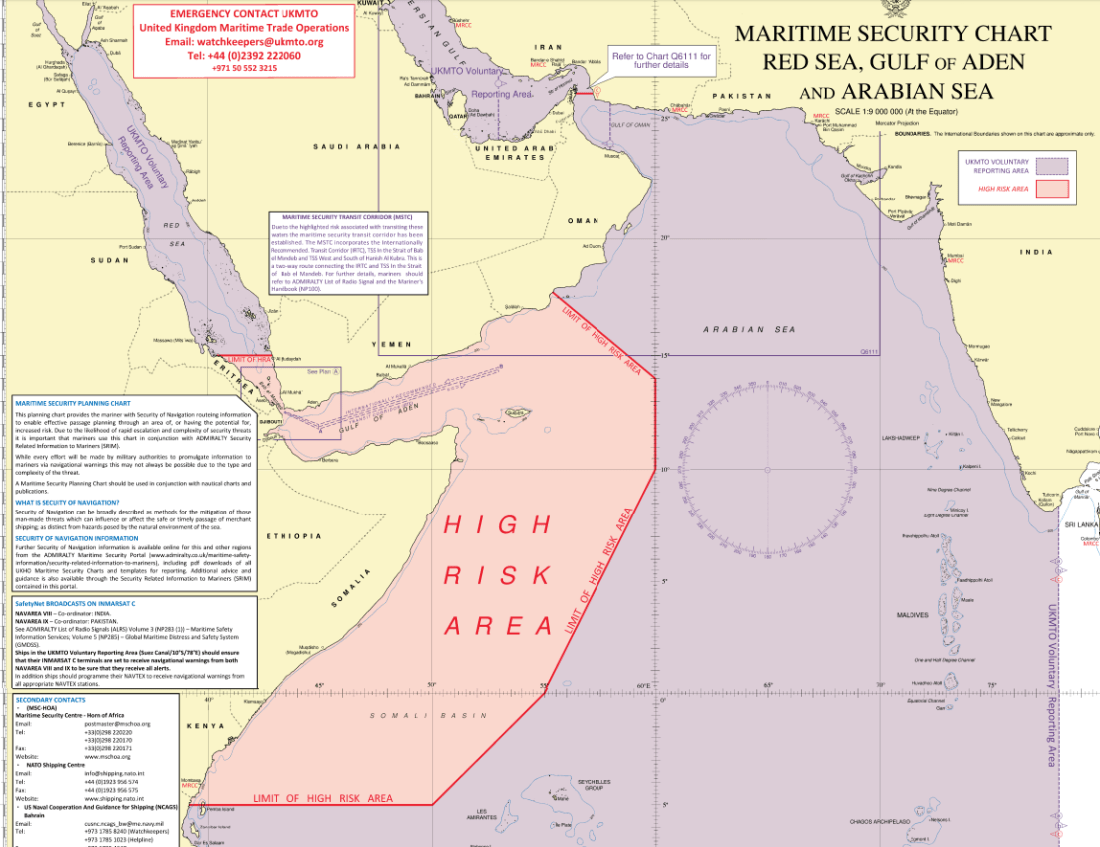
CTF 150 is a multinational maritime force whose mission is to maintain maritime security and prevent illegal activity across the Arabian Sea, Southern Red Sea and Western Indian Ocean. Covering an area of 2.3m square kilometers, CTF 150 works with its coalition partners to help prevent illegal narcotics.

Commodore Alveer Ahmed Noor Si, Commander CTF150 said: “The Pakistan Navy command team is determined to maintain good order at sea through adept deployment of CTF150 Units. Effective Command and Control and close coordination with deployed assets has resulted in the successful seizure of a sizable amount of narcotics. Maritime Domain Awareness and Maritime Security Cooperation between relevant stakeholders is a necessity to overcome various maritime challenges and protect global commerce”.  He went onto say: “As Commander of Combined Task Force 150, my aim is to continue working together with regional players, participating nations and maritime organisations in order to further augment collaboration with regional states and harness their support, which remains pivotal for maintaining maritime security throughout the region”.

On the 14th and 18th April, HMCS Regina spotted two suspicious dhows, off the coast of Oman in an area known as the “Hash Highway.” The ship deployed its Naval Tactical Operations Group (NTOG) team – working as the boarding team for the ship, and seized hauls of illegal hashish and heroin, which were transferred to HMCS Regina and subsequently destroyed.

Commander Jacob French, Commanding Officer HMCS Regina “We’re honoured to be contributing to counter-terrorism and maritime security efforts in the Middle East, ensuring the funding from illegal narcotics is staying out of the hands of criminal and terrorist organisations. I’m extremely proud of the hard work of our ship’s company, and we remain ready to continue our mission and support CTF 150 and the Combined Maritime Forces.”

Lt (N) Jacob Killawee, NTOG Officer in Charge said, “Our priority when boarding these ships is the safety and welfare of the fishermen we encounter, drugs being there or not. In order to effectively deter and disrupt the flow of narcotics that is funding terrorism, it’s just as important for us to build trust with the people who are being exploited by those same actors who wish to do us harm. We are trained and prepared for a worst case scenario, but treating the crew with dignity and respect makes our job easier and safer for everyone involved. Our success validates the hard work we’ve done in preparation for this deployment, ensuring that we were in the right place, with the right training and equipment to achieve this result.”

Source: combinedmaritimeforces.com

Regina makes second drug bust

Peter Mallett, Staff Writer ~

HMCS Regina and crew completed a second sizable drug bust following the seizure of approximately 3,000 kilograms of hashish of the coast of Oman.

The Canadian warship is participating in Operation Artemis and the Canadian Armed Forces Combined Task Force (CTF) 150, part of an international counter-terrorism and maritime security operations in the Indian Ocean involving the combined maritime forces of 33 nations.

To continue reading, please click here.

Source: lookoutnewspaper.com

CMF Commander hosts Semi-Annual Maritime Security Conference in Bahrain

MANAMA, BAHRAIN

Story by Petty Officer 1st Class Bryan Blair

U.S. Naval Forces Central Command / U.S. 5th Fleet  

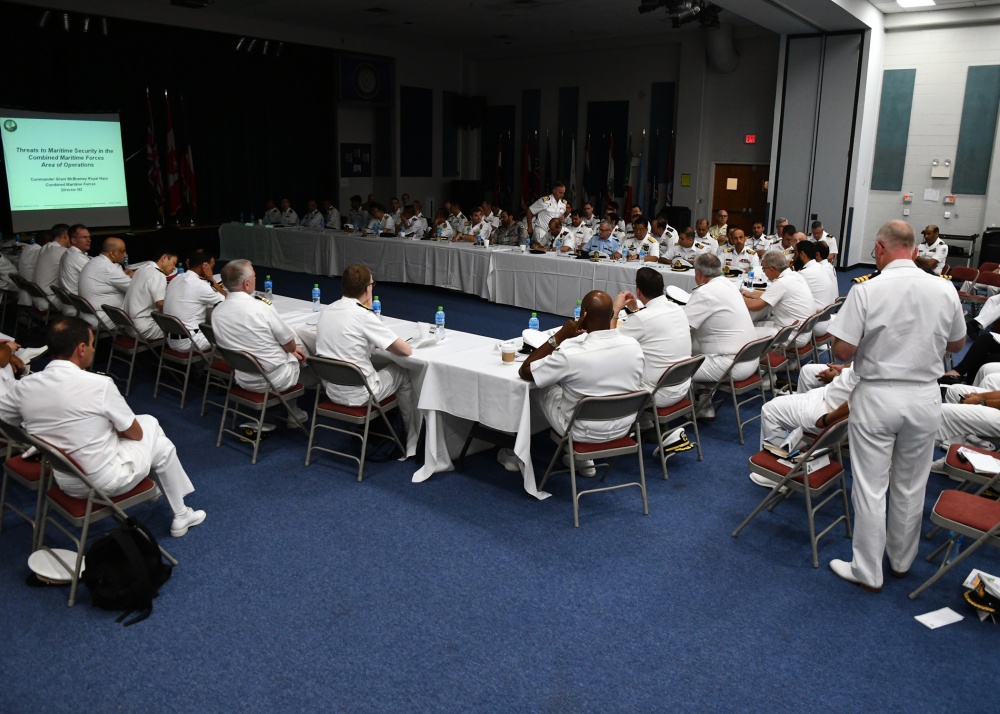
MANAMA, Bahrain – More than 150 multi-national military leaders representing 33 partner nations were onboard Naval Support Activity Bahrain to attend the Combined Maritime Forces (CMF) annual Maritime Security Conference, March 7. 

Vice Adm. Jim Malloy, commander of U.S. Naval Forces Central Command/U.S. 5th Fleet/Combined Maritime Forces hosted the partner-nation representatives to discuss the importance of teamwork and alliances in combatting and deterring potential threats in the U.S. 5th Fleet area of operations. 

“Collaboration is key to accomplishing our shared goals of maritime security and stability in the region,” said Malloy. “A forum such as this conference allows Navy leaders from across the region and the globe to gather and share perspectives – identify common threats and shared opportunities, and then coordinate activities which will optimize our collective strength and maximize our effectiveness as we operate at sea in the Middle East.” 

The objective of this year’s conference was for multi-national leaders to actively communicate about challenges, solutions and ultimately, the way forward in maritime strategy. The members were dispersed into working groups, which assisted in streamlining the discussion topics. 

“Collectively we operate in one of the most challenging and complex maritime environments in the world. Ships that operate here face threats in the Red Sea, the Arabian Sea, the Arabian Gulf and the Indian Ocean,” said Malloy at the beginning of the conference. “The CMF is the vehicle we use to promote legitimate commerce, deter conflict and maintain regional stability.”

Royal Navy Commodore Steve Dainton, deputy commander of the CMF, was also in attendance and echoed the sentiments conveyed by Malloy. 

“As a community, we all need to be in this together and building a network of like-minded people will be essential to future success,” said Dainton. “Your individual contributions undoubtedly provide legitimacy to the organization.”

CMF is comprised of three Combined Task Forces (CTFs), CTF 150, which is responsible for maritime security and counter terrorism operations, CTF 151, responsible for counter piracy operations and CTF 152, responsible for maritime security and counter terrorism with the Gulf and building cooperation between Gulf Cooperation Council nations.

CMF is a unique multi-national collective of 33 like-minded nations, dedicated to promoting security and free flow of commerce across 3.2 million square miles of international waters in the Red Sea, Gulf of Aden, Somali Basin, the Indian Ocean and the Gulf. CMF’s main focus areas are disrupting terrorism, preventing piracy, reducing illegal activities, and promoting a safe maritime environment for all.

U.S. 5th Fleet area of operations encompasses about 2.5 million square miles of water area and includes the Arabian Gulf, Gulf of Oman, Red Sea and parts of the Indian Ocean. The expanse is comprised of 20 countries and includes three critical choke points at the Strait of Hormuz, the Suez Canal and the Strait of Bab al Mandeb at the southern tip of Yemen.

Source: dvidshub.net

Combined Task Force 150 Seizes 4,085 Kg of Illegal Narcotics in 24 Hours

Over a 24 hour period, Combined Task Force (CTF) 150 seized 4,085 kg of illegally smuggled hashish from two separate boarding operations by warships operating in the region.

On 27th February, 2019, Royal Navy warship, HMS Dragon, found a dhow off the coast of Oman in the Northern Arabian Sea which they assessed to be suspicious. HMS Dragon’s boarding team conducted a search of the vessel which resulted in a successful seizure of 100 bags of hashish, totaling in 2,040 kg.

The next day, on 28th February, Royal Australian Navy warship, HMAS Ballarat, also sailing off the coast of Oman, conducted a similar operation. A boarding and search operation of the dhow resulted in 2,045.60 kg of hashish.

In reaction to the drug seizures, Commodore Darren Garnier, Royal Canadian Navy, Commander CTF 150 said: “HMS Dragon and HMAS Ballarat have been instrumental in reducing the use of the high seas as a venue for illegal activities. These two very capable warships and their ships’ companies have each conducted six seizures to date, ensuring the funding of illegal narcotics is staying out of the hands of potential terrorist organizations. Bravo Zulu HMS Dragon and HMAS Ballarat for your continued support to CTF 150 operations.”

Combined Maritime Forces has three principle task forces: Combined Task Force (CTF) 150, which conducts counter-terrorism and maritime security operations; CTF 151, which conducts counter-piracy operations; and CTF 152, which conducts maritime security operations in the Middle East.

Captain Leif Maxfield, Deputy Commander CTF 150 added: “I am extremely proud of the hard work and meaningful interoperability between the international ships under our command and our CTF 150 Battle Watch. Our successes demonstrate the value the Combined Maritime Forces coalition brings to the table in improving maritime security in the area of operations.”

The Canadian-led CTF 150 Task Force, supported by the Royal Australian Navy, has now directed and overseen fifteen successful illegal narcotic interceptions in an area known as the ‘hash highway’. Since taking command on 6th December, 2018, the Task Force has now seized and destroyed over 28,000 kg of illegal narcotics.

The Combined Maritime Forces (CMF) is a multinational task force currently comprised of 33 nations. CMF operates three Combined Task Forces (CTFs) in order to conduct Maritime Security Operations. CTF 150 responsible for maritime security and counter terrorism operations. CTF 151 responsible for counter piracy operations. CTF 152 responsible for maritime security and counter terrorism with the Gulf.

Source: combinedmaritimeforces.com