Egypt, UAE, US Kick off Drills to Bolster Maritime Security

Egypt, the United Arab Emirates and the United States kicked off on Monday a joint drill aimed at bolstering regional maritime security.

Naval and air forces from the three countries will take part in the “Eagle Salute – Eagle Response 2019” exercise, taking place in the Red Sea. Saudi Arabia is participating as an observer, said Egypt’s military spokesman.

To continue reading, please click here.

Source: aawsat.com

Saudi Arabia moves to secure Yemen Red Sea ports after UAE drawdown

Aziz El YaakoubiMohamed Ghobari

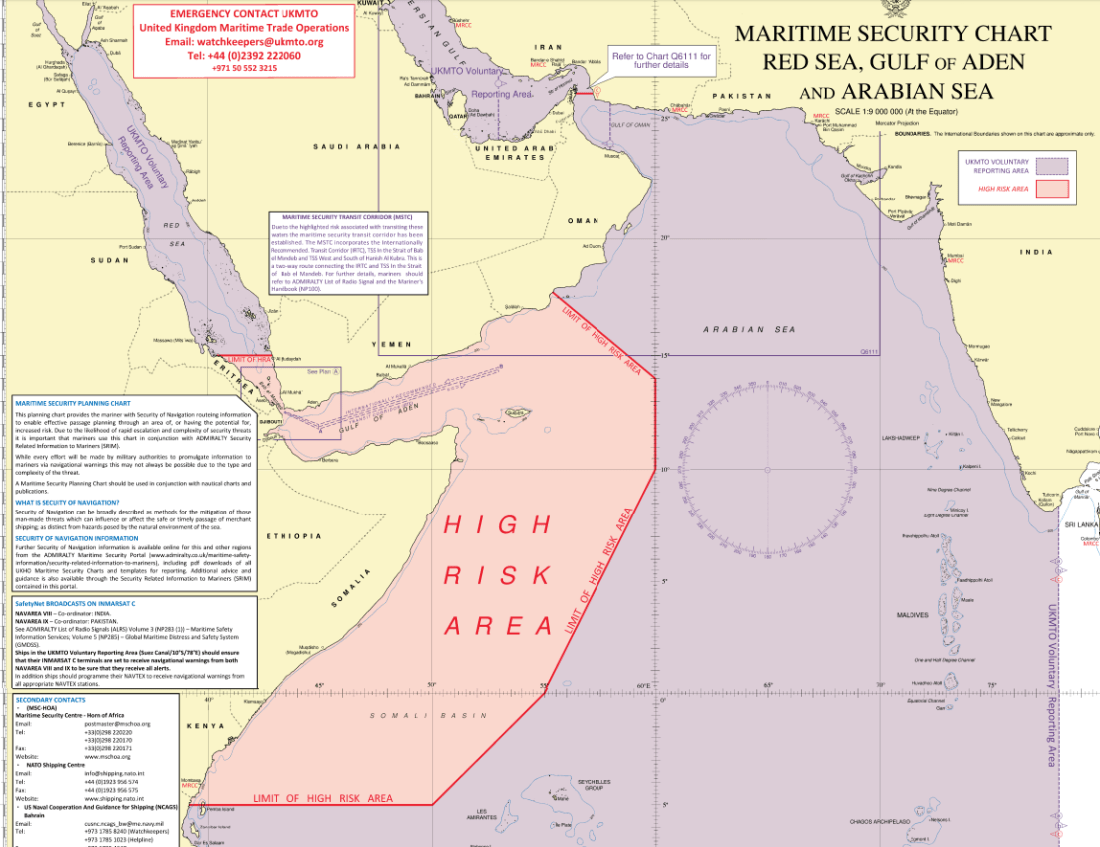
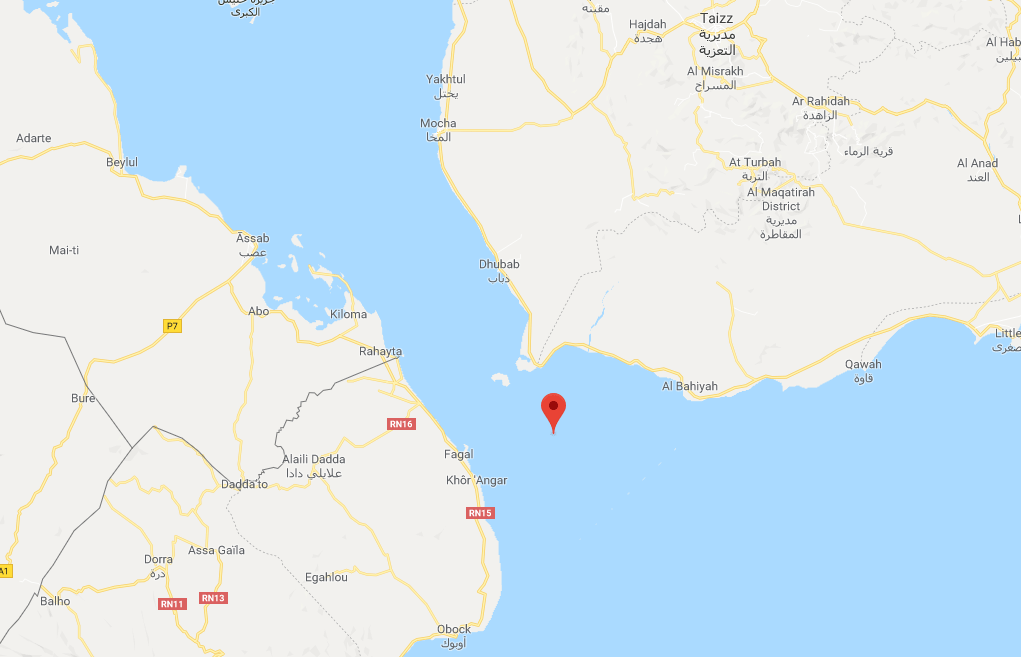
DUBAI/ADEN (Reuters) – Saudi Arabia’s military in Yemen has moved in to secure two strategic Red Sea ports and the Bab al-Mandeb Strait after its leading ally the United Arab Emirates substantially reduced its presence there, four sources familiar with the matter said.

The UAE has drawn down its numbers in some parts of Yemen, where it had set up large bases amid a four-year-old multi-layered war that is widely seen as a proxy battle between regional rivals Saudi Arabia and Iran.

To continue reading, please click here.

Source: reuters.com

Saudi-led coalition says it foiled Red Sea ship attack, Houthis deny

RIYADH (Reuters) – Naval forces from the Saudi-led coalition fighting in Yemen foiled an attempted attack on an unidentified commercial ship in the southern Red Sea on Monday by the Iran-aligned Houthis, which the group denied.

Spokesman Colonel Turki al-Malki said the Western-backed military alliance had destroyed an unmanned boat laden with explosives which the militants had used for the attack, Saudi state news agency SPA reported without providing more details.

To continue reading, please click here.

Source: reuters.com

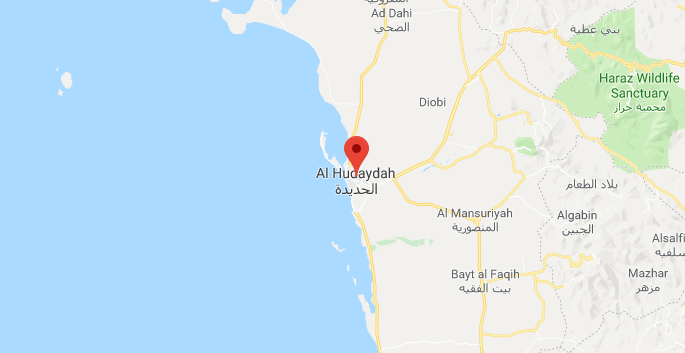
Renewed Clashes in Hodeidah as Peace Talks Continue

Despite a U.N.-backed ceasefire agreement, fighting between Houthi rebels and government forces has resumed on the south side of the port city of Hodeidah, Yemen. Pro-government militia leaders told Xinhua that Houthi units had shelled several neighborhoods, damaging homes and destroying part of a hospital. 

Under the terms of an agreement negotiated in Stockholm last December, Iranian-backed Houthi rebels were to withdraw from the port, and Saudi- and UAE-backed Yemeni government forces were to pull back from their positions surrounding the city. Houthi security units at the port have transferred control to the Yemeni Coast Guard, but the head of the UN mission in Hodeidah, Lt. Gen. Michael Lollesgaard, said last month that considerable work remains to demilitarize the port complex. 

To continue reading, please click here.

Source: maritime-executive.com

Houthi Leader Threatens to Target Int’l Navigation

Ali Rabee

Head of the Houthis’ Supreme Political Council Mahdi al-Mashat has threatened to target the commercial navigation waterways and oil tankers in the Red Sea and the Arabian Sea, saying that they possess missiles that can reach Egypt and Sudan.

Mashat affirmed that the militias would continue to target cities and airports in Saudi Arabia.

To continue reading, please click here.

Source: aawsat.com

Yemen war: Houthis withdraw from key ports, says UN

The UN says Houthi rebels have pulled out of three key Red Sea ports in Yemen, in partial implementation of a ceasefire deal agreed six months ago.

Hudaydah, Salif and Ras Issa were handed over to the coast guard.

The UN said work was still needed to remove trenches, barriers and mines – and to implement the rest of the deal.

The Houthis and pro-government forces, which are backed by a Saudi-led coalition, agreed to leave the ports to allow in vital humanitarian aid.

However, the BBC’s Lyse Doucet says some Yemenis are sceptical about the latest pull-out and accuse the Houthis of leaving fighters in the ports disguised as coast guard personnel.

Yemen’s government has previously warned that the withdrawal would be a rebel “ploy”.

The UN says at least 7,070 civilians have been killed and 11,205 injured in the fighting, with 65% of the deaths attributed to Saudi-led coalition air strikes.

Thousands more civilians have died from preventable causes, including malnutrition, disease and poor health.

About 80% of the population – 24 million people – need humanitarian assistance and protection, and almost 10 million who the UN says are just a step away from famine. Almost 240,000 of those people are facing “catastrophic levels of hunger”.

What does the UN say?

Lt Gen Michael Lollesgaard, head of the UN’s Redeployment Co-ordination Committee (RCC) in Hudaydah, welcomed the Houthi withdrawal from the ports in western Yemen.

He said that since Saturday there had been “very good co-operation” with Houthi commanders and that the UN had been given access to all areas of the ports.

“Today we have together seen the redeployment and we have also agreed that there are a few outstanding issues,” he said.

“There are two minefields in Ras Issa and Salif and trenches in this port [Hudaydah] that need to be removed.”

He urged all sides to help implement the next stages of the peace deal.

Why is Hudaydah important?

Hudaydah port is the main lifeline for two-thirds of Yemen’s population and its closure has had a devastating impact.

Under the local ceasefire deal brokered by the UN in Stockholm last December, the warring parties agreed to redeploy their forces from Hudaydah city and the ports of Hudaydah, Salif and Ras Issa.

The Houthi withdrawal marked the first major step in bringing that ceasefire agreement into being.

Pro-government forces have twice tried to seize the port, and accuse the Houthis of using it to smuggle in weapons from Iran. The rebels and Tehran both deny these accusations.

Source: https://www.bbc.co.uk

Houthis Stage Series of Attacks in Hodeidah ahead of UN Team Visit

Saeed al-Abyad

The Iran-backed Houthi militias have been trying to lure army forces deployed to the outskirts of the coastal city of Hodeidah into armed confrontation.

Analysts said the militias are plotting to break the UN-brokered Stockholm agreement, which was signed last December. 

To continue reading, please click here.

Source: aawsat.com

Why the Massive Floating Bomb in the Red Sea Needs Urgent Attention

BY DR. IAN RALBY, DR. DAVID SOUD, AND ROHINI RALBY

A floating storage and offloading (FSO) terminal less than five miles off the coast of Yemen has turned into a massive bomb—capable of explosion due to its contents and lack of maintenance. The risk of explosion increases by the day, and if that were to happen, not only would it damage or sink any ships in the vicinity, but it would create an environmental crisis roughly four and a half times the size of the Exxon Valdez oil spill.

The consequences of that explosion and corresponding environmental devastation would likely be 1) to rupture the fragile aid-focused ceasefire in Hodeidah established under the December 2018 Stockholm Agreement; and 2) to accelerate the already dire humanitarian crisis in Yemen where roughly fourteen million people are on the brink of famine, surviving at the moment on international aid. There is nothing benign about this situation—even in a region with countless immediate needs, this matter is of the utmost urgency.

To continue reading, please click here.

Source: atlanticcouncil.org

Houthis push for military escalation in Yemen’s Hodeidah: gov’t official


ADEN, Yemen, March 20 (Xinhua) — Yemen’s government accused on Wednesday the Houthi rebels of pushing for a new escalation of armed confrontations in the Red Sea port city of Hodeidah despite the cease-fire brokered by the United Nations.

The government’s spokesman, Rajeh Badi, announced during a press conference held in the southern port city of Aden that the Houthi rebels are continuing to dispatch military reinforcements into Hodeidah in an attempt to “spark the situation militarily again.”

To continue reading, please click here.

Source: xinhuanet.com

Iranian Navy sends 61st flotilla to Bab-el-Mandeb Strait

The Iranian Navy has dispatched its 61st flotilla to Bab-el-Mandab Strait to safeguard maritime routes used by Iranian vessels, Commander of the Iranian Navy’s Southern Fleet Rear Admiral Afshin Tashk said on Sunday.

The navy chief added that the fleet, which consists of Sabalan destroyer and a logistic warship named Bandar Abbas, set off on Saturday for the international waters to safeguard maritime routes used by Iranian vessels, especially in the strategic strait of Bab-el-Mandab, which links the Gulf of Aden to the Red Sea.

To continue reading, please click here.

Source: en.mehrnews.com