India spends big on Maldives security

Indian leader Narendra Modi on Saturday inaugurated a coastal radar system and military training center in the Maldives on Saturday, as New Delhi seeks to fend off Chinese influence in the strategically-placed nation

The Maldives, a low-lying archipelago of more than a thousand tiny coral islands south of the Indian subcontinent, straddles the world’s busiest east-west maritime route.

To continue reading, please click here.

Source: english.alarabiya.net

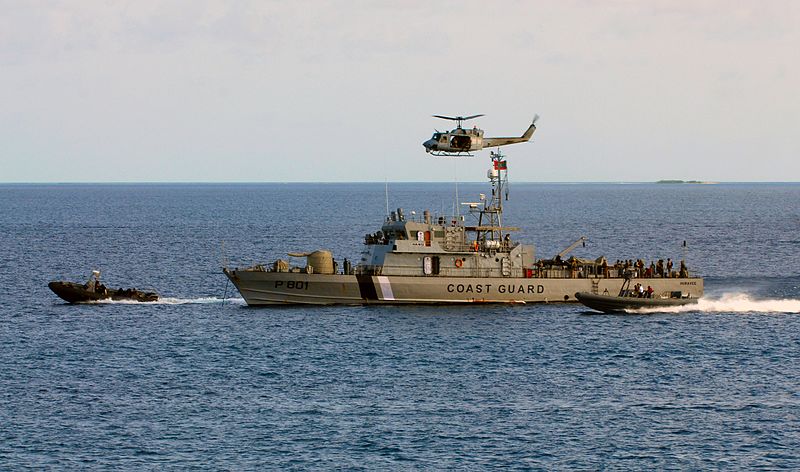
A Maldivian coast guard ship Hurawee (801) (formerly Indian Navy Ship Tillanchang T62) serves as a non-compliant vessel during an exercise for a visit, board, search and seizure team assigned to the amphibious transport dock ship USS Dubuque (LPD 8). Dubuque is participating in Operation Bungalow Breeze with the Maldives National Defense Forces. (U.S. Navy photo by Mass Communication Specialist 1st Class David McKee/Released)

Nigeria ranks highest in piracy, vessel stowaways — Insurance report

Nike Popoola

Nigeria overtook Indonesia in global piracy incidents in the maritime sector, accounting for one out of every four reported cases in 2018, according to the latest report by Allianz Global Corporate & Specialty, a global corporate insurance carrier and a key business unit of Allianz Group.

The report also revealed that Nigeria’s port saw the highest number of reported cases of stowaways on commercial vessels.

To continue reading, please click here.

Source: punchng.com

Kenya wins accolades from France for establishing Coast Guard

Philip Mwakio

The French Government has commended Kenya for establishing a Coast Guard Unit to police its vast Coastal maritime waters.

President Uhuru Kenyatta late last year unveiled the Kenya Coast Guard Service (KCGS) and launched into service its first offshore patrol boat christened Doria in Mombasa.

To continue reading, please click here.

Source: standardmedia.co.ke

Nigerian piracy levels deemed ‘unacceptable’, international solutions sought

SAM CHAMBERS

Some of shipping’s top stakeholders met on Friday at the London headquarters of the International Maritime Organization (IMO) to demand action to counter the dire piracy situation off the Gulf of Guinea, which is causing severe distress for seafarers who have to transit the region.

The event, co-sponsored by BIMCO, IMCA, ICS, ITF and OCIMF, drew members of the shipping community, flag states and agencies from the Gulf of Guinea.

To continue reading, please click here.

Source: splash247.com

3 ‘Abu Sayyaf members’ nabbed in Zamboanga City

By Teofilo Garcia, Jr.

ZAMBOANGA CITY — Police arrested Wednesday three members of the Abu Sayyaf Group (ASG) in this southern port city.

The Police Regional Office-9 (PRO-9) identified the arrested ASG members as Jamik Ibrahim, Majuk Amil, and Hasim Aming. Ibrahim and Amil were arrested in Barangay Arena Blanco, while Aming in Magay, Barangay Zone 1.

To continue reading, please click here.

Source: pna.gov.ph

Is Kenya staring at fresh security threats in a maritime row?

by Carson Jnr

For the past few weeks, Kenya’s diplomatic relations with the Federal Republic of Somalia has steadily been getting worse, thanks to the ongoing maritime row pitting oil wells along the Indian Ocean.

Amid the row, it is apparent that Kenya could be staring at fresh security threats from terrorist groups as  Al-Shabaab, and to some extent, the ISIS who might be watching from a distance, hoping that Kenya gets into a war with Somalia.

To continue reading, please click here.

Source: hivisasa.com

Piracy: India bars seafarers from working on Nigerian waters

Anna Okon

Following the increasing rate of piracy and hijacking of the crew for ransom in Nigerian waters, especially in the Gulf of Guinea, Indian Directorate General of Shipping in Mumbai, has issued a restriction on all seafarers who are Indian nationals, banning them from working in vessels in Nigeria and the Gulf of Guinea.

In a circular sent to all shipping owners, shipping companies and other practitioners which was signed by the Director-General of Shipping in India, Capt Anish Joseph, the state reportedly observed that there was an increasing trend in the number of incidents taking place inside the various coastal states jurisdiction in the GoG.

To continue reading, please click here.

Source: punchng.com

UAE tanker attacks blamed on ‘state actor’

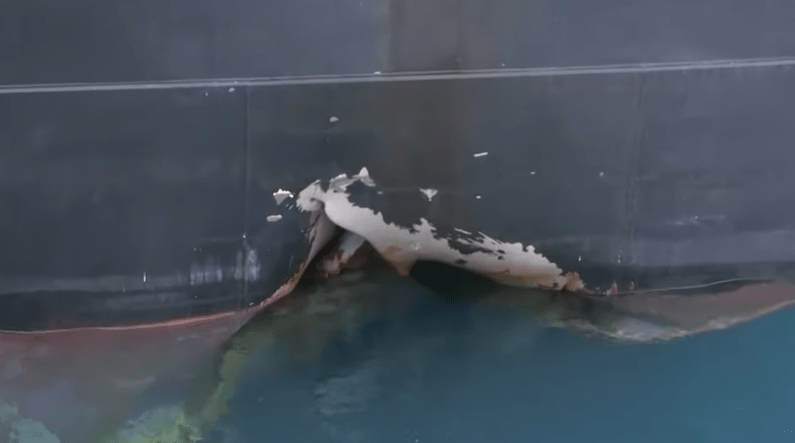
The United Arab Emirates has told the UN Security Council a “state actor” was most likely behind attacks on four tankers off its coast.

The 12 May attacks bore the hallmarks of a “sophisticated and co-ordinated operation”, according to its report.

The UAE did not say who it thought was behind the attacks, which also targeted vessels from Saudi Arabia and Norway.

The US has accused Iran of being behind the attacks but Tehran denies this and has called for an investigation.

The attacks took place within UAE territorial waters east of the emirate of Fujairah, just outside the strategically vital Strait of Hormuz, in what the UAE called a “sabotage attack”.

They exacerbated long-standing tensions between Iran, and the US and its allies in the Gulf.

What does the report say happened?

According to the UAE-led investigation, which was presented to a closed session of the UN Security Council in New York, the attacks showed a “high degree of sophistication”.

“The attacks required the expert navigation of fast boats” which “were able to intrude into UAE territorial waters”, the report’s preliminary findings say.

Divers were used to attack the ships using limpet mines in order to cause damage but not cause a major explosion, the presentation says.

There were no casualties but Saudi Arabia has said two of its ships suffered “significant” damage. Another tanker was Norwegian-registered, while the fourth was UAE-flagged.

Why is Iran being accused?

The attacks happened at a time of escalating tension between the US and Iran, long-time foes.

They took place days after the US sent warships and bombers to the region in response to what it said was an unspecified plan by Iran to attack US forces in the area.

While it is unclear why Iran would carry out a relatively low-level attack on the multinational tankers, observers have speculated that it could have been to send a signal to forces ranged against it that it is capable of disrupting shipping there without triggering a war.

Responding to the UAE report, the Saudi Ambassador to the UN, Abdallah Y al-Mouallimi, said the kingdom believed “that the responsibility for this action lies on the shoulders of Iran. We have no hesitation in making this statement,” Reuters news agency reported.

US National Security Adviser John Bolton previously said “naval mines almost certainly from Iran” were to blame for the damage, although he provided no evidence to support the allegation.

However, Mr Bolton, long known for his hawkish stance on Iran, denied the Trump administration was seeking to overthrow the Iranian government.

“The policy we’re pursuing is not a policy of regime change,” he told reporters last week during a visit to London. “That’s the fact and everybody should understand it that way.”

Iran’s foreign ministry has rejected the US accusations as “ludicrous” and accused Mr Bolton of being a “warmonger”.

What are the underlying tensions?

At the start of May, Washington ended exemptions from sanctions for countries still buying oil from Iran.

The decision was intended to bring Iran’s oil exports to zero, denying the government its main source of revenue.

US President Donald Trump reinstated the sanctions a year ago after abandoning the landmark 2015 nuclear deal that Iran agreed with six nations – the five permanent members of the UN Security Council and Germany.

Iran has now announced it will suspend several commitments under the deal.

Source: bbc.co.uk

Nigeria’s oil thieves roar back as militants kept in check

By ELISHA BALA-GBOGBO

ABUJA (Bloomberg) — Just as Nigeria gets to grips with militants who brought the nation’s oil industry to its knees a few years ago, another group of longstanding foes are slowly making a comeback: thieves.

Saboteurs including thieves caused an 80% increase in the number of spills in 2018, Royal Dutch Shell Plc, the largest international producer in the West African country, said in a report last month. By contrast, there have been no militant-related halts to operations since 2016.

To continue reading, please click here.

Source: worldoil.com

Troops recover Abu Sayyaf arms cache

By Teofilo Garcia, Jr

ZAMBOANGA CITY — Government troops recovered an arms cache belonging to Abu Sayyaf Group (ASG) bandits in an island off Sulu province, a top military official said Wednesday.

Major Gen. Divino Rey Pabayo, Joint Task Force Sulu commander, said the arms cache was discovered in Minis Island, Patikul, Sulu at about 7:45 a.m. Monday.

To continue reading, please click here.

Source: pna.gov.ph