Ship Captain Wants Agencies To Support Nigerian Navy To Fight Piracy

By Uchenna Eletuo

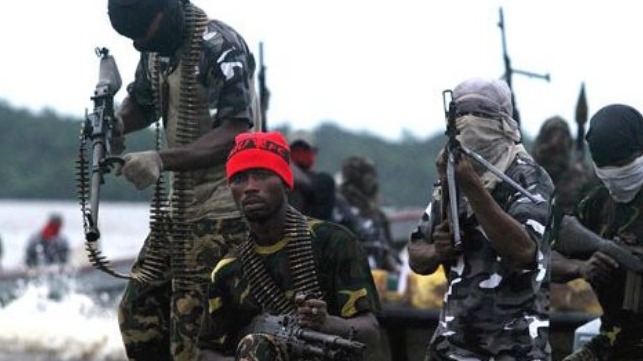
Lagos – Mr Bayo Oyekan, a ship captain, on Monday appealed to stakeholders to support the Nigerian Navy to check the incidence of piracy on the nation’s waters.

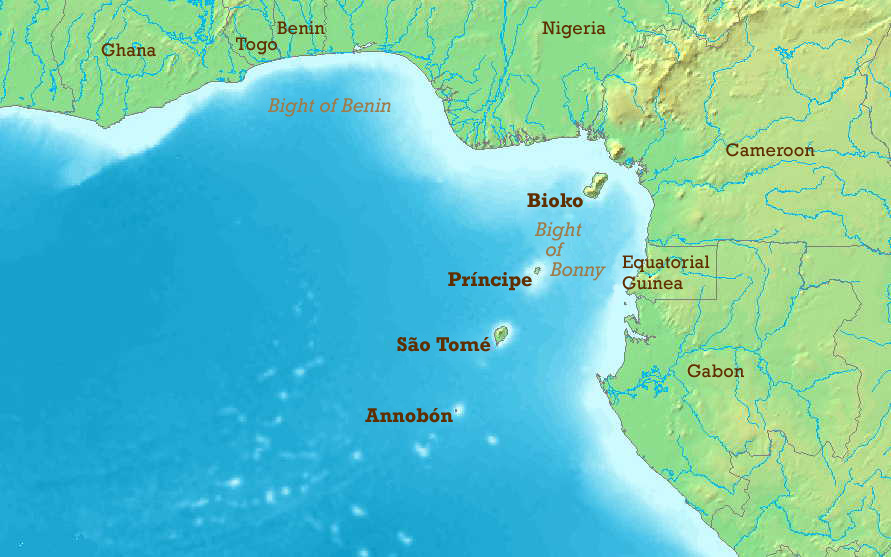
Oyekan told the News Agency of Nigeria (NAN) in Lagos that the lukewarm attitude of other agencies that were supposed to support the Navy in checking piracy had made the incidence to rise in the Gulf of Guinea.

To continue reading, please click here.

Source: sundiatapost.com

Nine Iranians nabbed with 107 kg of heroin ; contraband intended to reach SL drug dealer

Nine Iranian nationals were arrested with 107.22 kilograms of heroin which were to be delivered to a drug dealer in Sri Lanka, in the seas off the Southern coast today (Mar 24).

The narcotic was packaged in 99 parcels and had been concealed in four sacks while being transported in a trawler, Police Spokesman S.P Ruwan Gunasekara said.

To continue reading, please click here.

Source: sundaytimes.lk

Expanding collaborative efforts to promote maritime security

Members of three key regional maritime security agreements*, which IMO has helped to establish, are undergoing training tackling maritime crime in Jeddah, Saudi Arabia (10 – 28 March 2019).

Thirty participants from 24 countries** are learning theoretical and practical skills to deal with piracy/robbery against ships, drug trafficking, marine terrorism, weapons smuggling, human trafficking and more.

The course is organized by IMO and Saudi Arabia under the auspices of the Jeddah Amendment to Djibouti Code of Conduct and conducted by experts from the Saudi Arabia Border Guard, UNODC, INTERPOL and IMO.

The training is taking place at the Mohammed Bin Naif Academy for Maritime Science and Security Studies and is the first of three training workshops to be organized by IMO and the Saudi Border Guard in Jeddah during 2019 – with financial assistance from Saudi Arabia.

The series of workshops will enable participants from different regions  to share ideas and best practices in order to promote maritime security.

* The Djibouti Code of Conduct; the West and Central Africa Code of conduct; and the Regional Cooperation Agreement on Combating Piracy and Armed Robbery against Ships in Asia (ReCAAP)

** Bahrain, Comoros, Djibouti, Egypt, Ethiopia, Ghana, India, Jordan, Kenya, Madagascar, Maldives, Mauritius, Mozambique, Myanmar, Oman, Saudi Arabia, Seychelles, Somalia, South Africa, the Sudan, Cape Verde, Sri Lanka, United Republic of Tanzania and Yemen.

Source: IMO.org

ReCAAP ISC 13th Governing Council Meeting Held at Singapore

By Baibhav Mishra

The 13th Governing Council Meeting of the ReCAAP ISC was held on 19 to 22 March 2019 in Singapore, hosted by the Singapore Government. The Council reviewed the activities of ReCAAP ISC in FY2018 and deliberated on its activities for FY2019 and beyond. On 22 March 2019, the Open Session was held with External Participants comprising representatives from three countries and 13 organisations.

The Council commended ReCAAP ISC on producing positive results in respect to its activities in FY2018 under the three pillars of its mission, i.e., information sharing, capacity building and cooperative arrangement.
The Council reviewed the progress of the implementation of the Roadmap for the Future of ReCAAP ISC and appreciated the continued progress as well as new initiatives ReCAAP ISC has made under the Roadmap as a Centre of Excellence for information sharing.

To continue reading, please click here.

Source: seanews.co.uk

Navy seeks better pact with maritime stakeholders for effective prosecution

By Odita Sunday, Jesutomi Akomolafe (Lagos), Kanayo Umeh, Sodiq Omolaoye (Abuja) and Ayodele Afolabi (Ado-Ekiti)

The Nigerian Navy (NN) is seeking better collaboration and understanding with maritime stakeholders for effective prosecution of pirates and sea robbers.

It said that lack of collaboration among relevant government agencies had been the reason why suspects are granted bail in court.

To continue reading, please click here.

Source: guardian.ng

The Forgotten Key to Maritime Security in the Sulu-Celebes Seas

Economic development in coastal communities will help stem the flow of illegal behavior.

By Jay Benson

Maritime insecurity in the Sulu and Celebes Seas is a persistent challenge. These waterways have recently been used  to conduct incursions into Lahad Datu, orchestrate kidnap for ransom activities by militant groups such as Abu Sayyaf, and facilitate illegal wildlife trafficking. Governments in the Philippines, Indonesia, and Malaysia have responded with increased maritime enforcement capacity and presence, as well as enhanced international coordination. Although these are important efforts that need to be maintained, an exclusive focus on enforcement capacity risks ignoring an equally important facet of maritime insecurity: economic exclusion and inequality in coastal communities.

To continue reading, please click here.

Source: thediplomat.com

Houthis push for military escalation in Yemen’s Hodeidah: gov’t official


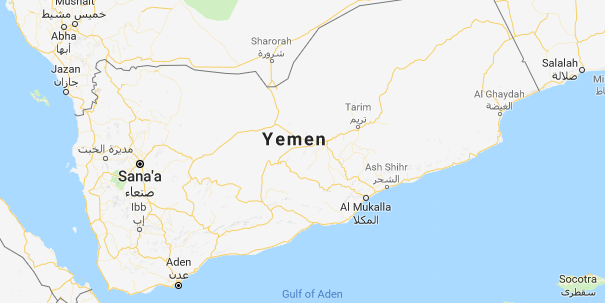
ADEN, Yemen, March 20 (Xinhua) — Yemen’s government accused on Wednesday the Houthi rebels of pushing for a new escalation of armed confrontations in the Red Sea port city of Hodeidah despite the cease-fire brokered by the United Nations.

The government’s spokesman, Rajeh Badi, announced during a press conference held in the southern port city of Aden that the Houthi rebels are continuing to dispatch military reinforcements into Hodeidah in an attempt to “spark the situation militarily again.”

To continue reading, please click here.

Source: xinhuanet.com

Nigerian Waters Are Safe for Merchant Shipping – Shippers’ Council Boss

By Godwin Oritse

The Executive Secretary/ Chief Executive, Nigerian Shippers ‘Council, NSC, Hassan Bello, has said that the imposition of surcharges on Nigerian bound cargo due to imaginary security concerns along the Gulf of Guinea region is a misconception of foreign shipping lines.

He lambasted foreign shipping firms for miscategorization and exaggeration of the security situation in the country to justify surcharges they unjustly levied on cargo destined to Nigeria.

To continue reading, please click here.

Source: allafrica.com

Combating piracy on Nigerian waters

By Chinweisu Amuta

Globally, the International Maritime Bureau (IMB) Piracy Reporting Centre, based in Singapore, recorded 201 incidents of maritime piracy and armed robbery in 2018, up from 180 in 2017. The Gulf of Guinea remained increasingly dangerous for seafarers as reports of attacks in waters between the Ivory Coast and the Democratic Republic of Congo more than doubled in 2018.

The expansion of piracy in the Gulf of Guinea poses a dire threat to local economies, potentially undermining what little stability currently exists in the region. Oil revenue, which many countries in the region rely upon, is seriously threatened by pirate activity; seven per cent of Nigeria’s oil wealth is believed lost due to such criminality.

To continue reading, please click here.

Source: guardian.ng

Importers Pay N988bn Risk Surcharge For Nigerian-bound Vessels

By YUSUF BABALOLA

Nigerian importers have paid about $2.74 billion (N987.77 billion at prevailing rate of N360/$) in three years following the categorisation of Nigerian waters as a war risk, a development that spiked insurance premiums slammed on vessels and cargoes destined for Nigeria. 

LEADERSHIP recalls that foreign shipping companies slammed war surcharge premium, a supplementary carrier charge that is only applied when insurance underwriters designate specific zones as war risks.

To continue reading, please click here.

Source: leadership.ng