Nigeria has been advised to create alternative operation routes, secure the evacuation routes and expand export activities to the eastern side of the Niger Delta to contain crude oil theft.
The suggestions were given by the Chief Executive Officer (CEO) of Umugini Pipeline Infrastructure Limited (UPIL), Blessing Ayemhere, on Tuesday during the unveiling of the company’s new logo and brand identity.
After a relative calm period, unrest in the Niger delta could be on the rise
Eromo Egbejule
Fears that militant violence and sabotage in the Niger delta are about to take off again has been fuelled by a spate of kidnappings of oil industry workers over recent weeks.
In one incident, two Royal Dutch Shell workers were abducted in Nigeria’s oil rich Rivers state in late April 2019, while their police escorts were killed. The two workers—from Canada and the UK—were released after a week, but there are concerns that there will be more problems to come, as Delta unrest picks up after a relatively quiet period.
For Indigenes of Bayelsa, issues of illegal bunkering is not new and has gained acceptance despite repeated clampdown on their operations by security agencies, particularly the Joint Security Task Force, code named Operation Delta Safe. Osa Okhomina examines the operations of the illegal operators amidst growing concern over insecurity, destruction and other environmental effects.
In Bayelsa, the operations of illegal operators of local refineries have become a norm and has been embraced as another way of forceful sharing from the national cake.
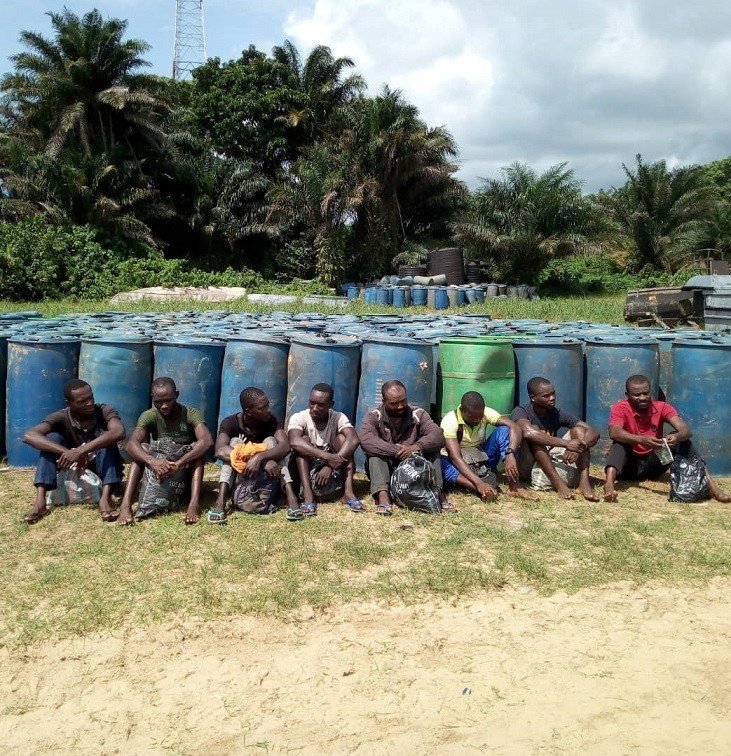
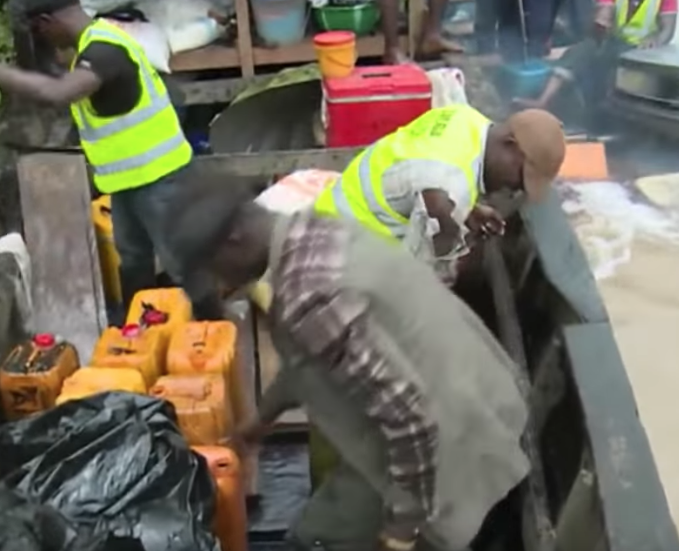
While the security agents including the Joint Security Task Force code named Operation Delta Safe and the Nigerian Navy, engage in serious security operations with destruction of Illegal bunkering sites, the shady operation continued in some Bayelsa communities and has become a new way of livelihood.
Somalia has launched a diplomatic offensive against Kenya in their dispute over the Indian Ocean waters prompting the Arab League to condemn Nairobi for annexing Mogadishu’s territory.
The Arab Parliament in which Somali has members claimed Kenya was drawing up an illegal map that includes taking away Somali territory. The taking sides in the disputes could now complicate the war on piracy in which more than 30 Indian Ocean rim countries have cooperated to decimate attacks and their success.
The Nigerian Navy said it operatives have impounded six ships and 80 wooden boats used by criminal elements for alleged illegal oil bunkering, used in siphoning of product from the Nigerian National Petroleum Corporation (NNPC) pipelines and crude oil well heads in six months. The Command also said it has destroyed over 50 illegal refineries at Yeye, Burutu and Ibafa creeks in Delta State.
The operatives of the Nigerian Navy Ship NNS, Delta gave the names of the six arrested ships as MT Aysu, MT Interim, MV Mama Elizabeth, MT Miracle, MV Nipal and SD Waterman and 80 wooden boats used by criminals for alleged illegal bunkering of petroleum products from NNPC.
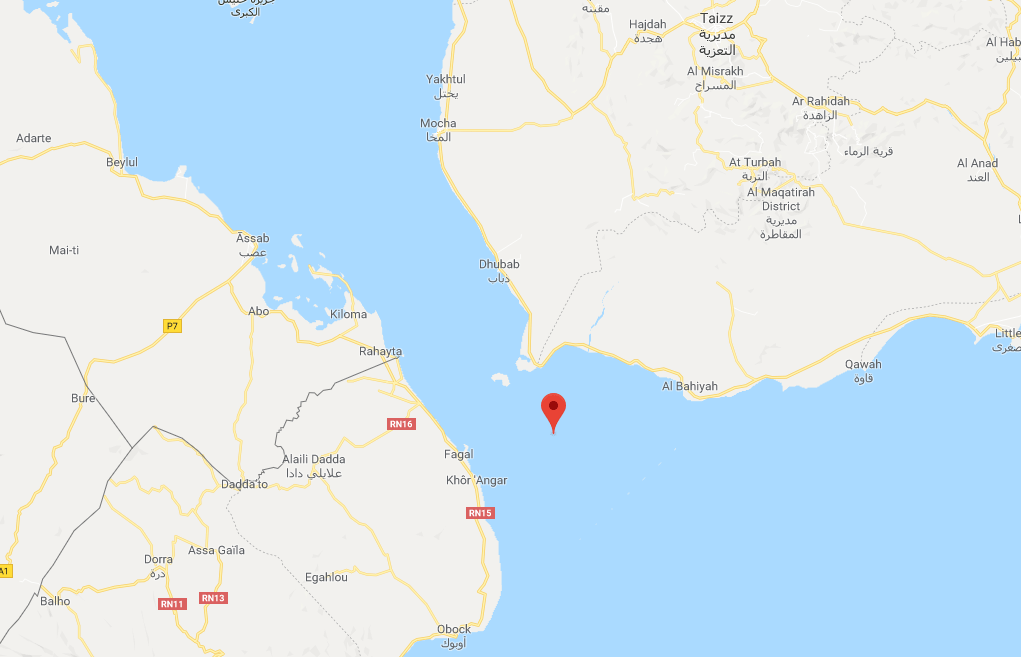
Head of the Houthis’ Supreme Political Council Mahdi al-Mashat has threatened to target the commercial navigation waterways and oil tankers in the Red Sea and the Arabian Sea, saying that they possess missiles that can reach Egypt and Sudan.
Mashat affirmed that the militias would continue to target cities and airports in Saudi Arabia.
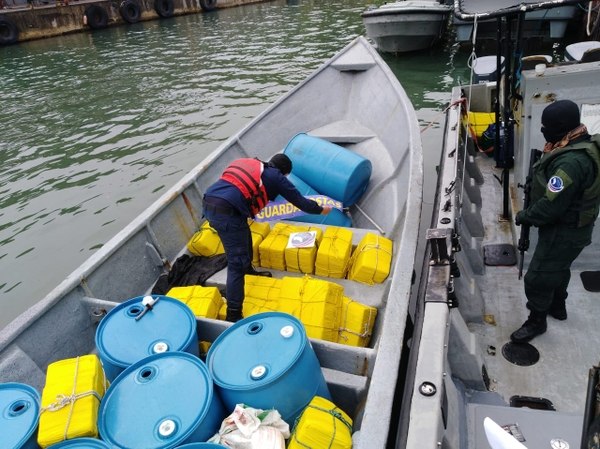
(Reuters) – Federal authorities seized 16.5 tons of cocaine worth more than $1 billion from a ship in Philadelphia in one of the largest drug seizures in U.S. history, the U.S. Justice Department said on Tuesday.
Federal, state and local law enforcement agents on Monday boarded the MSC Gayane, a cargo ship docked in Philadelphia’s Packer Marine Terminal, and found cocaine in seven shipping containers, according to a criminal complaint filed in Philadelphia federal court.
GENEVA/DUBAI (Reuters) – U.S. President Donald Trump said he was prepared to take military action to stop Tehran from getting a nuclear bomb but left open whether he would back the use of force to protect Gulf oil supplies that Washington fears may be under threat by Iran.
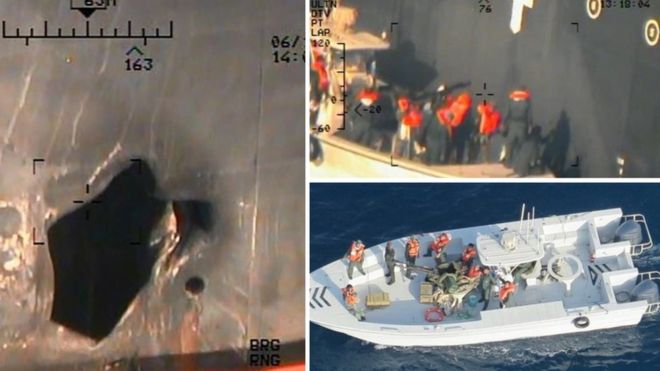
Worries about a confrontation between Iran and the United States have mounted since attacks last week on two oil tankers near the strategic Strait of Hormuz shipping lane at the entrance to the Gulf. Washington blamed long-time foe Iran for the incidents.
The seas off West Africa’s oil-rich coastline are now the most dangerous in the world for shipping, according to a new report.
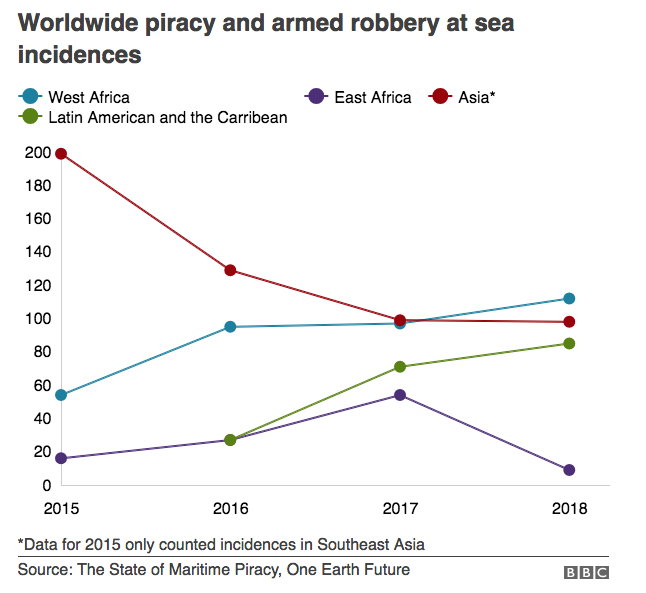
One Earth Future, which produces an annual State of Maritime Piracy, says that while attacks have been falling substantially in some regions of the world, in West Africa they’ve been on the rise and are now more frequent than anywhere else.
So why the increase in West Africa, and what shipping is being targeted?
What is piracy?
A strict definition of maritime piracy only includes attacks on shipping on the high seas – that is, more than 12 nautical miles off the coastline and not under the jurisdiction of any state.
Inside a country’s territorial waters and within port facilities, these attacks are defined as armed robberies at sea.
However, the data we’ve used from this latest report combines these two sets of data to give an overall picture of incidents at sea both inshore and offshore.
In 2018, there were 112 such incidents in West African waters.
It’s not just the huge tankers exporting oil and gas from Nigeria and Ghana that are targeted.
Commercial ships from smaller countries are also in the sights of the pirates.
At a recent event in London, President Faure Gnassingbé of Togo – a country sandwiched between these two regional giants – highlighted his own concerns at the rise in attacks on regional shipping.
“Our region is distinguished by the resurgence of transnational criminality on the high seas in the Gulf of Guinea,” said Mr Gnassingbé.
Why are attacks rising?
Most of the attacks have been against ships involved in oil and gas transportation, such as tankers, bulk carriers and tugs. Fishing vessels have also been targeted.
The coastline off Nigeria saw the most attacks in 2018. This is partly because of “petro-piracy”, targeting tankers from Nigeria’s rich oil and gas fields.
There were also incidents reported at the loading and anchorage facilities in the Nigerian port of Lagos.
Piracy in the form of hijacking and kidnapping for ransom payments was also common off the coasts of Benin, Ghana, Nigeria, Congo-Brazzaville and Cameroon.
Rich pickings at sea, political instability, the lack of law enforcement and poverty on land are all factors which have contributed to the increase in piracy.
Most of the seafarers affected are not from the region. Around half are from the Philippines, followed by India, Ukraine and Nigeria.
One of the reasons West Africa is now the number one spot for piracy is because of of the downward trends recorded elsewhere.
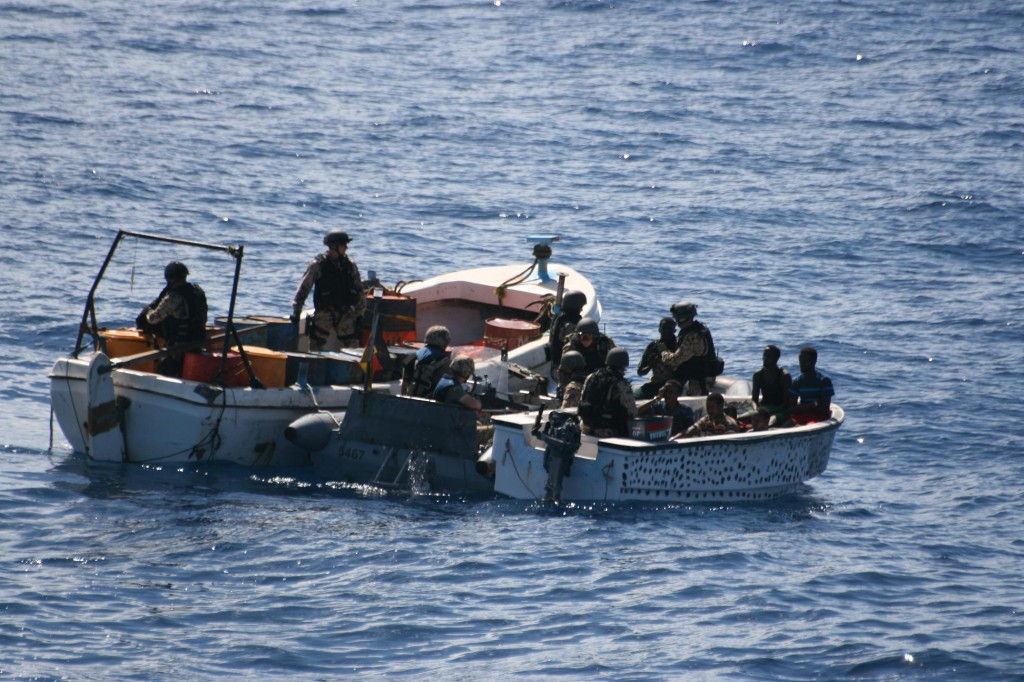
The East African shipping routes along the Somali coastline have been notorious for hijackings and robberies.
But since peaking in 2011, rates of piracy there have fallen off dramatically in recent years.
Local efforts on land in Somalia to change attitudes towards permitting piracy and building legal capacity to prosecute criminals have also helped improve the situation.
In Asia, the Malacca Strait, a busy, commercially important stretch of water between Malaysia and Indonesia, experienced a high number of attacks in 2015.
Concerted action by regional naval forces has reduced the problem there, but piracy still persists.
Attacks against shipping in the Caribbean and off the coast of Latin American have, however, risen.
Venezuela in particular has become a hotspot for piracy.
“Political and economic instability is a big factor there,” says Lydelle Joubert, an expert on piracy at One Earth Future.
A suspected notorious cultist and illegal oil bunkering kingpin, Korobe Menele Loveday, who has been on the wanted list of the security agencies for terrorizing communities in Rivers State has been killed.
He was killed in a shootout with security operatives.



 Maritime Security News