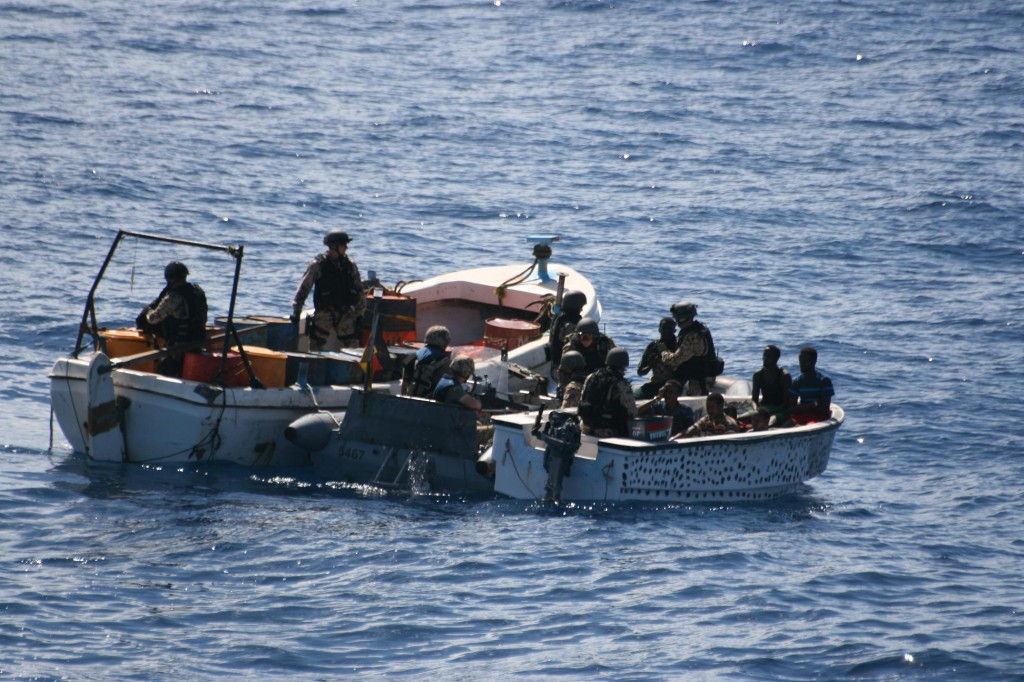
Maritime piracy incidents down in Q1 2019 but kidnapping risk in Gulf of Guinea persists

The International Chamber of Commerce International Maritime Bureau’s (IMB) report for the first quarter of 2019 reveals fewer incidents of piracy and armed robbery against ships than the first three months of 2018.

The IMB Piracy Reporting Centre, a 24-hour, free service offered by the IMB, enables shipmasters to report any incidents of piracy and armed robbery, globally against ships. Since 1991, the IMB Piracy Reporting Centre has provided the industry, government bodies and response agencies with timely data on the location of piracy and armed robbery incidents at sea.

Global trends

In the first quarter of 2019, IMB reported 38 incidents of piracy and armed robbery at sea, representing 28 fewer incidents than the first quarter of 2018 (66). IMB’s Piracy Reporting Centre detailed that 27 vessels were boarded, seven vessels were fired upon and four attempted attacks occurred in the first quarter of 2019. No vessels were reported as hijacked for the first time since the first quarter of 1994.

“These latest statistics from the IMB Piracy Reporting Centre are encouraging. However, first quarter statistics is too short a period on which to anticipate trends over the year.  It confirms the importance of information sharing and coordinated action between the industry and response agencies. Going forward, it is critical to continue to build more effective reporting structures to enable a strong, unified response when dealing with piracy incidents,” said IMB Director Pottengal Mukundan.

High risk in Gulf of Guinea

The Gulf of Guinea represented a high number of piracy and armed robbery attacks at sea, with 22 incidents reported in the first quarter of 2019. The region also accounted for all of the worldwide crew kidnappings as 21 crew members were kidnapped across five separate incidents. Incidents were reported in the coastal countries, of Benin, Cameroon, Ghana, Ivory Coast, Liberia, Nigeria and Togo in the first quarter of 2019.

Gains in Nigeria, but caution urged

Nigeria has been a hotspot for piracy incidents over the past decade. However, in the first quarter of 2019, Nigeria experienced a decrease in reported piracy incidents. Nigeria reported 14 incidents of piracy for Q1 2019, in comparison to 22 incidents in Q1 2018. These results confirm the Nigerian Navy’s increased efforts to “actively respond to reported incidents by dispatching patrol boats,” the report notes. Despite these efforts, Nigerian waters remain risky for vessels, especially the port of Lagos where four incidents have been reported.

Improvements in Asia

In Asia, Indonesia witnessed a decrease in piracy activities for the first quarter of 2019. There were only three incidents reported against anchored vessels in ports in Indonesia – the fewest reported incidents since 2010 – according to the report. As with Nigeria, increased cooperation and information sharing between the Indonesian Marine Police and IMB Piracy Reporting Centre has enabled regular patrols in high-risk areas.

Data sharing remains critical

The declining rate of piracy incidents worldwide in the first quarter of 2019 reinforces the importance of transparency, communication and coordination, between vessels and coastal authorities. By reporting all incidents to the IMB Piracy Reporting Centre and  coastal authorities the response can be better organised improving  incident response times and prompt advice to vessels aimed at a more optimal use of  resources.  National governments and coastal authorities can use this data to collaborate and strengthen their piracy prevention efforts.

Source: iccwbo.org
PN seizes 1000kg hashish in offshore operation

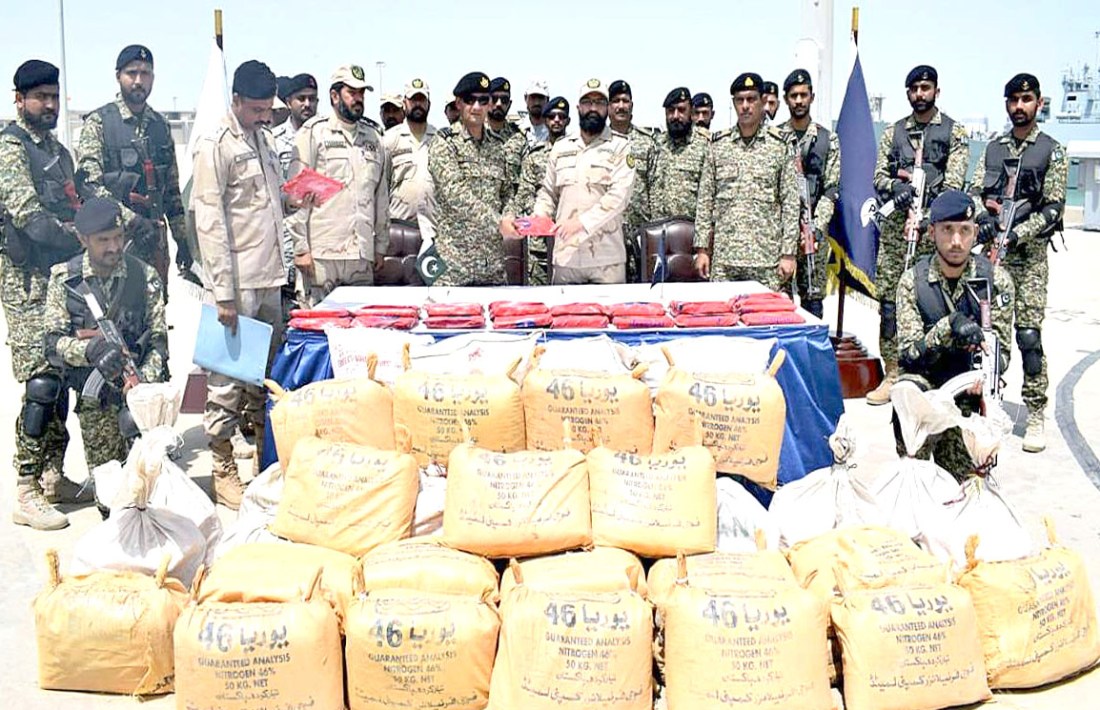
Pakistan Navy in an offshore operation near Ormara in Balochistan, seized a large consignment of hashish, a spokesman of the force said. In an intelligence-based offshore operation approximately 1000 kilograms of hashish with a value of over 2.5 billion rupees captured by the Navy near coastal town of Ormara in Balochistan, the Navy’s spokesperson said.

The Navy conducted the intelligence based operation on the basis of permanent surveillance and mutual cooperation with the Anti-Narcotics Force (ANF), the spokesman said. The spokesperson also said that the seized drugs have been handed over to the ANF for further legal proceedings.

To continue reading, please click here.

Source: pakobserver.net

China deploys new missile destroyer, frigate in its anti-piracy fleet

One of the country’s new generation of self-developed Type-052C guided missile destroyers, Xi’an, which entered into service in February 2015, possesses over-the-horizon strike capability at sea, the report said. 

BEIJING: China has deployed its latest guided missile destroyer and frigate in the fleet of naval ships participating in anti-piracy operations in the Gulf of Aden and Somalian coast in the Arabian Sea and the Indian Ocean, a media report said Thursday. 

To continue reading, please click here.

Source: economictimes.indiatimes.com

The United Kingdom lowers the European flag on Northwood

Maritime Security News note: This article has been automatically translated into English by Google. As such, errors may remain.

(B2) The European Union flag will be lowered at Northwood HQ. The United Kingdom loses control of the EU’s anti-piracy operation, which it has been commanding since the beginning, a good decade ago in December 2008. At issue: Brexit.

It will be effective March 29, 2019. And there, there is no postponement. Everything has already been decided and endorsed for several months already. The command returning to the Spaniards, with the French in support. Which is just a return of things. Since without Paris and Madrid, this operation would never have seen the day (Read: France and Spain decided to act on maritime piracy).

To continue reading, please click here.

Source: bruxelles2.eu

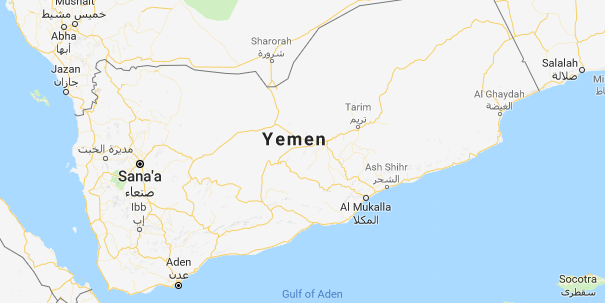
Claims of British commandos shot on secret missions in Yemen dismissed

Lucy Fisher, Defence Correspondent

Senior defence sources today dismissed reports that five British special forces commandos were wounded in gun battles while on secret missions in Yemen.

Members of the Special Boat Service (SBS) were shot while fighting in the Saadah area in the north of the country, according to the Mail on Sunday.

To continue reading, please click here.

Source: thetimes.co.uk

Nine Iranians nabbed with 107 kg of heroin ; contraband intended to reach SL drug dealer

Nine Iranian nationals were arrested with 107.22 kilograms of heroin which were to be delivered to a drug dealer in Sri Lanka, in the seas off the Southern coast today (Mar 24).

The narcotic was packaged in 99 parcels and had been concealed in four sacks while being transported in a trawler, Police Spokesman S.P Ruwan Gunasekara said.

To continue reading, please click here.

Source: sundaytimes.lk

Expanding collaborative efforts to promote maritime security

Members of three key regional maritime security agreements*, which IMO has helped to establish, are undergoing training tackling maritime crime in Jeddah, Saudi Arabia (10 – 28 March 2019).

Thirty participants from 24 countries** are learning theoretical and practical skills to deal with piracy/robbery against ships, drug trafficking, marine terrorism, weapons smuggling, human trafficking and more.

The course is organized by IMO and Saudi Arabia under the auspices of the Jeddah Amendment to Djibouti Code of Conduct and conducted by experts from the Saudi Arabia Border Guard, UNODC, INTERPOL and IMO.

The training is taking place at the Mohammed Bin Naif Academy for Maritime Science and Security Studies and is the first of three training workshops to be organized by IMO and the Saudi Border Guard in Jeddah during 2019 – with financial assistance from Saudi Arabia.

The series of workshops will enable participants from different regions  to share ideas and best practices in order to promote maritime security.

* The Djibouti Code of Conduct; the West and Central Africa Code of conduct; and the Regional Cooperation Agreement on Combating Piracy and Armed Robbery against Ships in Asia (ReCAAP)

** Bahrain, Comoros, Djibouti, Egypt, Ethiopia, Ghana, India, Jordan, Kenya, Madagascar, Maldives, Mauritius, Mozambique, Myanmar, Oman, Saudi Arabia, Seychelles, Somalia, South Africa, the Sudan, Cape Verde, Sri Lanka, United Republic of Tanzania and Yemen.

Source: IMO.org

Houthis push for military escalation in Yemen’s Hodeidah: gov’t official


ADEN, Yemen, March 20 (Xinhua) — Yemen’s government accused on Wednesday the Houthi rebels of pushing for a new escalation of armed confrontations in the Red Sea port city of Hodeidah despite the cease-fire brokered by the United Nations.

The government’s spokesman, Rajeh Badi, announced during a press conference held in the southern port city of Aden that the Houthi rebels are continuing to dispatch military reinforcements into Hodeidah in an attempt to “spark the situation militarily again.”

To continue reading, please click here.

Source: xinhuanet.com

Anti-piracy firm ARX Maritime cheers overseas growth

HANNAH BURLEY

Anti-piracy equipment developer ARX Maritime has unveiled a four-fold rise in revenues after enjoying rapid international growth.

Sales at the Edinburgh-based firm, which develops self-install anti-piracy barriers to protect seafaring vessels, have risen by 300 per cent year-on-year since the business was formed in 2016.

To continue reading, please click here.

Source: scotsman.com

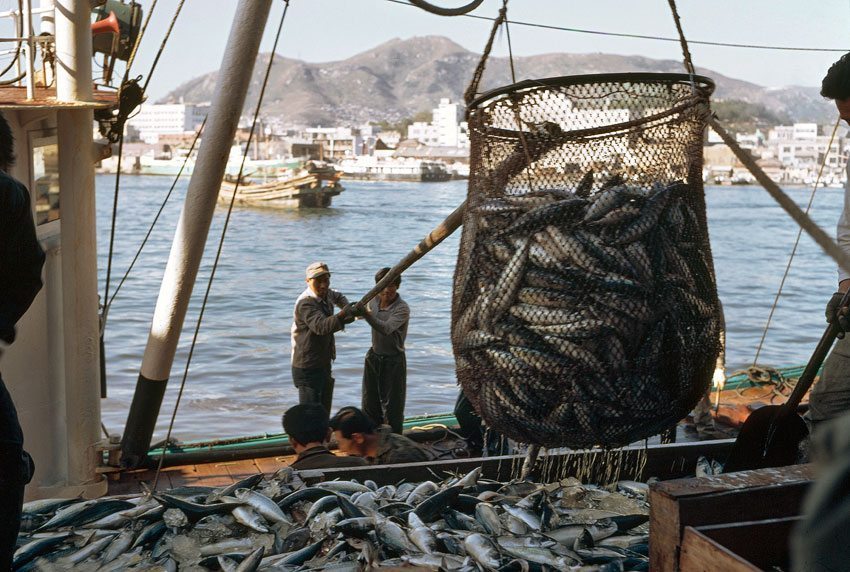
China-Somalia Fishing Deal Could Create a Surge in Pirate Attacks

Fish stocks are an important policy issue in China. The most recent five-year plan regarding fishing policy called for improving the quality of catches to improve profitability. However, environmental degradation and overfishing have reduced the quality and quantity of China’s fish stocks. While China works on dealing with its environmental and fishing management policies, it has decided to go elsewhere to secure quality fish: Somalia.

China signed a deal with the Somali central government for licenses to fish. If you know about marine life off the coast of Somalia, the deal seems like a good idea. Somalia has abundant fish stocks that contain tuna, lobster, and swordfish. With the exception of coastal communities, Somalis largely don’t eat fish, so competition is limited. If the deal seems too good to be true, it’s because it is.

If you know anything about Somali politics, you should know that this deal is a horrible idea.

To continue reading, please click here.

Source: international.thenewslens.com