Pompeo’s Hollow Plan to Beef Up Security in the Gulf

BY LARA SELIGMAN

Experts are skeptical that U.S. allies will get on board.

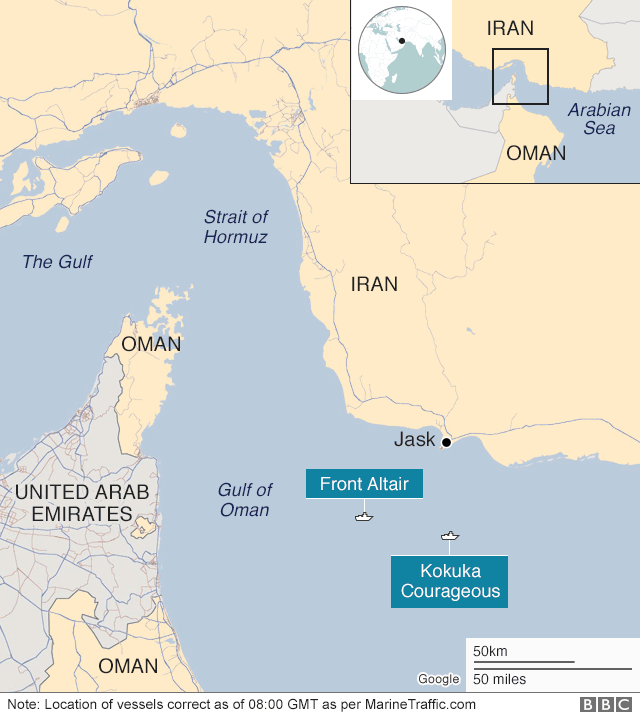
In the wake of alleged aggression from Iran in the Persian Gulf, U.S. Secretary of State Mike Pompeo rolled out a new plan this week, dubbed “Sentinel,” to recruit U.S. partners to help enhance security for ships traversing the Strait of Hormuz and other choke points.

But experts are skeptical that the United States can get allies in the Gulf, Europe, or Asia to shore up the resources needed to make a significant difference to the commercial vessels facing threats from Tehran in the world’s busiest shipping lanes.

To continue reading, please click here.

Source: foreignpolicy.com
Supporting Kenya’s coast guard

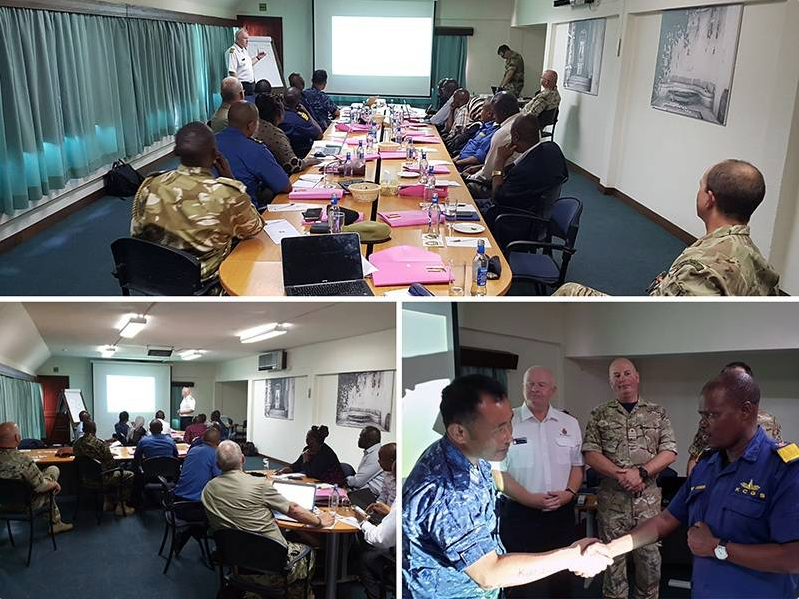
Senior officials from the newly established Kenya Coast Guard Services are undergoing training on coast guard functions at a national workshop in Mombasa, Kenya (24-28 June).

Fifteen participants are taking part in the training, which is using scenario development methodology and plenary discussions to highlight issues, identify insights and develop deeper understanding of effective ways to meet coastguard functions – with a view to enhancing maritime security in Kenya.

The training is organised by the United Kingdom and IMO, under the auspices of the Jeddah Amendment to the Djibouti Code of Conduct. It is supported by a joint team from the UK Maritime Coastguard Agency (MCA), Royal Navy International Defence Training (RNIDT), and facilitated by the British Peace Support Team Africa (BPST(A)) and IMO. Other international partners supporting the implementation of the Djibouti code of Conduct (Japan, Denmark and the International Committee of the Red Cross) are also in attendance and contributing to the discussions.

Source: imo.org

Trump Questions Need to Protect Persian Gulf Shipping

Questioning the longstanding American policy of defending maritime security in the Persian Gulf, President Donald Trump said Tuesday that the United States does not “need to be there” for merchant shipping in the region. 

“China gets 91% of its Oil from the [Strait of Hormuz], Japan 62%, & many other countries likewise. So why are we protecting the shipping lanes for other countries (many years) for zero compensation. All of these countries should be protecting their own ships on what has always been a dangerous journey,” he wrote in a Twitter post on Tuesday morning. “We don’t even need to be there in that the U.S. has just become (by far) the largest producer of Energy anywhere in the world!” 

To continue reading, please click here.

Source: maritime-executive.com

U.S. Launches Maritime Security Initiative for Strait of Hormuz

The United States is launching a new maritime security initiative for the Persian Gulf region to counter the threat of Iranian attacks on shipping, a State Department official told reporters Monday. During previous regional conflicts, the U.S. Navy has periodically provided escorts for merchant shipping through the Strait of Hormuz, but this effort would be multilateral, according to the official. 

The new program, called Sentinel, would be implemented with both material assets and monetary contributions from participating nations. The participants have not yet been named, but the official said that Secretary of State Mike Pompeo would seek the support of Saudi Arabia on Monday during a visit to Jeddah. 

To continue reading, please click here.

Source: maritime-executive.com

Maritime Piracy Warnings Issued by REMISC in Sana’a are not Legitimate, Says IMO

By Baibhav Mishra

Alerting the international maritime community on Monday, the IMO stated that warnings currently being issued from the email account of the Regional Maritime Information Sharing Centre (REMISC) in Sana’a, Yemen (infoex@remisc.org) are not legitimate.

Given the current situation in Yemen, the centre has not been able to provide updated piracy incident information, and has temporarily stopped its activities.

To continue reading, please click here.

Source: seanews.co.uk

Gulf of Oman oil tanker attacks fuel maritime security demand

Maritime security firms have seen demand soar following the attacks on oil tankers on June 13. But defending ships from allegedly involved state-backed forces such as Iran’s Revolutionary Guard may not be easy.

Author Ashutosh Pandey

The demand for private maritime security personnel has shot up since the attacks on oil tankers in the Gulf of Oman on June 13, as shippers step up efforts to protect their ships and keep global trade going.

The US has blamed Iran for the attacks, which took place near the Strait of Hormuz, which is used to transport a third of the world’s seaborne crude. Iran has denied the accusations.

To continue reading, please click here.

Source: dw.com

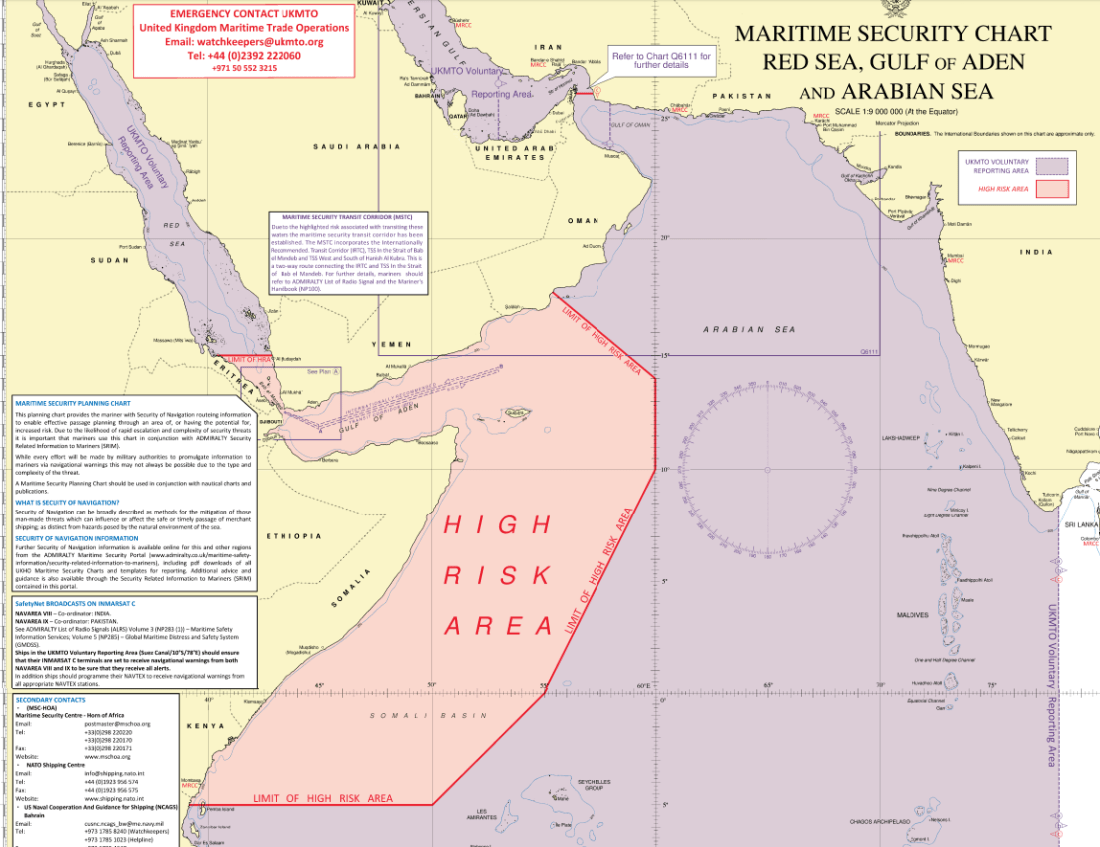
Kenya, Somalia sea row threatens war on piracy

By AGGREY MUTAMBO


Somalia has launched a diplomatic offensive against Kenya in their dispute over the Indian Ocean waters prompting the Arab League to condemn Nairobi for annexing Mogadishu’s territory.

The Arab Parliament in which Somali has members claimed Kenya was drawing up an illegal map that includes taking away Somali territory. The taking sides in the disputes could now complicate the war on piracy in which more than 30 Indian Ocean rim countries have cooperated to decimate attacks and their success.

To continue reading, please click here.

Source: businessdailyafrica.com

India launches Operation Sankalp to reassure Indian vessels

The development has come in the wake of the attack on oil tankers raising tensions between US and Iran

WRITTEN BY Sidhant Sibal

In a major development the Indian Navy has launched Operation Sankalp in the Persian Gulf/Gulf of Oman as a measure to re-assure Indian flagged vessels transiting through the region. The development has come in the wake of the attack on oil tankers raising tensions between US and Iran.

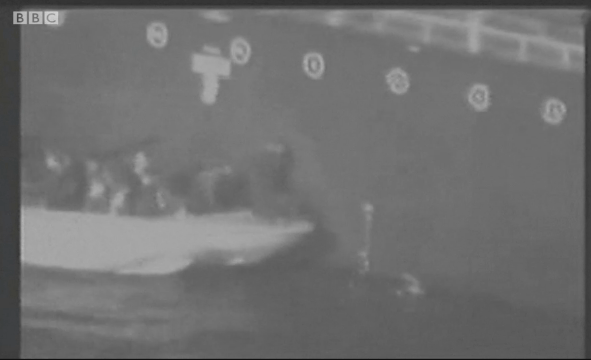
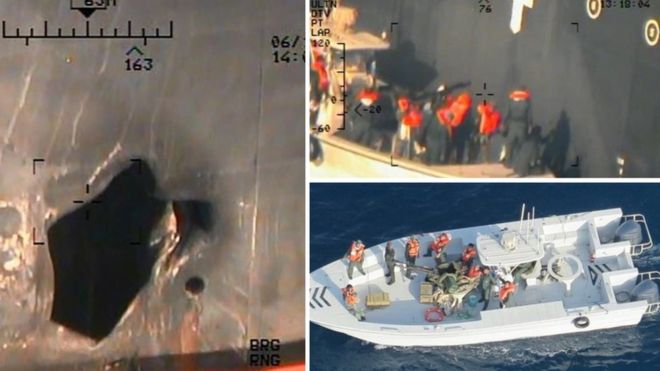
While Tehran denies involvement, Washington says that the West Asian country was behind it. Pentagon has released footage of Iran’s special forces removing unexploded mine.

To continue reading, please click here.

Source: dnaindia.com

Kenya elected to chair Contact Group on Piracy off the Coast of Somalia

By Patrick Vidija

Kenya has been elected the chair of the Contact Group on Piracy off the Coast of Somalia (CGPCS) for a period of two years beginning January 2020.

The chairmanship will afford  Kenya the opportunity to coordinate regional and international efforts to deal with the challenge of piracy which remains a threat to the Maritime sector, despite being suppressed in recent times.

To continue reading, please click here.

Source: the-star.co.ke

Navy playing Op Copper cards close to the chest – military observers not impressed

File image of an approach on a dhow

An SA Navy decision not to comment on an Operation Copper anti-piracy deployment has not improved the public image or perception of the maritime service of the national defence force, with experts cautioning this is a step backwards in terms of transparency.

When defenceWeb earlier this month requested some detail on an apparent upcoming deployment to the Mozambique Channel the official SA Navy response was: “This is an operational matter and we cannot comment on it”.

To continue reading, please click here.

Source: defenceweb.co.za