Iran tanker seizure: Hunt seeks European help on Gulf shipping

The foreign secretary has repeated his call for the release of a British-flagged ship and its crew detained in the Gulf by the Iranian military.

The Iranian Revolutionary Guard captured the Stena Impero and its 23 crew members in the Gulf on Friday.

Jeremy Hunt told MPs it was an act of “state piracy”.

Mr Hunt said the UK would develop a maritime protection mission with other European nations to allow ships to pass through the area safely.

The foreign secretary secured support for the initiative from both French and German foreign ministers on the phone on Sunday evening, the BBC has been told.

Addressing the Commons after a meeting of the government’s emergency Cobra committee, Mr Hunt said he spoke with a “heavy heart” but if Iran continued to act as it had, it would have to accept a “larger Western military presence” along its coastline.

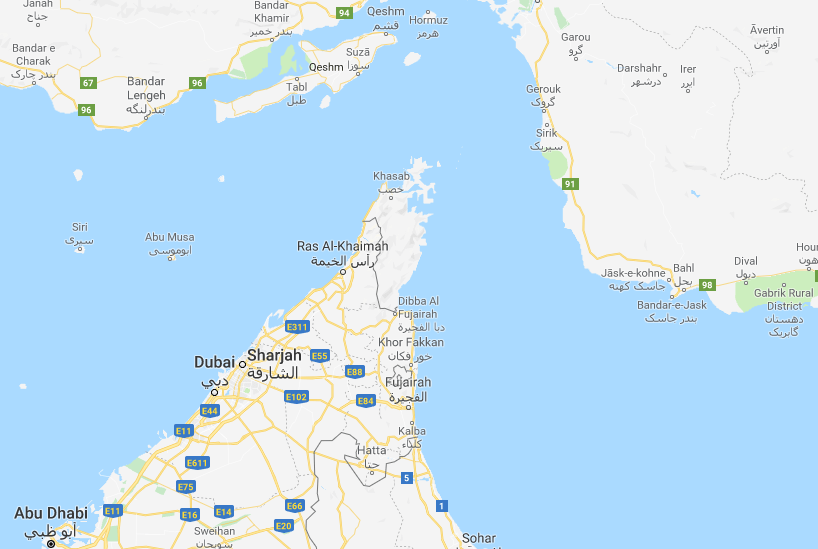
The seizure of the Stena Impero in the key shipping route of the Strait of Hormuz came after Tehran said the vessel violated international maritime rules.

Iran’s state-run news agency said the tanker was captured after it collided with a fishing boat and failed to respond to calls from the smaller craft.

Mr Hunt said the ship was illegally seized in Omani waters and forced to sail into Bandar Abbas port in Iran, where it remains.

Although the crew and owners are not British, the Stena Impero carries the British flag so the UK owes protection to the vessel, maritime analysts said.

The seizure was the latest in a string of acts leading to escalating tensions between Iran and the UK and US.

Earlier this month Royal Marines helped to seize tanker Grace 1 off Gibraltar, because of evidence it was carrying Iranian oil to Syria in breach of EU sanctions.

Mr Hunt said that vessel was detained legally, but Iran said it was “piracy” and threatened to seize a British oil tanker in retaliation.

In a statement to MPs in the Commons, Mr Hunt said the UK would seek to create a European-led mission to ensure safe passage of international vessels in the Gulf.

“Freedom of navigation is a vital interest of every nation,” he said.

US Central Command said it was developing a multinational maritime effort in response to the situation.

But the UK’s protection mission would not include the US because, Mr Hunt insisted, Britain was not part of President Trump’s policy of “maximum pressure” on Tehran.

The initiative would build on existing structures in the region such as the US Navy-led Combined Task Force 150, the BBC has learned.

Instead of focusing on tackling terrorism and the illegal drugs trade like the Combined Task Force 150, the new scheme would have a mandate to ensure freedom of navigation of international ships, the Foreign Office explained.

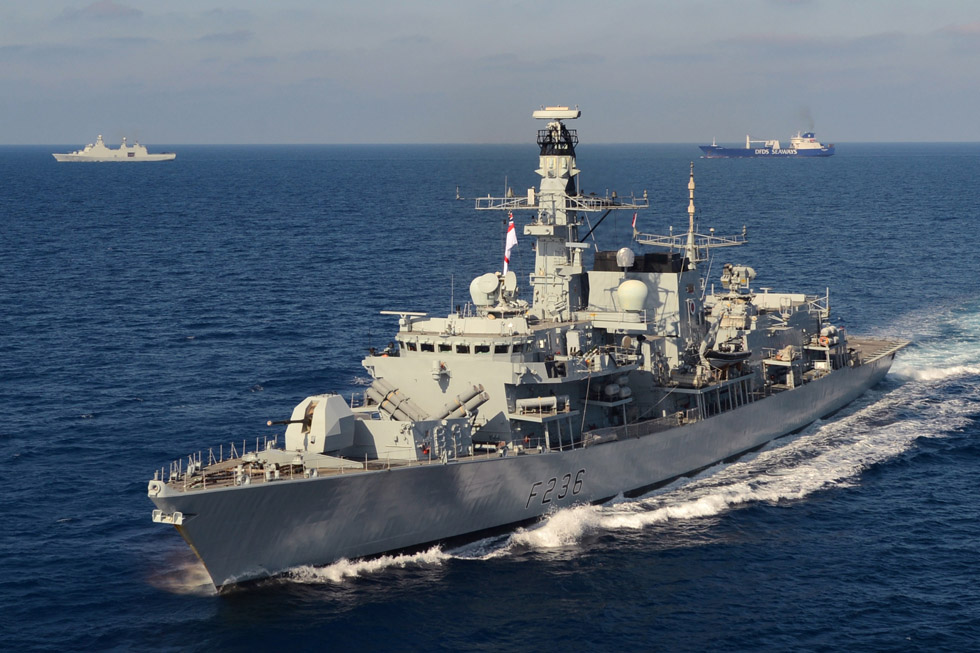
The mission would be implemented “as quickly as possible” but in the meantime the destroyer HMS Duncan has been sent to help keep British ships and crews safe in the region, Mr Hunt told the Commons.

Mr Hunt said the UK had sought to de-escalate the situation but there would be “no compromise” on freedom of navigation in the Strait of Hormuz.

Bob Sanguinetti, CEO of the UK Chamber of Shipping, welcomed the announcement of the mission but said it was “imperative” the government protected British-flagged ships in the Gulf in the meantime.

Mr Hunt encouraged commercial shipping companies in the region to follow advice issued by the Department for Transport to help reduce “risks of piracy”, because it was “not possible for the Royal Navy to provide escorts for every single ship”.

Source: bbc.co.uk
Egypt, UAE, US Kick off Drills to Bolster Maritime Security

Egypt, the United Arab Emirates and the United States kicked off on Monday a joint drill aimed at bolstering regional maritime security.

Naval and air forces from the three countries will take part in the “Eagle Salute – Eagle Response 2019” exercise, taking place in the Red Sea. Saudi Arabia is participating as an observer, said Egypt’s military spokesman.

To continue reading, please click here.

Source: aawsat.com

Indian Navy signs contract with ISRO for a new military satellite

For the procurement of a new military satellite to ease communications between its warships, aircrafts and shore- based units, the Indian Navy has placed an order with the Indian Space Research Organisation (ISRO), for which the launch is likely to happen within a year.

The new missile satellite, named “GSAT 7R”, costs Rs 1,589 crore, inclusive of launch cost and procurement of key infrastructure on ground. The “GSAT 7”, first dedicated Indian military satellite, launched in 2013, is likely to be replaced by the new satellite system.

To continue reading, please click here.

Source: newdelhitimes.com

Maritime security in the Gulf: UK government response

Stena Impero seized in the Strait of Hormuz

On 19 July Iranian authorities seized the British-flagged vessel, Stena Impero, in Omani waters in clear contravention of international law. Following a ministerial COBR meeting on 20 July, Foreign Secretary Jeremy Hunt gave astatement on iranian actions in the Strait of Hormuz.

The UK Mission to the United Nations in New York, on behalf of the UK government, sent a letter to the President of the United Nations Security Council setting out the facts about the incident.

On 21 July the Foreign Secretary called the French and German foreign ministers. Both agreed with the Foreign Secretary that safe passage through the Strait of Hormuz is a top priority for European nations, while avoiding escalation in the region.

Grace 1 detained off the coast of Gibraltar

On 4 July the Iranian oil tanker Grace 1 was detained during a a government of Gibraltar-led operation to uphold EU sanctions on Syria. The Foreign Secretary spoke with the Chief Minister of Gibraltar and with the Iranian Foreign Minister about the Grace 1 tanker.

On 15 July the Foreign Secretary attended the EU Foreign Affairs Council in Brussels. Before his visit, he gave a statement on Iran’s compliance with the nuclear deal and also commented on the detention of the Grace 1 and the rights of commercial ships in the Gulf.

Tankers attacked in the Gulf of Oman

The UK government is almost certain that a branch of the Iranian military attacked 2 tankers on 13 June. The Foreign Secretary condemned the attacks on civilian shipping, and called on Iran to cease all forms of destabilising activity. Read the UK statement on the attacks in the Gulf of Oman.

Source: gov.uk

Top official of Sri Lanka’s independent police commission held

COLOMBO: A top official of Sri Lanka’s independent Police Commission was arrested on Thursday for allegedly being involved in a case relating to illegal gun-running and money laundering, the police said…

…The case is related to the alleged illegal transfer of government weapons to Avant Garde, a private firm, from the Sri Lanka Navy. Avant Garde operated a lucrative business of providing sea marshals to protect merchant ships from Somali pirates in the high seas, during former President Mahinda Rajapaksha’s regime.

To continue reading, please click here.

Source: newindianexpress.com

US destroyed Iranian drone in Strait of Hormuz, says Trump

Persian Gulf/SoH

President Donald Trump has said the US Navy destroyed an Iranian drone in the Strait of Hormuz.

He said the USS Boxer amphibious assault ship “took defensive action” on Thursday after the drone came within about 1,000 yards (914m) of the vessel.

Iran said it had no information about losing a drone. In June, Iran downed a US military drone in the area.

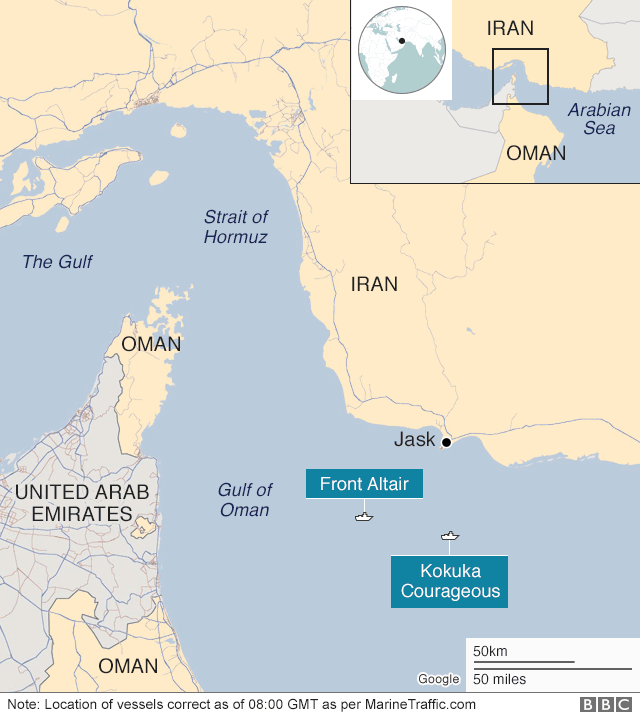
Earlier, Tehran said it had seized a “foreign tanker” and its 12 crew on Sunday for smuggling fuel in the Gulf.

Iran has been blamed by the US for attacks on tankers which have happened in the world’s key shipping area since May. Tehran denies all the accusations.

The recent incidents have triggered fears of a military conflict in the region.

What have the US and Iran said about the incident?

Speaking at the White House, Mr Trump said: “I want to apprise everyone of an incident in the Strait of Hormuz today involving USS Boxer, a navy amphibious assault ship.

“The Boxer took defensive action against an Iranian drone which had closed into a very, very near distance, approximately 1,000 yards (914m), ignoring multiple calls to stand down and was threatening the safety of the ship and the ship’s crew. The drone was immediately destroyed.

“This is the latest of many provocative and hostile actions by Iran against vessels operating in international waters. The United States reserves the right to defend our personnel, facilities and interests.”

A defence department official quoted by the New York Times said the drone had been brought down using electronic jamming equipment.

Meanwhile, a senior Iranian official dismissed the US statement. In an English tweet posted on 19 July, Deputy Foreign Minister Abbas Araqchi even suggested the US may have downed its own drone by mistake.

Mr Araqchi’s comment came after Iranian Foreign Minister Mohammad Javad Zarif told reporters in New York on Thursday that “we have no information about losing a drone today”.

What about the seized oil tanker?

Iran’s Revolutionary Guards’ Sepah News site said on Thursday that an alleged fuel-smuggling ship was seized on Sunday during naval patrols aimed at “discovering and confronting organised smuggling”.

Iran’s state media quoted the Guards as saying the vessel had been smuggling one million litres (220,000 gallons) of fuel.

The state media later published footage of Iranian speedboats circling around the Panamanian-flagged Riah tanker.

The vessel was seized south of Iran’s Larak Island, Iran said. Washington called on Iran to immediately release the ship.

What’s the background to this?

Tensions have been high in the Gulf since the US tightened the sanctions that it reimposed on Iran’s oil sector after unilaterally withdrawing from a landmark 2015 nuclear deal.

The US has blamed Iran for two separate attacks on oil tankers in the Gulf of Oman in May and June – an allegation Tehran has denied.

Iran also shot down a US surveillance drone over the Strait of Hormuz. Tehran said the aircraft had violated Iranian airspace, and that the incident sent a “clear message to America”.

The US military said the drone had been over international waters at the time, and condemned what it called an “unprovoked attack”.

UK warships have meanwhile been shadowing British oil tankers in the area since Iran threatened to seize one in response to the impounding of an Iranian tanker off Gibraltar.

The UK said the tanker was suspected of breaching EU sanctions against Syria. Iran denied it was en route there.

US Central Command Chief General Kenneth McKenzie, speaking on a visit to Saudi Arabia on Thursday, said he was working “aggressively” to find a solution to free passage for ships through the Gulf region, Reuters news agency reports.

Source: bbc.co.uk

Seeking to avoid escalation, ships deploy unarmed guards to navigate Gulf

Persian Gulf/SoH

Jonathan Saul

LONDON (Reuters) – Shipping companies are hiring unarmed security guards for voyages through the Middle East Gulf as an extra safeguard after a wave of attacks in the region, security companies involved said.

Relations between Iran and the West are increasingly strained after Britain seized an Iranian tanker in Gibraltar this month. Britain also said last week that one of its warships had to fend off Iranian vessels seeking to block a UK-owned tanker from passing through the Strait of Hormuz.

To continue reading, please click here.

Source: reuters.com

Departure of EU naval force risky for coast, report warns

File image of an approach on a dhow

By Samuel Baya

The possible withdrawal of the European Union Naval Force from the Indian Ocean waters has raised the need for other plans to ensure piracy does not rise again in the region, a new maritime report says.

A report by the Intergovernmental Standing Committee on Shipping (ISCOS) says that though piracy has been on the decline, the possibility of a withdrawal of the EU naval force that has been stationed in the Indian Ocean waters for years heralds uncertainty.

To continue reading, please click here.

Source: businessdailyafrica.com

U.S. unsure about circumstances of tanker towed to Iran

DUBAI (Reuters) – U.S. officials say they are unsure whether an oil tanker towed into Iranian waters was seized by Iran or rescued after facing mechanical faults as Tehran asserts, creating a mystery at sea at a time of high tension in the Gulf.

The MT Riah disappeared from ship tracking maps when its transponder was switched off in the Strait of Hormuz on July 14. Its last position was off the coast of the Iranian island of Qeshm in the strait.

To continue reading, please click here.

Source: reuters.com

Commercial ships warned against using private armed security in the Gulf

Shipping associations issue advice after a series of attacks blamed on Iran

Shipping companies sailing through the Arabian Gulf are being urged to avoid having private armed security guards on board as the risk of escalation in the region rises.

Relations between Iran and the West have become increasingly strained after Britain seized an Iranian tanker in Gibraltar last week and London said its warship HMS Montrose had to fend off Iranian vessels seeking to block a British-owned tanker from passing through the Strait of Hormuz.

To continue reading, please click here.

Source: thenational.ae