BP avoids sending tankers and crews into Gulf waters

Oil giant’s CEO takes decision amid fears its tankers could be targeted by Iranian forces as tensions mount

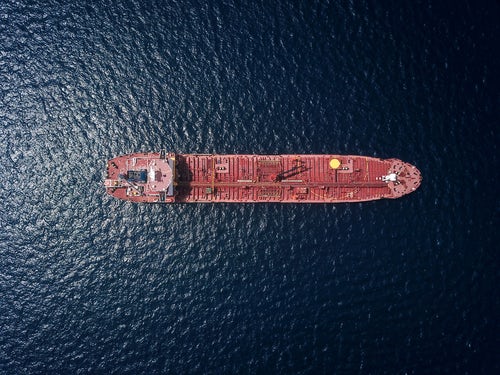
British oil giant BP is avoiding sending ships to the region after it had to shelter one of its tankers in the Gulf this month in fear it could be targeted by Iranian forces.

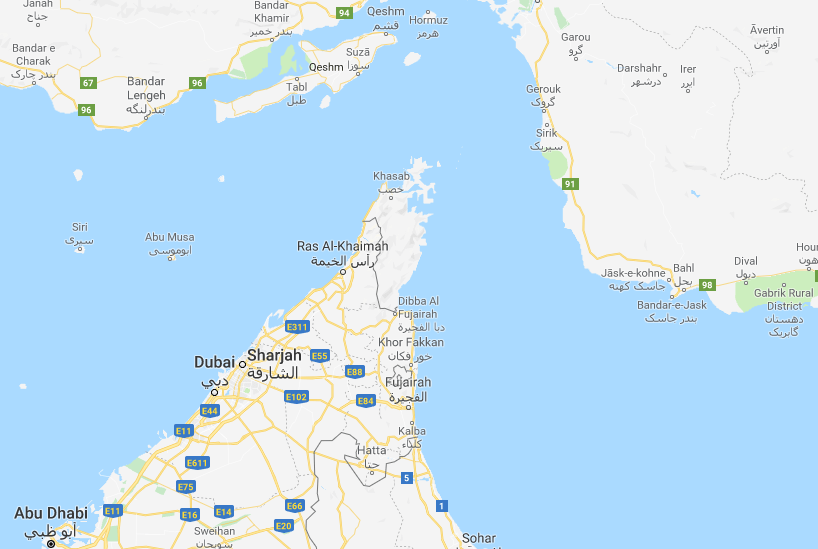
BP is “certainly not sending British ships and crews” through the Strait of Hormuz, the only way for tankers to reach the world’s biggest oil-exporting region, CEO Robert Dudley said in an interview on Bloomberg TV.

To continue reading, please click here.

Source: logisticsmiddleeast.com

Russia Submits Persian Gulf Security Plan to UN

Russia’s concept of collective security in the Persian Gulf has been distributed as an official document approved by the United Nations.

“In the current conditions, energetic and effective action is needed at an international and regional level in the interests of improving and further stabilizing the situation in the Persian Gulf, overcoming the prolonged crisis stage and turning this sub-region to peace, good neighborly relations and sustainable development,” the document said, TASS reported.

To continue reading, please click here.

Source: english.almanar.com.lb

Iran asks China for support as Royal Navy warship arrives in the Gulf

Persian Gulf/SoH

Senior Chinese politician told UK and USA are ‘fanning flames of war’ during visit to Tehran

By Max Channon

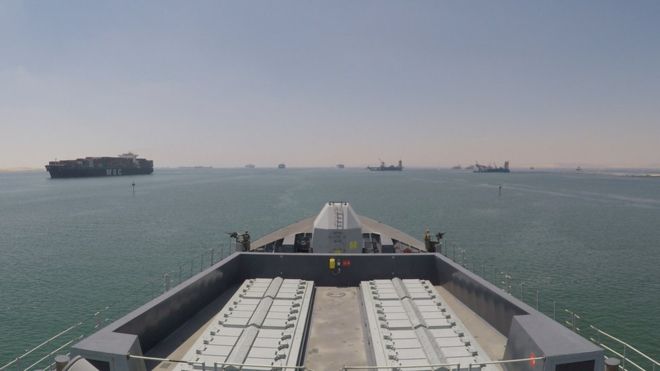
Iran has reportedly  asked China for its support in the Gulf, as Royal Navy Type 45  Destroyer HMS Duncan arrived in the region.

The state – which seized a British-flagged tanker in retaliation for a UK operation involving Royal Marines from Plymouth which saw an Iranian tanker  seized near Gibraltar earlier this month –  has also condemned UK calls for a European-led naval mission to escort tankers in the Gulf.

To continue reading, please click here.

Source: plymouthherald.co.uk

Iran says European fleet would be ‘provocative’

Persian Gulf/SoH

By AMIR HAVASI

Britain planning joint force to escort tankers through Strait of Hormuz after seizure of UK-flagged vessel

Iran on Sunday slammed as “provocative” a British proposal for a European-led naval mission to escort tankers in the Gulf, amid soaring tensions over the seizure of ships.

“We heard that they intend to send a European fleet to the Persian Gulf, which naturally carries a hostile message, is provocative and will increase tensions,” said government spokesman Ali Rabiei.

To continue reading, please click here.

Source: asiatimes.com

Iran tanker seizure: UK warship HMS Duncan arrives in Gulf

A second Royal Navy warship has arrived in the Gulf to protect British ships amid heightened tensions in the region.

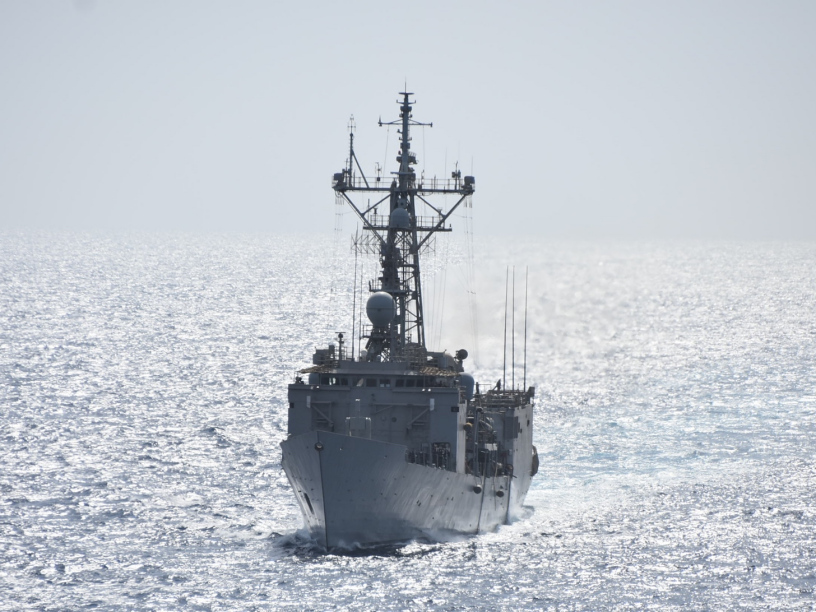
HMS Duncan has joined frigate HMS Montrose to escort vessels sailing under the British flag through the Strait of Hormuz.

HMS Montrose has so far accompanied 35 vessels through the strait, according to the Ministry of Defence (MoD).

Defence Secretary Ben Wallace said the UK continued to push for a diplomatic resolution to the situation.

He said: “Freedom of navigation in the Strait of Hormuz is vital not just to the UK, but also our international partners and allies.

“Merchant ships must be free to travel lawfully and trade safely, anywhere in the world.”

Mr Wallace added the Royal Navy will continue to provide a safeguard for UK vessels “until this is the reality”.

HMS Duncan is a Type 45 Destroyer which the Royal Navy describes as “among the most advanced warships ever built”.

Why have tensions escalated?

Earlier this month, British Royal Marines helped seize Iranian tanker Grace 1near Gibraltar which was suspected of breaking EU sanctions, infuriating Iran.

In response, Tehran threatened to capture a British oil tanker.

On 19 July, British-flagged oil tanker Stena Impero was seized by Iran’s Revolutionary Guard in the key shipping route.

A second British-linked tanker, the MV Mesdar, was also boarded by armed guards but was released.

Tehran said the Stena Impero was “violating international maritime rules”.

HMS Montrose was alerted but it was too far away to stop the seizure.

Iran’s state-run IRNA news agency said the tanker was captured after it collided with a fishing boat and failed to respond to calls from the smaller craft.

But the then foreign secretary Jeremy Hunt said it was seized in Omani waters in “clear contravention of international law” and then forced to sail into Iran.

The tanker’s Swedish owners, Stena Bulk, said it had been complying with regulations and had been in international waters.

Stena Bulk said the 23 crew members, who are Indian, Russian, Latvian and Filipino, are in good health and have met with officials from their respective countries.

How has the UK reacted?

The then foreign secretary Jeremy Hunt called the seizure of the Stena Impero “state piracy”.

But he insisted: “Our priority continues to be to find a way to de-escalate the situation.”

Speaking to the BBC, former Cabinet minister Iain Duncan Smith described the UK-flagged ship’s capture as a “major failure” by the UK.

The then defence minister Tobias Ellwood told Sky News “it is impossible simply to escort each individual vessel”.

What has Iran said?

Iran’s foreign minister Javad Zarif said in a tweet the UK “must cease being an accessory to #EconomicTerrorism of the US”.

He said Iran guarantees the security of the Gulf and the Strait of Hormuz, and insisted its action were to “uphold international maritime rules”.

Iranian President Hassan Rouhani has indicated the Stena Imepero could be released if the UK returns the Grace 1.

In a statement on his website he said: “We are not going to continue tensions with some European countries and if they are committed to international frameworks and abandon some actions, including what they did in Gibraltar, they will receive a proper response from Iran”.

Source: bbc.co.uk

Counter-Piracy Task Forces work together to deter piracy at sea

Warships from three nations have taken part in a counter-piracy surge operation, led by Combined Task Force (CTF) 151 in the Gulf of Aden. The operation was part of the Republic of Korea-led CTF 151’s mission to deter piracy and to contribute to wider maritime security in the region by focusing shared resources and assets over a prolonged period.

Collaboration between CTF 151, EUNAVFOR’s counter-piracy Task Force and the Japan Maritime Self-Defence Force ensured maximum response and support to the operation. A Japanese Maritime Patrol and Reconnaissance Aircraft also took part.

The ships ROKS Daejoyeong, ESPS Navarra and JS Asagiri worked together in conducting Maritime Awareness Calls to engage with local mariners and increase their understanding of the Combined Maritime Forces and CTF 151 role.

Captain Andrew Rose, Royal Navy, Deputy Commander of CTF151, said: “Operations such as this help to build partnerships and interoperability among the various stakeholders involved in counter-piracy. It also helps to build friendships and understanding amongst mariners to increase maritime security and suppress piracy.”

The long term aims of counter-piracy stakeholders are to deter and disrupt piracy by working together; to enhance information sharing and to engage with regional partners, the merchant shipping community and local mariners.

Source: combinedmaritimeforces.com

Iran’s Oil Tanker Gambit Has Nowhere to Go

To judge by the propaganda of the Iranian regime, the brave warriors of the Islamic Revolutionary Guard Corps had captured a Royal Navy guided-missile destroyer. Video footage shows the IRGC men rappelling down to a ship while other fearless comrades, looking on from speedboats racing alongside the vessel, cheer them on with shouts of “Allah Akbar!” Still images show the men advancing cautiously down the deck, automatic weapons pointed forward in preparation of a fierce gun battle.

Stirring stuff for an Iranian audience raised on stories of Albion’s many historical perfidies against their nation! Except the captured ship was not the mighty HMS Duncan, bristling with missiles and men-at-arms, but the Stena Impero, a small oil tanker with a motley complement of 23 civilians—and not a single man jack among them holding a British passport.

To continue reading, please click here.

Source: hellenicshippingnews.com

Maritime Union Report on the Dangers Seafarers Face on Ships in the Persian Gulf

Persian Gulf/SoH

First Hand Report on Transiting the Strait of Hormuz in a Merchant Vessel

PERSIAN GULF – As with the case of piracy in the waters off the Somali Coast, nothing brings the realities of dangers at sea whilst transiting the seas in the region like the first-hand accounts of those who have experienced the terrors of passing through the Strait of Hormuz whilst anticipating an attack from armed forces.

With security levels raised by the British government following the seizure of the UK-flagged tanker Stena Impero the focus of the maritime unions has been on the welfare of their members and now Nautilus International, the trade union for maritime professionals, has released the testimony of one of its members, via a report by Helen Kelly, illustrating the circumstances faced by seafarers in the region.

To continue reading, please click here.

Source: handyshippingguide.com

Stena Bulk says it has had contact with crew of seized tanker

Persian Gulf/SoH

STOCKHOLM (Reuters) – Stena Bulk, the Swedish-based operator of a British-flagged tanker seized last week by Iran, has been in contact by telephone with the 23 crew members of the vessel, Stena Impero, a spokesman for the operator said on Wednesday.

“We had direct contact with the crew on board the vessel last night by telephone and they’re all okay and in good health and they’re getting good cooperation with the Iranians on board the vessel,” spokesman Pat Adamson said.

To continue reading, please click here.

Source: reuters.com

Ships urged to alert navies before sailing through Strait of Hormuz

Persian Gulf/SoH

LONDON – Shipping associations have called on ship owners to inform Britain’s navy of their movements before sailing into the Middle East Gulf and Strait of Hormuz because of the escalating international crisis in the region.

About a fifth of the world’s oil passes through the Strait of Hormuz and shipping companies are already deploying more unarmed security guards as an extra safeguard.

To continue reading, please click here.

Source: todayonline.com