High Court: “Pirate Attack” was Attempted Fraud

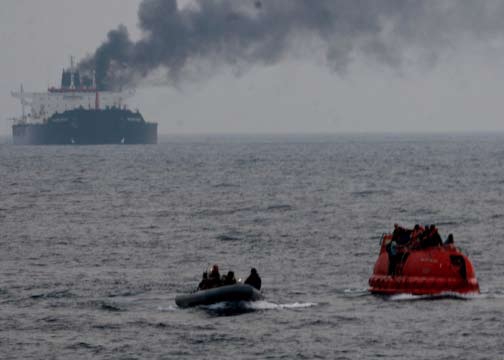
In a ruling issued Monday, the High Court of London ruled that the tanker Brillante Virtuoso was irreparably damaged not by pirates, as her owner and banker claimed, but by a group of conspirators. Justice Nigel Teare found that the owner’s claims of piracy were improbable, and he reached the “firm conclusion” that the attackers intended to destroy the vessel, that they had the assistance of the master and chief engineer as they went about the task, and that the owner orchestrated the scheme in order to defraud his insurer. 

On July 6, 2011, Brillante Virtuoso was drifting off Aden, awaiting a team of unarmed security contractors before transiting Bab el-Mandeb. A small boat approached carrying seven masked, armed men. The men informed the crew that they were “security,” and they came aboard with the master’s permission. (The disputants in the case agreed that the boarding party’s members were likely current or former Yemeni Coast Guard or Navy servicemenbers.) They ordered the crew to the day room, and escorted the master to the bridge and the chief engineer to the engine room. 

To continue reading, please click here.

Source: maritime-executive.com

Sailors from USS Philippine Sea rescue the crew of the Brillante Virtuoso

India starts sharing maritime data

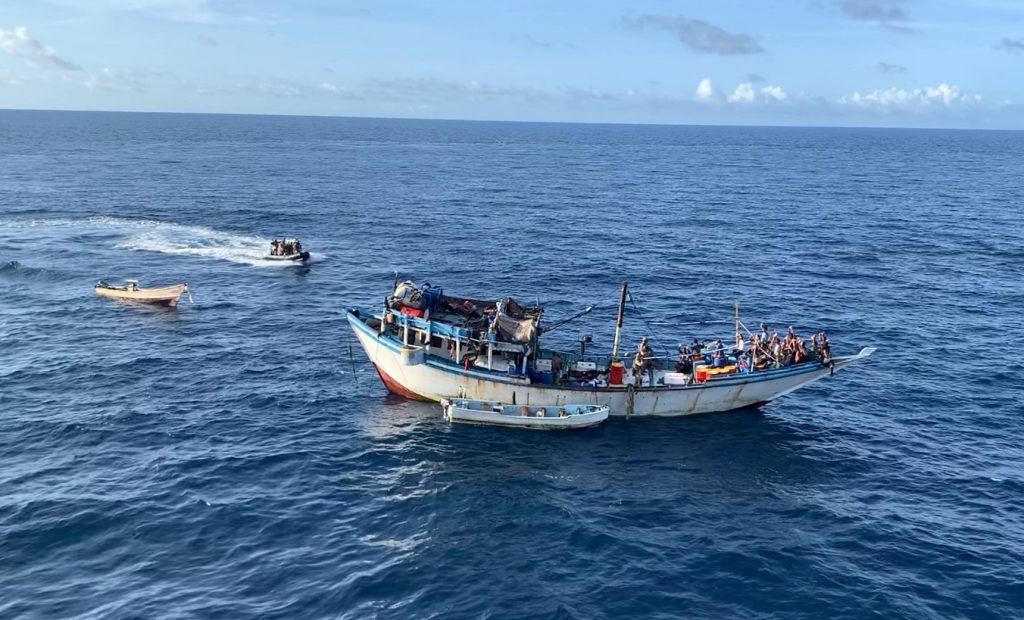
File image of an approach on a dhow

Dinakar Peri

Information Fusion Centre — Indian Ocean Region (IFC-IOR) was set up last year

The Information Fusion Centre – Indian Ocean Region (IFC-IOR) set up last year has started functioning as an information sharing hub of maritime data and “cuing incident responses” to maritime security situations through a collaborative approach, Navy sources said.

At the just concluded Goa Maritime Conclave (GMC), National Security Adviser Ajit Doval had offered countries in the IOR use of the facility to track movement of vessels on the high seas.

To continue reading, please click here.

Source: thehindu.com

Operation King Crab عملية “كِينْك كراب” – (يعني “سلطعون الملك”)

Operation ‘King Crab’ led by CTF 151 has successfully ended using assets from 9 nations. It involved a concentrated effort over four days, with increased counter-piracy patrols, air reconnaissance and visits to merchant vessels and local dhows. Information sharing and boarding exercises also took place. Rear Admiral Yu said: “Ultimately we all have the same goal of promoting security and stability in the region to legitimate seafarers by defeating piracy. Operations such as ‘King Crab’, greatly increase our ability to do this.”

Source: combinedmaritimeforces.com

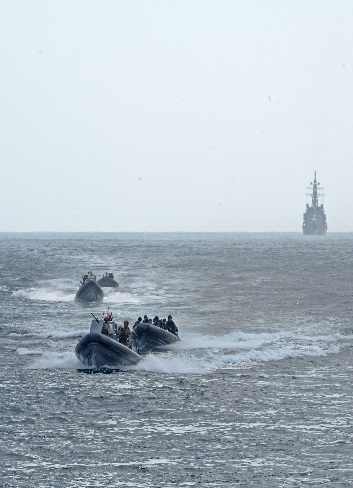
CTF151 Boat Crews approaching friendly Somali fishermen

Safety in the Red Sea corridor can’t be taken for granted

by Omar S Mahmood

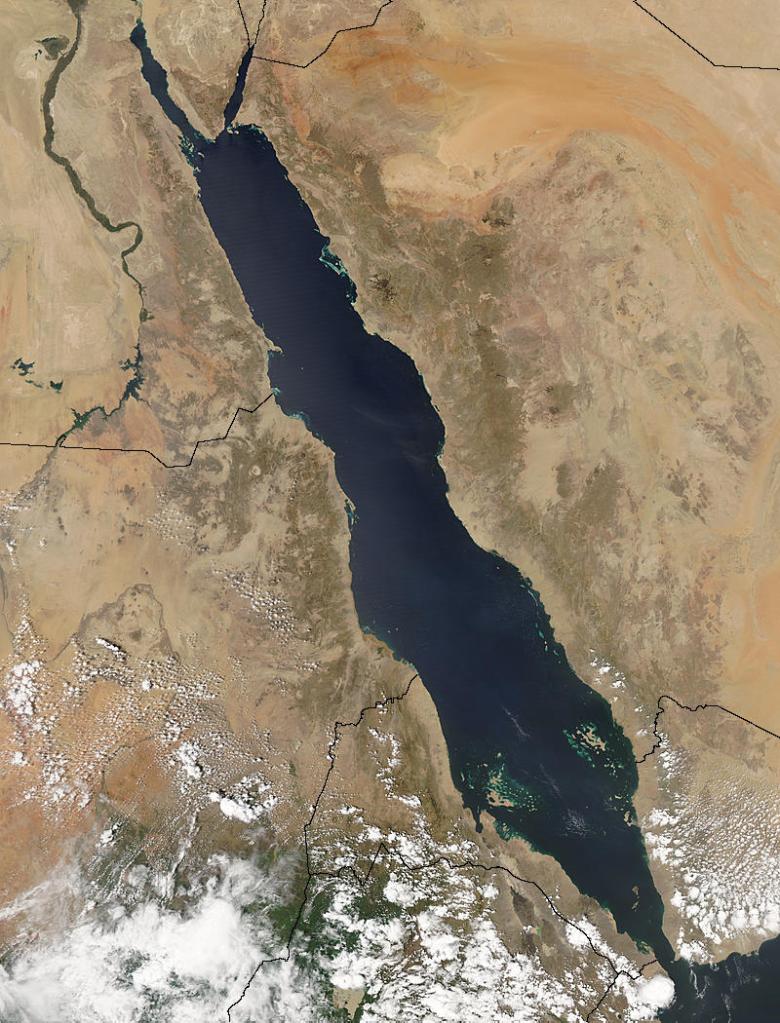
The Red Sea and the adjacent Gulf of Aden face many potential threats to free movement, ranging from the presence of non-state armed groups (such as the Houthis in Yemen) and organised crime outfits, to ongoing territorial disputes and environmental concerns. Yet maritime traffic has largely gone undisrupted in recent years.

The hitherto safe passageway of the Red Sea should not be taken for granted though, and the area has attracted significant geopolitical interest. New initiatives concerned with the shared maritime space are being conceived, including a Red Sea Forum championed by Saudi Arabia and Egypt. The African Union (AU) and Intergovernmental Authority on Development (IGAD) are also taking a greater interest. All these actors aim to address a perceived gap in management of the Red Sea space.

To continue reading, please click here.

Source: issafrica.org

Red Sea, via NASA
Red Sea (NASA)

Royal Navy guardians protect 7m tonnes of shipping in Gulf

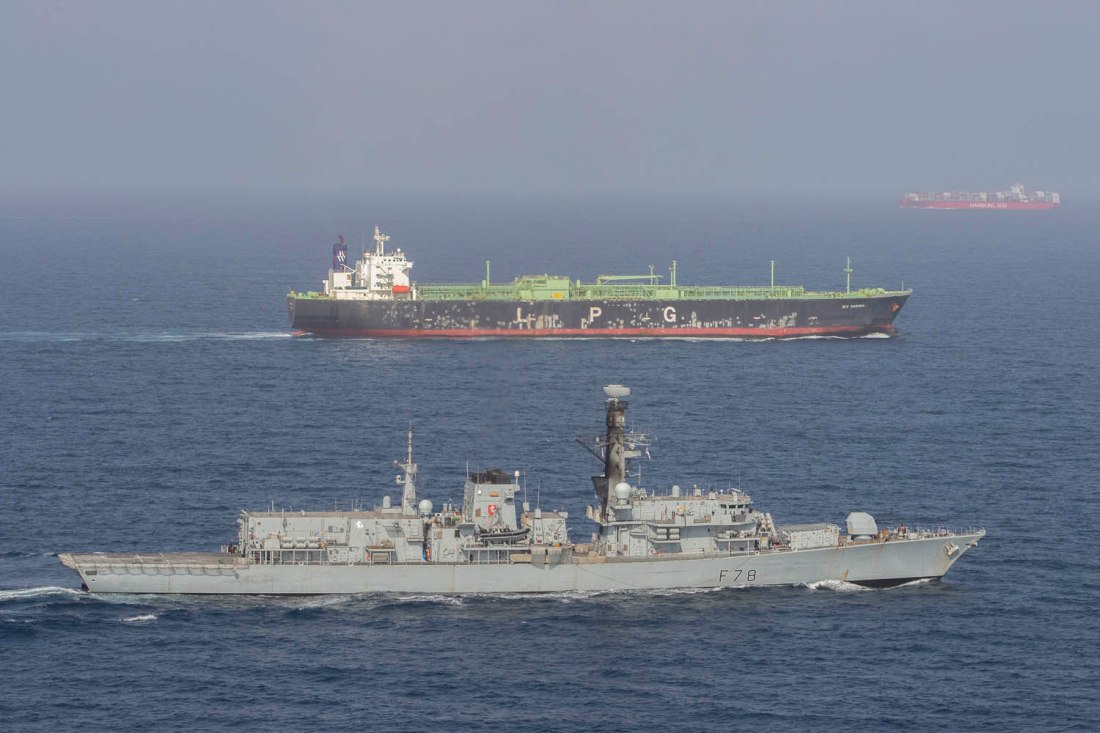
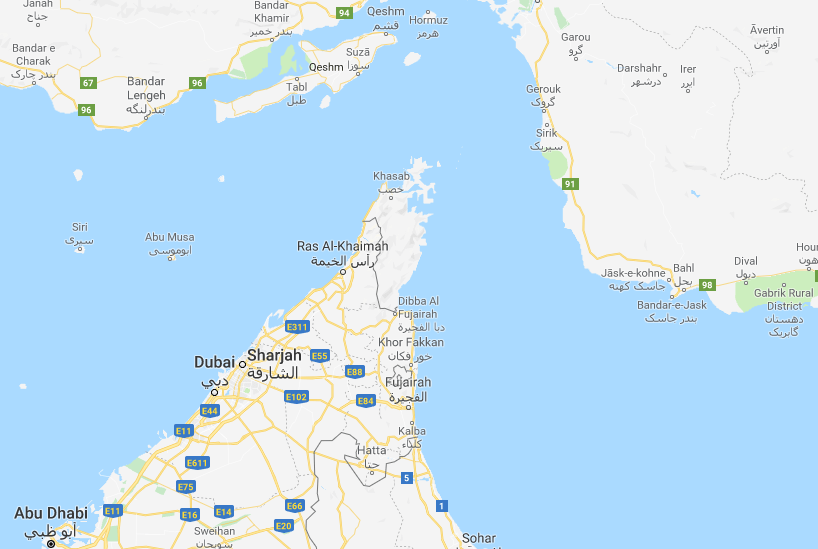
Over seven million tonnes of British shipping – the equivalent of around 20 wartime convoys – have been guided safely through the Strait of Hormuz by the Royal Navy.

HMS Montrose, her sister frigate HMS Kent and destroyers HM Ships Duncan and Defender – have accompanied British flagged and registered merchant ships in and out of the Gulf amid tensions with Iran.

Grateful seafarers have labelled the Royal Navy vessels ‘guardians of the Gulf’ for their efforts providing protection in the narrow waters separating Iran on the north shore and Oman and the UAE since the beginning of July.

The warships, plus their helicopters, have been used to accompany and watch over merchant shipping to ensure they can pass into and out of the Gulf safely, keeping international trade – especially oil and natural gas – flowing in the face of threats.

Most recently HMS Kent has borne the burden of patrols, spending three weeks in the strait, providing safe passage for in excess of 800,000 tonnes of shipping.

“We are a close-knit team and I am extremely proud of what my sailors have achieved over the last few months,” said Commander Andrew Brown, HMS Kent’s Commanding Officer.

The ship uses her Wildcat helicopter to scour hundreds of square miles of the Gulf for any signs of danger – merchant shipping needs accompanying through an area twice the size of Wales.

“Controlling our helicopter in such a busy area of the world can at times be extremely stressful,” said Leading Aircraft Controller Lewis Jackson. “The constant training we receive enables us to do our job in a calm and safe manner and at an extremely professional level.”

Beyond the physical and mental challenges of the escort mission, the 200-plus sailors and Royal Marines aboard the warships are still contending with demanding temperatures – in the high 30s Celsius by day – even at the end of September.

HMS Duncan, which returned to Portsmouth at the weekend, made 29 runs through the Strait, watching over 1,287,209 tonnes of merchant shipping.

Commander Tom Trent said his ship’s company found the mission challenging but also “very rewarding. We had emails from the ships we helped thanking us for getting them through safely.

“Protecting shipping is what the Royal Navy has done for hundreds of years. The whole operation is a reminder of how critical the Royal Navy is.”

Operations in the Strait of Hormuz to protect British shipping continues on a daily basis.

Source: royalnavy.mod.uk

EU NAVFOR Somalia MPRAs Fly In Support of CTF-151 Focused Operation

This week, EU NAVFOR Somalia Operation ATALANTA’s German Maritime Patrol Reconnaissance Aircraft supported a multi-national counter-piracy operation led by Combined Task Force 151 (CTF 151) in the Gulf of Aden.

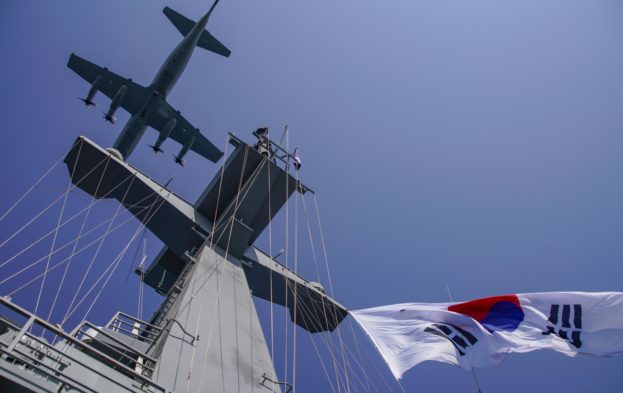
The assets involved in Focused Operation “King Crab” were from nine different nations, and included the Republic of Korea Ship (ROKS) Kang Gam Chan; the Japanese Ship (JS) Sazanami and the Royal Navy of Oman Vessel (RNOV) Al-Dhafreh in support.

The operation was a concentrated effort that spanned over four days and saw the counter-piracy task force and its partners undertake increased counter-piracy patrols and maritime engagement visits to merchant vessels and local dhows. The participating assets also partook in joint training and boarding exercises.

The exercises also reinforced the importance of information-sharing amongst the wide combination of counter-piracy partners.

“Ultimately we all have the same goal of promoting security and stability in the region to legitimate seafarers by defeating piracy and criminal attacks,” said Commander CTF 151, Rear Admiral Byeong-Ju Yu, ROKN. “Focused Operations such as King Crab greatly increase our ability to do this.”

Operation ATALANTA’s MPRAs have now returned to regular operations, patrolling the Indian Ocean, Gulf of Aden, Red Sea and Arabian Sea alongside other EU NAVFOR naval Assets.

Source: eunavfor.eu

2019-013-Eastern/Central Mediterranean Sea and Suez Canal-GPS Interference

 This revised Advisory cancels U.S. Maritime Advisory 2019-005

1. Reference: U.S. Maritime Alerts 2018-004A, 2018-004B, 2018-008A.

2. Issue: Multiple instances of significant GPS interference have been reported by vessels operating in the Eastern and Central Mediterranean Sea. In the Central Mediterranean Sea, these reports have been concentrated between Libya and Malta, specifically in areas offshore of Libya and to the east and the northwest of Malta. In the Eastern Mediterranean, these reports have been concentrated near Port Said, Egypt, the Suez Canal, and in the vicinity of the Republic of Cyprus. Instances of similar interference were also reported between Hadera, Israel and Beirut, Lebanon. This interference is resulting in lost GPS signals affecting bridge navigation, GPS-based timing and communications equipment. Satellite communications equipment may also be impacted.

3. Guidance: Exercise caution when transiting these areas. The U.S. Coast Guard Navigation Center (NAVCEN) and NATO Shipping Center websites contain information regarding effective navigation practices for vessels experiencing GPS interference. The information reaffirms safe navigation practices when experiencing GPS disruptions, provides useful details on reporting disruptions, and is intended to generate further discussion within the maritime community about other disruption mitigation practices and procedures. This guidance also recommends reporting such incidents in real time; noting critical information such as the location (latitude/longitude), date, time, and duration of the outage/disruption; and providing photographs or screen shots of equipment failures experienced to facilitate analysis. The NAVCEN information is available at: https://go.usa.gov/xQBaU.

4. Contact Information: GPS disruptions or anomalies should be reported immediately to the NAVCEN at https://go.usa.gov/xQBaw or via phone at 703-313-5900, 24-hours a day. NAVCEN will further disseminate reported instances of GPS interference in this region to the NATO Shipping Center.

5. Cancellation: This message will automatically expire on March 22, 2020.

For more information about U.S. Maritime Alerts and Advisories, including subscription details, please visit http://www.marad.dot.gov/MSCI.

Source: maritime.dot.gov

Sri Lanka- Head of Avant-Garde’s Maritime Security Division arrested

(MENAFN – Colombo Gazette) The head of Avant-Garde’s Maritime Security Division, Vishwajith Nandana Diyabalanage, was arrested by the Criminal Investigations Department (CID) at the Bandaranaike International Airport (BIA) today.

He was arrested when he returned to the country from Singapore. Diyabalanage was wanted over ongoing investigations into Avant-Garde.

To continue reading, please click here.

Source: menafn.com

UK tanker leaves Iranian port after being seized in July

Persian Gulf/SoH

DUBAI (Reuters) – The British-flagged Stena Impero tanker left Iran’s Bandar Abbas port on Friday after being detained since July by Iranian forces and was heading toward international waters.

The Stena Impero was seized by Iran’s Revolutionary Guards in the Strait of Hormuz waterway for alleged marine violations two weeks after Britain detained an Iranian tanker off the territory of Gibraltar. The Iranian ship was released in August.

To continue reading, please click here.

Source: reuters.com

Agency wants EU to expand maritime security mandate over Horn of Africa

By WINNIE ATIENO

A regional maritime organisation wants a European Union military ships operating in the Horn of Africa to extend its mandate to cover all maritime crimes in the Indian Ocean.

The Inter-Governmental Standing Committee on Shipping (ISCOS), says the EU NAVFOR Somalia Operation ATALANTA— which mainly focuses on anti-piracy activities — should extend its mandate to deal with all the maritime crimes including terrorism, charcoal smuggling as well as drug and human trafficking.

To continue reading, please click here.

Source: businessdailyafrica.com

MSN Note: Expanding the mandate of Operation Atalanta has been discussed for years, but this is the first real credible move. Somalis have been asking for fisheries protection for some time, and a naval presence would go some way to deterring foreign fleets from IUU fishing activity in Somali waters. Additionally, as Somalia and Kenya continue to argue about their respective TTWs, maritime security for oil and gas will become increasingly important in the region. Al Shabaab continues to profit from smuggled charcoal, something which would become much harder with additional maritime security present.